

This card is often feared, yet its core invites calm and practical insight.
The death tarot is a powerful, commonly misunderstood tarot card that centers on change and transformation in everyday life, not literal endings.
This short guide helps you spot when a major phase has run its course and it’s time to close one door so another can open.
Expect clear, usable ideas about symbolism, upright and reversed meanings, timing, and how the card applies to relationships, career, and finances.
After a pause or rethink, this part of the deck signals practical steps to let go of old baggage and welcome new beginnings.
Read on for concise keywords, examples, and actionable tips to shift from resistance to acceptance with confidence.
For a related reading on emotional shifts, see three of swords.
Key Takeaways
- The death card signals meaningful change and practical transformation.
- It asks you to release old attachments to make room for new beginnings.
- Upright meaning focuses on endings that lead to growth in life and work.
- Resisting change can cause delays; acceptance opens constructive patterns.
- This guide offers clear examples and quick steps to apply now.
Symbolism and Card Description: The Skeletal Figure, White Horse, and Black Flag
The card’s imagery packs a clear lesson about endings that make way for something truer.
The central skeletal figure in armor reads as endurance beyond decay. The armor suggests inevitability and invulnerability, a reminder that certain endings are universal and not subject to negotiation.
Riding beside it, the white horse stands for purity and cleansing. This animal implies that necessary endings can refine values, clarify motives, and leave intentions clearer than before.

Iconography explained
The black flag with a white motif is a paradox: dark ground with a bright emblem. It visually says that within an apparent void, a new order can begin. Beneath Death lie a king and a pauper, showing how the scene treats all people the same—status falls away in the face of major cycles.
Position in the major arcana
Placed after The Hanged Man, this card follows a pause of perspective. Once insight arrives, transition tends to unfold. That sequence helps explain why endings often come after a time of suspension.
Misconceptions and true meanings
Quotes that paint literal doom miss the card’s practical heart. In truth, it signals transformation, intentional release, and the clearing of space so new options can emerge.
“Change may arrive suddenly yet purposefully, pushing out worn structures and opening room for better fits.”
Look closely at any deck and its iconography to deepen your own interpretations. For a different angle on focused effort and skill, see eight of pentacles.
Death Tarot: Upright and Reversed Meanings at a Glance
When this card appears, it points to a clear shift: something must end so a truer path can begin.
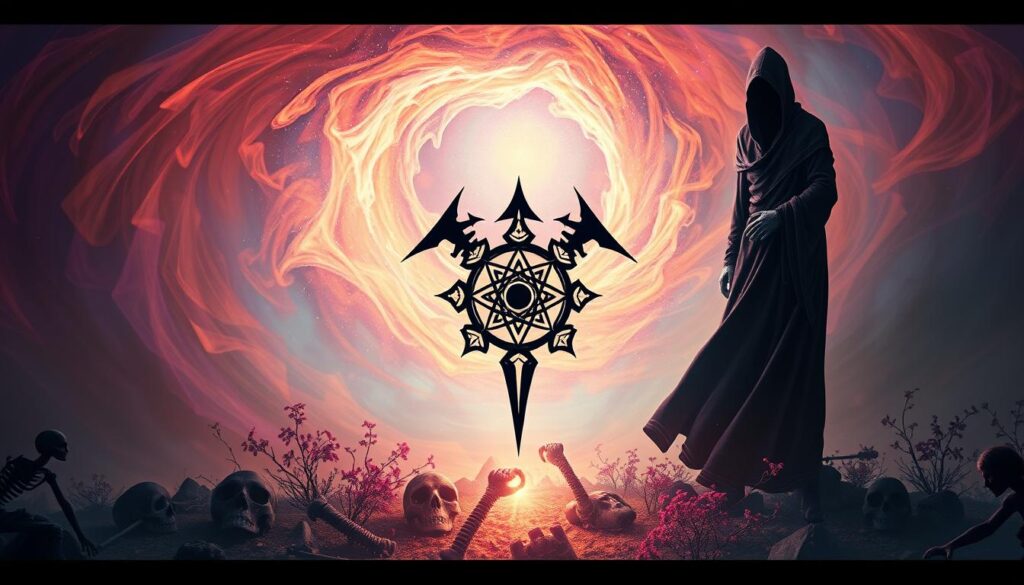
Upright meaning and keywords
Transformation, endings, transitions, and letting go are the core signals here.
The upright tarot card often announces a major phase ending and the start of a new one. It asks you to release unhealthy attachments, declutter, and make space for growth.
Reversed meaning and keywords
Resisting change, repeating patterns, and stagnancy mark the reversed side.
The reversed death card points to holding back, fear of the unknown, or feeling stuck in limbo. The practical advice is to reassess your approach and take small, supported steps forward.
Energy in readings: opening one door by closing another
Energetically, this card asks you to close one door so the next can open. That shift conserves energy and stops leakage into worn-out commitments.
- Love: upright may renew or end a cycle; reversed shows clinging to routines.
- Career: upright urges action on transitions; reversed warns of replaying bad habits.
- Finances: upright prompts practical shifts; reversed signals resistance to adapt.
Quick practice: write three attachments to let go of and perform one small ritual, like decluttering a drawer, to anchor change.
“I embrace change in all forms.”
Tone guidance: Treat the card’s energy as neutral but purposeful. Focus on where life wants to move next rather than on fear or others’ opinions.
Applying the Death Card to Life Areas: Love, Career, Finances, and Personal Growth
Use the card as a practical lens to see where life needs a decisive, kind shift.

Love and relationships
Upright: Embrace ending cycles that no longer grow. Couples can choose honest renewal or a compassionate close.
Reversed: Clinging to patterns keeps you stuck. Single people should examine limiting beliefs that block intimacy.
Career and vocation
Upright: Treat apathy as a signal to pivot. Build a stepwise plan to resign, reskill, or seek roles with clearer meaning.
Reversed: Staying in an unfulfilling job delays growth. Small career moves can break the pattern and open opportunity.
For practical perspective on steady effort and timing, see seven of pentacles.
Finances and resources
Upright: Loss may prompt a values-based budget and a redefinition of prosperity.
Reversed: Resisting needed budgeting changes can worsen strain. Start with lean, realistic steps.
Personal patterns
List attachments, habits, and beliefs ready to go. Pair each item with one small action—unsubscribe, set a boundary, cancel an obligation—to create momentum.
“Saying no creates room for a better yes.”
| Area | Upright Outcome | Reversed Signal | Suggested Action |
|---|---|---|---|
| Love | Renewal or respectful ending | Clinging to stale dynamics | Have a heart-to-heart or set new boundaries |
| Career | Transition toward meaningful work | Stuck in apathy | Make a stepwise pivot plan and reskill |
| Finances | Values-based spending shift | Resistance to budgeting change | Create a lean budget and redefine needs |
| Personal Growth | Release of old patterns | Repeating limiting habits | List attachments, take one concrete action each week |
Anchor changes with routines like weekly decluttering, journaling about the past, and scheduled check-ins.
The Process and Timing of Change: From Pain to Possibility
Change often arrives before we feel ready. You may notice low drive, repeated setbacks, or a quiet sense that the old chapter has ended even if practical steps lag behind.

Signs you’re in a cycle
Look for limbo, decaying motivation, and patterns that no longer return results. When small efforts stop working, treat that as a timing cue.
Practical steps to let go
Assess one habit or belief that ties you to the past. Pick two micro-actions you can do this week and set a short review time.
- Declutter a physical or digital space to free resources like time and focus.
- Sunset one habit and try a small, nourishing replacement.
- Test options with short experiments rather than all-or-nothing choices.
“Some pain marks a real transition; acceptance often reduces suffering and opens room for growth.”
Use timing cues—when attempts to revive the old path yield diminishing returns, redirect energy to building the new. This simple process moves pain toward practical transformation in daily life.
Comparing the Death Card Across Different Tarot Decks
Across decks, a familiar rider returns with small visual changes that reshape how readers apply the card in a spread.
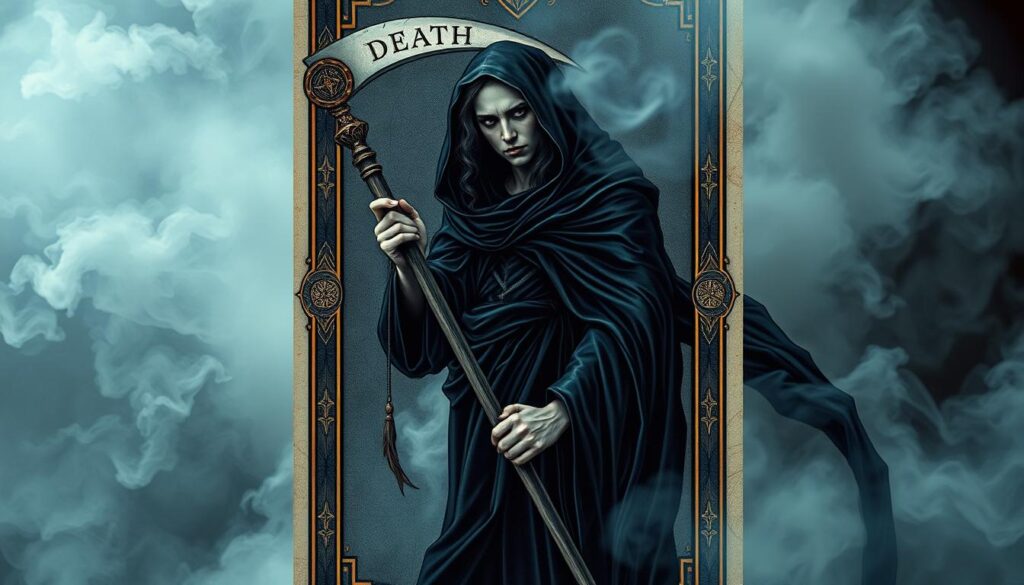
Shared backbone and what it signals
Most decks keep the skeletal rider, the white horse, the black flag, and fallen figures. This shared backbone signals inevitability, purification, and broad social impact.
How visual emphasis changes meanings
When a deck highlights the armor, readers hear a sterner message about unavoidable time and necessity.
Decks that spotlight the white horse suggest cleansing, renewal, and softer transition.
Posture, landscape, and social markers
Small shifts in the figure’s pose or the background can turn a solemn release into an active call to move.
Including a king, pauper, or everyday people reminds us that endings touch all ranks, shaping compassionate interpretations.
Practical tips for readers
- Compare your favorite decks side by side to see which imagery matches your style.
- Keep a reading log noting how each deck’s visuals influence your advice in spreads.
- Watch icon details to decide if the guidance leans toward surrender, decisive action, or ritual release.
Interpretations will vary, but the core meanings—endings that enable change—remain intact.
“Small iconographic choices help you decide whether to hold, act, or ceremonially let go.”
For a related perspective on endings that feel sharp but open space, see this ten of swords reading.
Reading Death in Practice: Spreads, Questions, and Empowered Interpretations
A practical reading helps translate symbolic endings into everyday actions you can take now. Use short spreads and clear questions to make the process feel safe and useful.
Simple spread positions that highlight endings and beginnings
Three-card spread: 1) What is ending? 2) What is emerging? 3) What to release now.
Five-card option: Past pattern, Present reality, The necessary ending, The first small step, The support I need. This format maps insight to practical steps.
Reflection questions to navigate change
- Which fears or limiting beliefs hold me back?
- What steps can I take this week to shed old patterns?
- What support or resources do I need right now?
Pull a clarifier to identify whether the process is in decline, limbo, or rebirth. That helps tailor advice to timing and energy.
Affirmation and ethical framing
“I embrace change in all forms.”
Repeat this during journaling or before readings to align energy with constructive transformation. Offer interpretations that honor client agency: the card points to endings, but the person chooses the pace.
| Spread | Focus | Immediate Step | Timing Prompt |
|---|---|---|---|
| Three-card | Ending & beginnings | One small release action | Clarifier: decline, limbo, rebirth |
| Five-card | Pattern to plan | First small step mapped | Weekly review |
| Single clarifier | Stage check | Adjust pacing | Pull again in 7–14 days |
| Ritual follow-up | Somatic anchoring | Write and release commitment | Do immediately after reading |
Track readings to notice when resistance eases and when bolder moves feel right. For a related look at emotional shifts, see emotional shifts.
Conclusion
Think of endings here as tools that free time, focus, and resources for what matters next. The death tarot image reminds you that transformation and transition are part of the major arcana’s move from insight to action.
Keep a friendly, practical stance: break change into small steps for life, career, and relationships. Release attachments and worn habits with honest, timely choices to limit pain and build momentum.
Use the spreads, reflection prompts, and the affirmation “I embrace change in all forms” when holding back returns. Different deck images tweak the tone, but the core meaning stays steady: closure opens opportunity.
For a related perspective on anxiety and pattern work, see this related reading.
FAQ
What does the card with the skeletal figure symbolize?
The image with the skeletal figure, white horse, and black banner points to major endings that clear space for new beginnings. The armor suggests inevitability, the white horse shows purity and movement, and the black flag signals transformation rather than literal harm. Together they invite a shift in perspective: release what no longer serves so something better can emerge.
Is this card always a bad sign in a reading?
No. While it marks endings, it primarily signals transformation and renewal. In upright positions it often means necessary change and growth. Reversed, it can show resistance, clinging to old patterns, or delayed transitions. Context and surrounding cards clarify whether an ending leads to opportunity or stagnation.
How does its position in the Major Arcana affect meaning?
Placed after the Hanged Man, it follows a period of surrender and new perspective. That sequence highlights a natural flow: insight, then the removal of outdated structures. In larger spreads, its placement shows where transformation will be most active—relationships, career, finances, or inner work.
What keywords should I remember for upright and reversed readings?
Upright keywords include transformation, endings, transitions, and letting go. Reversed keywords include resisting change, repeating patterns, stagnation, and holding back. Use these as starting points, then refine meaning with the querent’s situation and nearby cards.
How can someone apply this card’s message to relationships?
In love readings it can mean the end of a cycle, a breakup, or the evolution of a partnership. It encourages honest choices: either release what’s unhealthy or allow the bond to renew. It often nudges people to stop holding on to patterns that block intimacy and growth.
What does the card indicate about career and money?
Professionally, it can signal job transitions, leaving unfulfilling roles, or clearing space for new opportunities. For finances, it can point to adjustments, losses that prompt rethinking priorities, or a shift toward more sustainable resource management. Practical planning helps navigate these shifts.
How do I know if I’m in a cycle of transformation in my life?
Look for feelings of limbo, fading interest in familiar routines, recurring endings, or a sense that something must change. Physical or emotional discomfort often accompanies the process. These signs suggest old structures are breaking down to allow rebirth.
What steps help with letting go when this card appears?
Start by naming recurring patterns and attachments. Take small, courageous actions—set boundaries, declutter, seek support, or make practical plans. Embrace uncertainty by focusing on what you can control and allowing time for adjustment.
Do different decks change its meaning?
Visuals and cultural cues vary, but core themes remain: endings, transition, and transformation. Some decks emphasize gentleness; others stress disruption. Compare imagery—colors, symbols, and figures—to adapt interpretations to the deck’s tone.
What spreads or questions work best when this card shows up?
Simple three-card spreads (past / present / future) or position-based layouts that contrast what’s ending with what’s beginning work well. Ask: “What must I release?” “What opportunity follows this ending?” and “What support do I need now?” These prompts guide empowered action.
Can you share a short affirmation connected to this energy?
Try: “I embrace change and open to new possibilities.” Repeat it during moments of doubt to reinforce trust in the process and to shift focus from loss to potential.