

The Death card in the major arcana rarely forecasts literal loss. Instead, it marks a clear end to a phase of life and invites a new beginning.
The Rider‑Waite‑Smith image shows a skeleton in armor on a white horse carrying a black flag with a white rose. Figures of many classes lie before it, suggesting equality and purification.
Upright meanings often point to transformation, endings, transition, and letting go. Reversed positions can signal fear of change, stagnancy, or repeating patterns.
This introduction previews an Ultimate Guide that will unpack symbolism, upright versus reversed meanings, and practical tips for readings. You’ll learn how to tell fearful interpretations from grounded, constructive ones.
Across decks and traditions, the theme is consistent: release leads to renewal. Understanding this archetype can help people move past what no longer serves and step into life with purpose.
Key Takeaways
- The card often means transformation, not literal death.
- Imagery highlights equality, release, and renewal.
- Upright and reversed positions shift the message.
- Context and nearby cards shape timing and tone.
- Learning this archetype helps people face change with intention.
Understanding the Death Card Today: Intent, Context, and Why It’s Not About Literal Death
In modern readings this archetype most often signals a clear ending that makes room for new beginnings. It points to the close of a major phase and the start of transformation.
The intent is to prompt release and renewal, not to forecast literal loss. When you accept that something must end, you free time and energy for what follows.
Context changes meaning. In a “What to release” or “Challenge” position it points to habits or attachments to let go. As an “Outcome” it can mark a turning point if you choose change.
Timing varies. Sometimes shifts are slow and inner. Other spreads — especially with The Tower or The Hanged Man — show swift, unavoidable changes.
Emotionally, endings stir fear and grief. Move through those feelings with journaling, follow-up pulls, or concrete steps like decluttering and resetting boundaries.
Ethically, avoid sensationalism. Present options and empower choice. Asking “What needs to end?” gives action. Asking “What should I do next?” points to first steps.
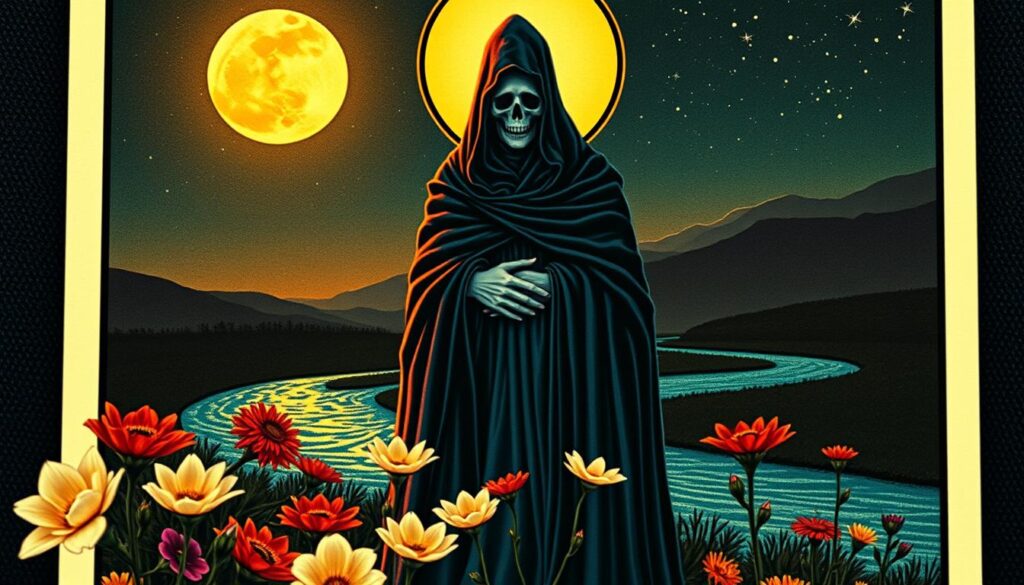
| Reading Position | Likely Focus | Practical Prompt | Associated Pace |
|---|---|---|---|
| What to Release | Old habits, toxic ties | List one habit to stop this week | Gradual |
| Challenge | Resistance to change | Journal fears, name one small step | Mixed |
| Outcome | Significant turning point | Create an action plan for next 30 days | Sudden or steady |
For a focused follow-up, try a targeted pull or read more about how related cards shape outcomes at three of swords guidance. Reframe endings as opportunities to reclaim attention for what truly matters now.
Myths vs. Reality: Why the Death Card Is More About Transformation Than Doom
The image often stirs fear, yet its core message is about clearing space for what’s next. Media tropes amplify dread, which creates a lot of false assumptions.
Common fears and misconceptions
Many people assume the appearance means literal finality. That is rarely the case.
Clients also worry a breakup or disaster is guaranteed. In truth, the symbol can point to shifting dynamics or a new commitment stage.
What endings really signal: release, renewal, and rebirth
Endings free up energy for goals and values that match who you are becoming. Repeated frustrations, stalled growth, and values misalignment are practical markers that something should close.
The emotional pain of letting go is real, but avoiding change often prolongs harm and delays fresh chances. Gentle rituals, clear conversations, and boundary resets help move the process with care.
- Debunk: sighting does not equal physical loss — tradition emphasizes transformation.
- Relationships often evolve; endings can lead to better connection or new commitment.
- Examine beliefs that fuel fear — a mindset shift can alter the outcome.
Think of this archetype as a cycle guide. When you meet it with curiosity and courage, it acts as a catalyst for deep transformation rather than doom. For focused practice on skill and craft, see eight of pentacles guidance.
Symbolism and Iconography: The Skeleton, White Horse, and Black Flag Explained
Look closely and the main figures on the scene reveal a lesson about equalizing change and quiet renewal.

Armor, equality, and inevitability
The living skeleton stands for what endures when forms shift. It points to the part of the body and self that remains even as roles change.
Armor signals inevitability and power — a force that completes cycles no matter who resists. The fallen king beside a pauper shows that this process comes to all people, beyond status or rank.
Purity, renewal, and modern reinterpretations
The white horse reads as purification: what falls away is cleansed to make room for new life and values. The black flag with a white rose frames endings as seeds for rebirth, not moral failure.
- Compare RWS to newer decks: butterflies or moon phases shift emphasis to healing and inner change.
- Tip: notice bodily cues like tension or relief — they often confirm where transformation is active.
- When this imagery appears, preserve what the white symbols point to and let the rest go.
Upright Death: Core Meaning, Change, and the Power of Letting Go
An upright reading marks a clear turning point where one chapter closes so another can begin.
In essence, this position points to transformation, endings, transition, and release. It asks you to honor the end so the next aligned phase can take root without fragmentation.

Key upright keywords
- Transformation: the self that emerges is reshaped by choices you make now.
- Endings: finish what drains you so energy frees up for what matters.
- Transition: practical steps shorten limbo and reduce confusion.
- Release: letting go is active work, not passive waiting.
Love and relationships
Relationships may evolve or close. Honest talks and renegotiated expectations help when growth stalls.
Sometimes the upright sign precedes a deepening — engagement or renewed commitment — when both people shift together.
Career and purpose
At work, this is a green light to update your story and skill map. Leave roles that no longer reflect your values.
Design three first steps: update your resume, reach out to mentors, and map transferable skills.
Finances and value shifts
Financial loss can force wiser stewardship. Treat setbacks as a call to review budgets, debts, and what “enough” means.
Practical pivots reduce the chance of repeating old patterns.
“Endings are not failures; they are upgrades that align your resources with who you are now.”
Timing note: upright placement often arrives when you’ve already sensed change. If fear holds you back, set a firm date to act and outline the first three moves.
Practical rituals: declutter a physical space, unsubscribe from one obligation, or run a calendar audit to reflect your priorities.
Ask: What door am I closing? What truth have I avoided? Choosing closure shortens pain and clears the path to new opportunity. For related guidance on pacing and patient effort, see seven of pentacles guidance.
Reversed Death: Resistance, Repeating Patterns, and Stagnation
A reversed image can mean you are holding the past like a safety net, even as it frays. This position is a red flag: resisting necessary shifts keeps discomfort active and stops growth.
Key reversed keywords: fear of change, stagnancy, decay. Look for procrastination, circular debates, or rising frustration as everyday tells.
Love and relationships: Clinging to comfort can block intimacy and self‑respect. If single, watch for repeating rescue patterns. Try a brave conversation or a timed separation to test new boundaries.
Career and work: Staying in unhealthy roles fuels self‑sabotage. Common patterns include people‑pleasing or defensiveness. Counter each with a small corrective: say no once this week, ask for feedback, or set one measurable goal.

| Area | Signal | Action |
|---|---|---|
| Relationships | Clinging, avoidance | Schedule a heart-to-heart or trial separation |
| Career | Repeating patterns | Set one boundary and a 30-day skill experiment |
| Finances | Failure to adapt | Triage expenses; automate one saving habit |
Start micro: cancel one misaligned commitment this week. Then run a weekly check‑in: one thing delayed, one thing released. Draw a clarifier tarot card or set a 30‑day experiment to see what life feels like on the other side.
death tarot card: Advanced Layers for Deep Readers
Deep readings treat the symbol as a hinge between surrender and practical rebuilding.

Astrology and planetary lineage
Scorpio frames profound inner trimming. Mars speaks to sudden clearing while Pluto implies long, deep transformation.
With The Tower, expect external shock. With The Emperor, look for system-level endings. With Judgement, anticipate rebirth in scope and meaning.
Elemental depth and the Veil
As fixed water, this sign invites surrender, emotional depth, and ego dissolution. It collaborates with The Moon and The Hanged Man to move the seeker through grief into renewal.
Number and sequence
Thirteen reduces to four, linking endings to structure and balance. Placed after The Hanged Man and before Temperance, it clears space so healing can be blended and integrated.
- Reading tip: If paired with The Tower, expect speed; with The Emperor, expect organized transition; with Judgement, expect awakening.
- Notice body signals—waves of grief, sudden calm, or release—as confirmation of process.
- Compare deck glyphs (Scorpio, Mars, Pluto, water) to anchor nuanced meanings.
Reflect: what you can control by discipline, and what you must release to let true rebuilding begin. For related contrast on conflict dynamics, see five of swords.
Reading the Death Tarot in Practice: Spreads, Positions, and Timing
A focused layout can turn unsettling signs into a workable plan for change. Use spreads that map endings, next steps, and timing so clients leave with options, not alarm.
Helpful spreads include a Release-and-Renew five-card layout (What’s ending, Why it ends, What to release, What emerges, First step) and a Transition Timeline (Past cycle, Present turn, Hidden factor, Next 30 days, 90-day outlook).
Timing and pacing
The presence of The Tower or The Hanged Man signals faster rupture; Temperance suggests slow integration. Upright usually asks for action and deadlines. Reversed asks for tiny, steady releases to build momentum.
Reader’s ethics and practical rules
Avoid sensational claims. Never predict literal loss. Use clarifiers: draw one card for “What to let go today” and one for “What to nourish next.”
- Positions to try: “What door to close,” “Lesson of this ending,” “Resource for surrender,” “New path invitation.”
- Career prompts: “Which responsibility to sunset?” “What value shift guides my budget now?”
- Deck note: imagery alters emphasis—butterflies point to rebirth, moon phases to timing.
“Readings should empower choices, not provoke fear.”
Use client-centered language, validate grief, co-create small steps, and frame every ending as an opportunity to realign time, work, and life.
Across Tarot Decks: Visual Variations, Cycles, and Rebirth Imagery
Across decks, the imagery of endings and renewal shifts to reflect each artist’s view of life and cycles.

From classic RWS to contemporary decks
The Rider‑Waite‑Smith shows a skeleton in armor on a white horse with a black flag and figures from many classes beneath. That tableau stresses equality and inevitability.
Contemporary art often softens this with symbols that highlight rebirth and ongoing movement. Some decks pair birth and aging in one scene to show continuous cycles.
Butterflies, snakes, and moon phases
- Butterflies: signal metamorphosis and ancestral threads—change that spans generations.
- Snakes: stand for shedding and Scorpio energy, linking personal reinvention to natural rhythm.
- Moon phases: act as timing cues—what was hidden becomes visible as the cycle turns.
What stays the same: equality before change, the inevitability of endings, and the opening of space for a new path.
| Visual Element | Common Emphasis | How to Read It |
|---|---|---|
| RWS tableau | Finality, social equality | Focus on universal endings and practical closure |
| Butterflies | Metamorphosis, lineage | Read as gradual, multi‑phase renewal |
| Snakes | Shedding, Scorpio tie | Note cycles of release and reinvention |
| Moon phases | Timing and revelation | Use to gauge visibility and pacing of change |
“Study your deck’s glyphs—Scorpio, water, Pluto—to add astrological and elemental nuance to readings.”
Try this practice: journal three differences and three constants between your deck and the RWS. Note how those shifts affect your reading style and client experience.
For a related perspective on swift endings and aftermath, consider a clarifier like this follow-up spread to map transition steps.
Conclusion
Endings mark a doorway—what closes now clears space for what will grow next. This guide shows how the symbol stands for the completion of a major phase, the release of what no longer serves, and the chance to welcome real renewal.
Understanding the imagery, timing, and deeper layers turns fear into clear steps. Embrace the process: name what’s over, honor it, and choose one first move to reclaim your energy.
Try a short ritual: write what you’re releasing, thank it, and safely let it go. For rest and reset between shifts, see a focused follow-up like rest and reset guidance.
Every end ushers in a beginning. Meet this work with curiosity and courage. You do not walk this path alone—seek support when the pain is heavy and return here when you need clarity to read tarot with compassion and power.
FAQ
What does the Death card really mean in a reading?
It primarily signals change and transformation rather than literal loss of life. This Major Arcana image points to an ending that clears the way for something new—like a job shift, a relationship turning point, or a personal habit ending so growth can begin.
Why does this card feel scary even when it rarely predicts physical death?
The imagery and cultural associations trigger fear. The card asks you to confront endings and uncertainty, which feels threatening. In practice it invites acceptance and a willingness to move through a transition with intention instead of resisting it.
What are common misconceptions people bring into readings?
Many assume doom, sudden tragedy, or punishment. Others treat it as a final verdict instead of a phase. The reality: it’s a process—release, shed, and rebuild—often offering opportunity alongside loss.
What do key symbols like the skeleton, white horse, and black flag represent?
The skeleton represents structure stripped to essentials; the horse suggests forward motion; the dark banner marks transformation or mystery. Together they emphasize that endings are universal and pave the way to renewal.
How does upright placement change the meaning?
Upright usually emphasizes active change, acceptance, and the power of letting go. It can mean choosing to leave an unhelpful situation, embracing a necessary transition, or completing a chapter so a truer path can start.
What about reversed placement — is that worse?
Reversed often points to resistance: stalled transitions, repeating patterns, or fear of loss. It highlights the need to address what’s blocking growth rather than predicting catastrophe.
How does this theme show up in relationships?
It can mean conscious closure, an evolution in how two people relate, or a breakup that clears space for healthier connections. It encourages honest endings when growth would otherwise be stunted.
How should I interpret career or financial changes related to this card?
In work contexts it can signal leaving a role, shifting direction, or restructuring. Financially, it may indicate loss that prompts smarter decisions, or a change in values around money and how you manage resources.
Are there deeper correspondences like astrology or numerology to consider?
Yes. It often links to Scorpio energy, transformative planets like Pluto, and the number thirteen, which reduces to four—ideas of structure, power, and rebalancing. Those layers add nuance for experienced readers.
How do I use spreads and timing to read transitions accurately?
Ask targeted questions and place the card in positions that show what must end, what supports the shift, and the next step. Consider whether the change feels gradual or sudden by noting surrounding cards and the querent’s context.
How do visual differences across decks affect interpretation?
Modern decks may replace classical images with butterflies, snakes, or moon phases, shifting emphasis toward metamorphosis, shedding, or cyclical renewal. Core meaning—ending for rebirth—stays intact despite visual variation.
How should a reader handle sensitive topics when this card appears?
Use compassion, clear wording, and ethical boundaries. Focus on agency and options rather than fear. Offer practical steps and emotional support so the querent can navigate change with dignity.