

Clairsentience is a gentle way your body and heart pick up on subtle energy in the world around you. It acts like an inner radar that notices shifts before words appear.
This ability is less about dramatic moments and more about small feelings that guide practical, compassionate choices with others. When you slow down, your feelings become clear signals that help you move through life with more ease.
In this guide you will learn what this gift looks like, how it shows up in work and relationships, and simple practices to strengthen it. Expect grounded steps like meditation, grounding, shielding, journaling, and space-clearing.
No special training is required—just an open mind and a willingness to notice what you already sense. Track small wins, respect boundaries, and build confidence one moment at a time.
For a deeper path to related intuitive skills, see how to expand intuitive practice as a next step.
Key Takeaways
- Clairsentience is a practical inner sense for reading subtle energy.
- Your heart and body work together as a built‑in compass.
- Simple practices make this gift easier to use in daily life.
- Respect, consent, and boundaries are essential when sensing others.
- Anyone can develop this ability with patience and curiosity.
What Is Clairsentience? The “Clear Feeling” Behind Your Inner Knowing
Sometimes the body speaks first, giving a quiet signal about a person, place, or choice. Clairsentience is that clear feeling: an ability to sense energy, emotions, and intention before a single word is spoken.
How it works: the heart often notices subtle shifts first. The body follows with tightness, warmth, or a sinking feeling. Then the mind makes grounded sense of what those signals mean.
“The science of feeling energy,” as Serge Benhayon puts it, can perceive energy’s movement, intention, and exact quality.
Everyday examples
- You feel stress in a meeting even when someone says they are “fine.”
- You sense calm from a supportive friend before they speak.
- Polished words can mask intention; this sense reads the energetic quality behind them.
This gift is natural and practical, not dramatic. Use feelings as data—without judgment—to set healthy boundaries and make wiser choices.

| Aspect | How it shows up | Practical tip |
|---|---|---|
| Heart first | Warmth, tightness, or a nudge | Pause and breathe before reacting |
| Body signals | Tension, gut drop, or calm | Note repeat sensations to spot true signals |
| Mind follows | Language makes meaning of sensations | Journal to track patterns over time |
For related intuitive skills and how this sense pairs with others, read about different types of clairvoyance.
How Clairsentience Works with Energy in People, Places, and Time
Often a room’s mood announces itself the moment you step inside. That first whisper of feeling is useful data about the energy held by the people and events tied to that space.

Feeling the vibe of a room: reading energetic histories of spaces
Spaces can carry an emotional afterglow from past experiences. Joy from celebrations, heaviness after conflict, or a neutral calm can be noticeable right away.
Objects and heirlooms sometimes keep a signature you sense when you touch them. Note where feelings occur to map the past life of a place over time.
Physical sensations as data: tightness, tingles, temperature shifts
Body cues are signals, not facts. Tingles may say “pay attention.” Tightness can signal caution. Warmth often means safety or comfort.
Journal when and where these sensations appear. Track people and places that repeatedly spark the same response so you can plan your day with more awareness.
Quick resets: open a window, play sound clearing, or take a brief walk to shift a room’s tone. If a sensation feels overwhelming, step outside, hydrate, and ground to protect your well-being.
| What you feel | What it may mean | Action |
|---|---|---|
| Tingling | Attention, new information nearby | Pause and observe; journal timing |
| Tightness | Possible tension or guarded energy | Set a boundary; step outside if needed |
| Temperature shift | Energetic change tied to an event or person | Note location; use simple reset like opening windows |
| Warmth | Comfort, safety, or welcoming presence | Trust the feeling; explore slowly |
Each cue invites observation, not assumption. Over time, patterns reveal whether a place, person, or moment in time carries a lasting tone. For related steps to expand your intuitive practice, see how to get clairvoyance.
Signs You Might Be Clairsentient
A sudden knowing about a person or place can arrive as a clear bodily signal. Hold that as useful data, not a verdict.
Walk room to room: You may instantly feel whether a room is tense or joyful before anyone speaks. That quick vibe-check is a common sign of being clairsentient.
Crowds and energy: Large groups can leave you depleted because you absorb mixed emotions from many people. Simple boundaries and resets help you stay steady.
Strong gut reads: You often sense the right first impression about a person and later find you were correct. Trusting that nudge can guide better choices.
Feeling someone else in your body: Headaches, butterflies, or chest tightness may mirror someone else’s discomfort. Ask, “Is this mine or someone else’s?” and notice how naming it shifts the sensation.
Screens and news: Movies or breaking stories can hit you harder. Emotions linger longer and can feel physically heavy.
Nature as a reset: A walk among trees or near water often restores clarity quickly. Fresh air and grounding are practical tools for release.

- Notice feelings as signals, not weakness—sensitivity is a strength.
- Try short post-social habits: walk, hand wash, or five breaths to clear energy.
- If you often say, “I just know,” consider simple practices to protect and thrive.
Clairsentience vs. Your Own Emotions: Learning to Discern
Discerning what belongs to you and what comes from others is a skill that steadies the heart. Notice feelings as signals, not final answers. This makes room for calm choices and clearer boundaries.

Observe, don’t absorb: energetic boundaries that protect your heart
Serge Benhayon advises observing feelings rather than taking them on. The Law of Correspondence asks that you check inner-accordance before acting on outward cues.
“Develop clairsentience by watching feelings, not absorbing them.”
Journaling patterns to separate self from others’ feelings
Keep short notes after encounters. Track when a mood follows a person or place. Over time, patterns show if the feeling is your self or from others.
- Use the mantra: “observe, don’t absorb.”
- Note repeated sensations to gather reliable information.
- Try the phrase: “Let me think about that” to buy space.
Listening to your body’s signals and inner-accordance
Do a quick body scan to find where tension sits. Breathe low and slow to move out of a racing mind into the body’s honest way of knowing.
Quick reset: shake hands, brush arms downward, and picture excess energy falling to the floor. Emotions without context often fade; steady guidance repeats until you act on it.
Clairsentience in Daily Life: Relationships, Work, and the World Around You
Small habits shape how your subtle awareness helps at home, work, and with friends.
Navigating relationships with empathy without overwhelm
Use empathy with clear boundaries so others feel heard without draining you. Ask simple check‑ins like, “What do you need right now?” and pause before offering deep input.
Create a brief reset after emotional exchanges: step outside two minutes, sip water, or place a hand on your heart to steady your breath.
Reading the room at work and making timely decisions
Read the room before presenting and schedule key talks when energy is steady. Time‑block focused work after big meetings so your abilities recover.
Follow up when tensions cool and get consent before sharing sensitive observations. This etiquette builds trust among people and supports collaboration.
Creating a supportive space: calm, clear, and restorative
Declutter surfaces, choose soft lighting, and keep a small reset zone with a plant or cozy chair to restore connection fast. Clear space helps energy settle and supports the nervous system.
- Honor limits: saying no preserves your capacity to help others well.
- Try short habits: two‑minute walks, hand‑washing, or brief journaling to reset.
- Track which rooms and people feel nourishing so you can invite more of those moments into your life.
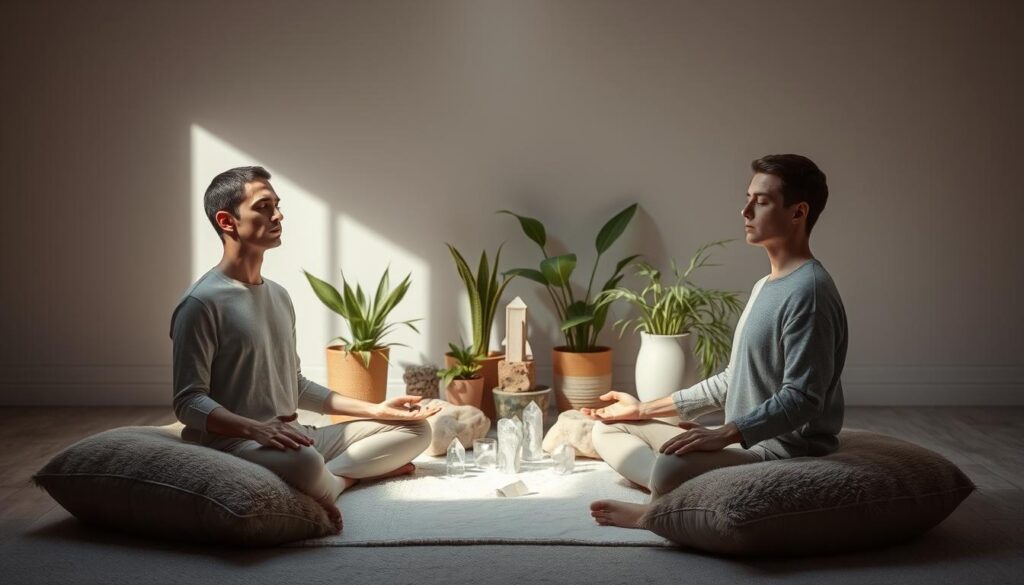
For related tools on building sustainable psychic skills, see psychic powers.
Clairsentience, Spirits, and the Unseen
A quiet sensitivity sometimes opens a window to the lives and emotions left behind in people and places.

Mediumship insights: sensing how someone lived, felt, or passed
In mediumship, subtle feeling may register a person’s temperament—tender, stubborn, anxious—or hints about how they passed.
These impressions are often short and sensory: a pressure in the chest, a sudden warmth, or a clear emotional tone.
Work gently: offer impressions as possibilities, not facts, and let recipients confirm resonance.
Energetic footprints: when a place feels heavy or “haunted”
Events can leave an energetic imprint that makes a room or whole building feel dense or unsettled.
Sensations like a chill, tingles, or a drop in temperature are prompts to pause, breathe, and observe safely.
- Ground and shield before entering locations with intense histories.
- Aftercare: wash hands, take a brisk walk, or stretch to clear residual energy.
- Never impose interpretations; share impressions gently and invite feedback.
- If something feels off, trust your body and leave—curiosity with caution is wise.
“Compassion for yourself and others must guide work with the unseen.”
Document brief notes about each encounter to build discernment and avoid sensationalizing your experiences.
Remember: clairsentience can inform care, not replace consent. Keep your wellbeing first as you explore this quieter side of the world.
Clairsentience Among the Psychic Abilities
Sometimes your inner senses act like a small team, each bringing a different clue to the same moment.
Clairvoyance may show an image, clairaudience a phrase, and clairsentience offers a clear feeling that ties them together. Together these psychic abilities give richer context than any single channel alone.
Often you just know before the mind labels the idea. That initial felt download gives raw information. Later, the mind organizes details into a story you can act on.

How they work in practice
- One sense can start the message; others validate it by adding color, sound, or body cues.
- Check across senses: did you feel calm, see a color, or hear a word? Triangulate for clarity.
- Record short sessions to spot which abilities favor you and how they combine.
- Use intuition practically: test impressions, act gently, and share impressions ethically.
“Rely on inner-accordance, not only the mind, to know what feels true.”
With steady practice, one reliable channel strengthens the rest. Expect trial and error as you build trust in your way of receiving insight.
For structured training that helps refine multiple channels, consider a professional path like how to become a professional psychic.
Developing Your Clairsentient Abilities: Practices and Exercises
Simple, repeatable exercises help sharpen how you sense people, places, and subtle shifts. Start small and track progress so your trust grows with evidence.

Meditation and filtering external energy
Begin with 5–10 minutes of quiet breathing. Notice sensations in the body and label them without judgment.
This practice creates a buffer between your field and someone else’s, letting you test impressions later.
Grounding and presence
Stand barefoot on grass or imagine roots to the earth. This anchors your energy and calms nervous tension.
Do this for a minute after busy interactions to reset and restore clarity.
Shielding before crowds
Visualize a soft protective light around you. Adjust brightness so you stay open but not overwhelmed.
This simple shield helps you remain compassionate from the heart while staying safe.
Psychometry and photo exercises
Hold an unfamiliar object and note temperatures, images, or moods. Jot impressions then ask the owner to confirm.
Practice photo reads by studying a person’s eyes briefly, noting emotional tones, then comparing later.
Nature time and supportive crystals
Walk in a forest, sit by water, or watch mountains to reset sensory overload. Nature deepens your connection and calms the field.
Use fluorite for focus, amethyst for calm, rose quartz for compassion, and amber for warmth during meditation or journaling.
| Practice | How to do it | Quick benefit |
|---|---|---|
| Meditation | 5–10 minutes breathing, notice bodily sensations | Centers attention; filters external energy |
| Grounding | Bare feet on earth or root visualization | Stabilizes the body and nervous system |
| Shielding | Visualize protective light before crowds | Buffers excess input while remaining open |
| Psychometry & Photo Reads | Handle objects; observe eyes in photos briefly | Sharpens accuracy and validation skills |
| Nature & Crystals | Walks in nature; crystals during meditation | Restores clarity and compassion |
Daily habit: Keep a simple log of what you sensed, when, and any later confirmations. This practice builds trust in your clairsentient abilities over time.
For ways to expand visual practice and psychic vision, consider exploring guided clairvoyant exercises.
Ethics, Boundaries, and Self‑Care for Clairsentients
Holding compassion and boundaries together keeps both you and others safe. When you work with subtle impressions, ethics guide how you share and how you rest afterward.

Consent, compassion, and the responsibility of a clear feeling
Lead with consent. Ask if someone wants feedback before sharing impressions and respect privacy when others disclose sensitive details.
Use gentle language: frame insights as possibilities, not verdicts, to honor dignity and build trust.
- Set time limits so helping others doesn’t take your whole day.
- Treat your gift as a responsibility—offer help without overstepping.
Release practices: letting go after helping others
After intense support, use a quick ritual to return what isn’t yours.
Visualize handing emotions others back to their rightful owners with love, or repeat a short mantra like “Return to sender, with love.”
- Journal a line about the session, then close the page physically.
- Hydrate, move your body, or step outside for fresh air.
Creative outlets and sound to reset
Make time for art, sketching, or writing to process impressions and protect your self.
Use sound hygiene: brief Tibetan singing bowl tones or a harmonium can clear energy and restore calm.
“Offer care without consuming your capacity; track how support roles affect you and adjust.”
For more on signs that relate to this way of working and to explore how your ability feel develops, see discover your hidden gifts.
clairsentience Resources in the United States
Practical supports—groups, courses, and guided retreats—make developing subtle awareness easier and safer. Use local and online options to build skills, find steady people, and protect your energy.

Journaling circles, meditation groups, and supportive communities
Look for small journaling circles and meditation meetups where members share short practices and feedback. These groups create a reliable connection and reduce isolation.
Seek nature-based meetups like forest bathing and sunrise hikes to practice sensing in open space. A quick walk in the woods or on the beach helps you reset in a busy day.
Courses and digital grimoires for continued study and practice
Consider online options that pair structure with play. Hand delivered witchcraft offers a U.S. subscription for $32.99/month that includes one self‑paced course (listed value $50) and access to the Mystic Grimoire, a modern take on a correspondence-style resource.
Also look for weekend workshops, peer pods, and hybrid retreats that combine breathwork, journaling, and grounded practice to strengthen your abilities.
| Practice type | What it offers | Cost / Notes |
|---|---|---|
| Journaling circle | Peer check-ins, short reads, accountability | Often free or donation-based |
| Nature meetups | Forest bathing, beach walks, grounding practice | Low cost; schedule by time or season |
| Online subscription | Monthly course + Mystic Grimoire access | $32.99/month (U.S.), course value $50 |
| Weekend workshop | Live feedback on shielding and grounding | Varies; good for real-time practice |
- Join forums focused on the gift clairsentience to share notes and speed learning.
- Try short daily challenges—three-minute resets between meetings—to make practice practical for busy people.
- Rotate resources each season so your toolkit stays fresh and aligned with the world around you.
Conclusion
A simple daily check‑in with your sensations helps turn sensitivity into steady skill.
Clairsentience is an innate, learnable way to read energy and emotions so you can make kinder, clearer choices in life.
Pick one small practice this week—a five‑minute breath break or a short nature walk—and notice how your feelings shift. Track one person interaction daily to compare sensations, words, and space.
Trust the heart and body working with the mind; repeated calm feelings often point you toward healthier experiences with others. Honor consent, share impressions lightly, and treat sensitivity as a strength.
Join a supportive group when you can—practicing with clairsentients makes learning faster and more fun. Even one small shift today can help you feel others less and feel yourself more.
FAQ
What does it mean to be clairsentient?
It’s the gift of sensing energy and emotions in the world around you. You may pick up on other people’s feelings, the vibe of a room, or subtle shifts in a place’s atmosphere. These impressions come as bodily sensations, gut feelings, or an inner knowing rather than words or images.
How is clairsentience different from the five senses?
This ability works beyond sight, sound, smell, taste, and touch. Instead of physical perception, you receive information through feelings in the body and heart. Think of it as an inner radar that reads emotional tone, intention, and energetic traces across people and spaces.
How can I tell if I’m feeling my own emotions or someone else’s?
Look for patterns. If you routinely pick up feelings in certain places or after talking with specific people, you may be absorbing others’ energy. Journaling daily sensations and triggers helps you separate personal mood from external influence and build boundaries.
Why do crowds leave me drained?
Crowds mix many energies and emotions. If you’re sensitive, you may unconsciously absorb those sensations—tension, excitement, sadness—leaving you tired. Grounding and shielding techniques can reduce overwhelm and restore your energy.
What physical sensations should I pay attention to?
Notice tightness, tingles, shifts in temperature, or fluttering in the chest and stomach. Those bodily signals often act as data—clues about someone else’s mood, a place’s history, or even impressions of time and events.
Can clairsentients sense spirits or the past in a place?
Yes. Sensitive people often pick up energetic footprints—memories, emotions, or presence left behind. That may feel like a heaviness, a distinct emotion tied to a location, or glimpses of how someone lived or passed.
How do clairsentience and other psychic skills work together?
These abilities often blend. Clairvoyance provides images, clairaudience offers sounds or words, and clairsentience supplies feelings and sensations. Together they create a fuller intuitive picture when you “just know” something without logical proof.
What daily practices sharpen this sense without causing overwhelm?
Short meditations, mindful grounding (bare feet on grass or a visualization), and brief shielding visualizations before busy events help. Also balance heart awareness with practical boundaries and take nature breaks to reset.
How can I protect myself while still using this gift compassionately?
Use consent and clear intention. Ask permission internally before tuning in, visualize a protective light, and release energy after interactions. Creative outlets and healing sounds like singing bowls help clear residual feelings.
Are there tools that support development—like crystals or exercises?
Yes. Crystals such as rose quartz, amethyst, fluorite, and amber can aid clarity and grounding. Exercises include psychometry (sensing objects), photo exercises to practice reading emotions, and nature time in forests or near water to deepen connection.
How do I read the vibe of a room or workspace to make better decisions?
Pause and tune into your body for an instant impression: tightness, warmth, or calm. Use that data with observation—clutter, lighting, and noise affect energy. Small changes like decluttering or calming décor can shift the atmosphere and support clearer choices.
Where can I find supportive communities and training in the United States?
Look for local journaling circles, meditation groups, and intentional communities focused on intuitive work. Many spiritual centers and online courses—offered by reputable teachers and organizations—provide practical tools, continuing study, and peer support.