
The debate has followed this practice into the modern world. Some people treat readings as stage fun, while others rely on them for honest reflection and guidance.
At its heart, this method works like a mirror. It highlights present energies and suggests likely outcomes rather than fixed forecasts. Accuracy often shows up as resonance — how well a spread fits a question, the reader’s intuition, timing, and the querent’s openness.
The Rider‑Waite deck, created in 1910 by Pamela Colman Smith and A. E. Waite, made imagery easier to read and helped interpretation land for many people. Psychological ideas like projection and Jung’s synchronicity also explain why readings can feel true.
This article will explore how a reading differs from fortune‑telling, the roles of reader and querent, and practical steps to get clearer guidance. For a deeper look at practice and skill-building, see Eight of Pentacles.
Key Takeaways
- Readings are best seen as tools for clarity and present guidance.
- Accuracy is measured by resonance, not scientific proof.
- Deck imagery, like Rider‑Waite, helps interpretation land.
- Psychology explains why sessions can feel meaningful.
- You can improve outcomes by asking clear questions.
The debate today: entertainment, insight, or something in between?
Contemporary perspectives stretch from casual fun to a method that highlights current life patterns.
Some people treat readings as a parlor game—a social way to spark conversation. Others seek clear answers and use the practice as a decision-making tool.
Most professional readers, however, frame a reading as a present-focused diagnostic. They map patterns unfolding now and suggest the likely way things may move forward, rather than promise fixed predictions.
“Run insights past your own intuition and use them as prompts, not mandates.”
People are drawn to the mystical power of a symbolic universe, while others prefer a psychological lens that credits the mind for meaning-making. Both views can coexist.
- Skill of the reader and the quality of questions shape whether a session feels playful or practical.
- Career and life decisions often benefit from actionable guidance more than yes/no forecasts.
- State your preferred form—light, exploratory, or deep—and set honest expectations up front.
Open dialogue with the reader aligns the session to your needs and helps a reading land as either entertainment or a useful tool.
Are tarot cards real? Defining “real” in the context of guidance vs. prediction
Questions about authenticity often mean different things. Some ask if a reading predicts fixed events. Others ask whether it offers useful guidance for decisions.
Here, “real” is best read as practical value. A session feels real when its language maps to a person’s life and helps them act with more clarity. That usefulness is what many readers call accuracy.
What “accuracy” means for readings: resonance, clarity, and likely outcomes
Accuracy in this setting measures how much a reading resonates and leads to clearer choices. If a querent feels seen and can use the insight, the session succeeded.
- Focused questions and a clear intention sharpen specifics.
- Predictions describe likely paths based on present energies, not fixed events.
- Timing matters: readings capture a moment and can shift as life changes.
“A reading is a snapshot of possibilities, not a final verdict.”
Skeptics point to cold reading and vague statements. Thoughtful card readings backed by context and honest dialogue often land as meaningful guidance despite lacking lab-style proof.
| Measure | What it shows | Practical takeaway |
|---|---|---|
| Resonance | How true the message feels to the querent | Use insights that feel relevant to guide next steps |
| Clarity | Specific ideas or actions suggested | Ask focused questions to improve usefulness |
| Timing | Snapshot of current energies and influences | Revisit readings as situations change |
| Skepticism check | Possibility of generalized language or cold read | Look for context and examples that tie to real life |
Bottom line: Think of a reading as honest guidance and near-future foresight that supports better choices. For more on developing intuitive skill and vision, see exploring clairvoyant abilities.
How tarot works: symbols, intuition, and the role of the reader and querent
Meaning emerges from the mix of the reader’s skill, the querent’s openness, and focused questions. A session is an exchange: the reader interprets symbolic imagery while the querent supplies context and intent.
Intuition and interpretation: the reader, the querent, and the energetic exchange
The reader uses training and instinct to map symbolism to life situations. The querent brings background, choices, and emotional honesty.
When both engage openly, the connection deepens and messages gain usable meaning.
“A clear exchange beats mystique; honest context makes insight practical.”
Clarity of questions, timing, and context: improving guidance and outcomes
Better questions yield better guidance. Ask, “What can I do to move this forward?” rather than a yes/no fate query.
Timing matters: a reading captures a moment in time and can change after decisions or events.
Clarity boosters: journal your intent, state limits (budget, time), and name key people involved.
Decks and origins: from 15th‑century cards to the Rider‑Waite deck
European decks began as a 15th‑century game and later shifted to divinatory use. The Rider‑Waite deck (1910), illustrated by Pamela Colman Smith for A. E. Waite, added full images to the Minor Arcana and widened interpretive detail.
Choice of deck matters: pick a tarot deck whose imagery resonates with you to strengthen the reader–querent connection and the session’s clarity.
| Factor | What it affects | Practical tip |
|---|---|---|
| Reader skill | Interpretation depth | Choose a reader with clear method and examples |
| Querent context | Relevance of meanings | Share constraints and goals up front |
| Question quality | Actionable guidance | Ask how-to or next-step questions |
| Timing | Snapshot accuracy | Revisit readings after major decisions |
Prepare your questions, give honest context, and agree on focus with the reader to get clearer guidance. For tips on developing inner sight and practice, see how to get clairvoyance.
Psychology meets spirituality: why tarot feels accurate to many people
Psychology and spirit often meet where symbolic spreads prompt personal meaning.
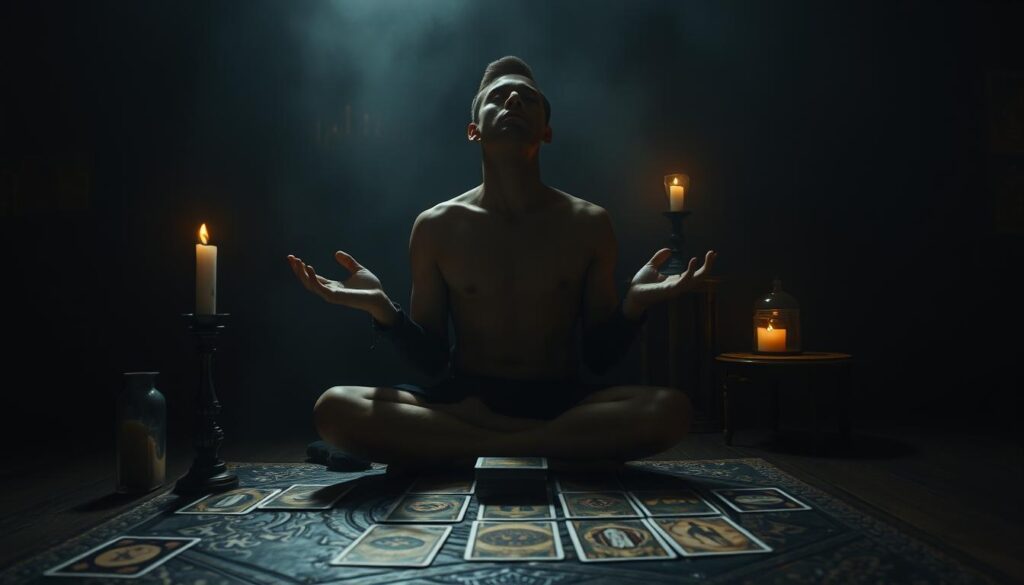
Projection and confirmation bias: the mind’s role
Projection makes symbols map to private stories. People spot links between images and events and then focus on matching details.
Confirmation bias nudges the mind to keep memories that fit the reading and forget the rest. That mix helps a session feel tailored.
Synchronicity and patterns
Jung named “meaningful coincidences” synchronicity. When timing, imagery, and life events align, many sense a bigger pattern or message from the universe.
Skepticism vs. lived experience
Critics point to cold reading and broad statements. Ethical practice asks readers to avoid fishing for facts.
Yet many people report clarity, motivation, and actionable insight after a session. That value can exist even if the explanation is psychological.
“Use a reading as a mirror: it reflects what you already know in new language.”
| Factor | What it explains | Action |
|---|---|---|
| Projection | Personal meanings map to images | Journal responses after the session |
| Synchronicity | Timing feels meaningful | Note coincidences and test them over time |
| Skepticism | Cold reading risk | Choose a transparent reader and ask for examples |
Where tarot adds value in modern life: love, career, and life path decisions
Many clients use a session to clarify relationship patterns, career priorities, and life goals. A focused spread reflects present dynamics, talents, and likely obstacles so you can make clearer choices.

Relationships, career moves, and life goals: using insights without rigid predictions
Readings illuminate communication and patterns in relationships without locking anyone into a fixed future. They surface dynamics you may not notice and suggest next steps to improve clarity and outcomes.
In career work, a session can highlight strengths, timing, and practical priorities. Use the messages to map small actions toward bigger goals and to test options before committing.
For life path decisions, spreads often align choices with values so short-term needs meet long-term meaning. One card pulled with a clear prompt can offer usable guidance; more cards add depth and nuance.
Getting better readings: ask focused questions, stay open, reflect after
- Start with one core question and two sub-questions to sharpen focus.
- Set a clear decision window — for example, next 3 months — to make advice actionable.
- Share context with the reader; honesty improves accuracy and relevance.
“Treat a reading as input, not instruction — you steer the path.”
After the session, journal insights, pick one or two next steps, and revisit the spread if conditions change. For guidance on developing skill and offering professional sessions, see how to become a paid psychic.
My editorial take: a reflective tool, not a fixed forecast
Think of readings as a sounding board that clarifies what you already feel and can do next.

This practice works best as a practical tool for reflection. Experienced readers stress the future shifts with new choices. A session sketches probabilities and highlights options, not guaranteed outcomes.
Accuracy should be judged by usefulness. If guidance helps a person choose a wiser path given limits and values, the session succeeded.
- Keep what resonates; leave what doesn’t.
- Sense‑check insights against your own intuition and priorities.
- Return to a reading only after something material changes, not to chase certainty.
Agency matters: the future responds to action. Use a reading to inform decisions, then make a plan and move.
Pick a reader and a deck that fit your style so a session feels natural and grounded. For a focused example on meaning and conflict, see Five of Swords.
“Treat a spread as a companion for clarity, never a crutch for choice.”
Conclusion
Conclusion: Use this practice as a practical mirror that offers insight and helps you act with clearer intent.
A good reading delivers clarity more than certainty. It shows likely outcomes and patterns, not fixed predictions, and keeps the future open to choice.
Choose questions that match your goals and timeline to shape useful guidance for life, career, or relationships. Pick a deck that speaks to you and work with a trusted tarot reader for a collaborative session, or try a quick DIY pull for private reflection.
Try one small action now: journal a focused prompt, pull a single card, and spend five minutes noting insights. The truest measure of accuracy is whether the guidance helps you move forward today.
FAQ
Are tarot cards real or just for entertainment?
People use tarot for many reasons: some see it as a spiritual guidance tool, others treat readings as a way to reflect and make decisions, and some view it purely as entertainment. A reading can offer perspective and clarity without claiming absolute predictions.
The debate today: entertainment, insight, or something in between?
The discussion centers on whether readings provide genuine guidance or rely on storytelling and suggestion. For many, readings sit between entertainment and insight — they spark reflection, highlight options, and help people explore feelings and choices.
Are tarot cards real? How do we define “real” in guidance versus prediction?
If “real” means a fixed forecast of events, readings rarely meet that standard. If it means a useful framework for thinking about life, then yes: a spread can reveal patterns, prompt questions, and help shape decisions in meaningful ways.
What does “accuracy” mean for tarot readings: resonance, clarity, and likely outcomes?
Accuracy often means the reading resonates with the querent’s situation and offers clear, relevant options. Readings can suggest likely outcomes based on current paths, but they aren’t guarantees — they work best as part of a reflective process.
How does the process work: symbols, intuition, and the reader’s role?
A deck uses archetypal images and symbols that tap intuition. The reader interprets those symbols while listening to the querent. That exchange — card meaning plus personal context — creates insights that feel relevant and actionable.
What role do intuition and interpretation play between reader and querent?
Intuition guides interpretation, helping the reader connect imagery to the querent’s life. The querent’s responses and energy shape the reading, making it a collaborative reflection rather than a one-way prediction.
How can clarity of questions, timing, and context improve guidance and outcomes?
Focused questions yield clearer answers. Good timing and context help a reader frame a spread effectively. Preparing specific concerns and being open to reflection improves the value and usefulness of any session.
Where did modern decks come from, and what about the Rider‑Waite deck?
Playing cards with symbolic images date back to the 15th century. The Rider‑Waite deck, published in 1909, popularized modern imagery and narrative-driven meanings used widely by readers today.
Why does tarot feel accurate to so many people?
Several factors create that sense: projection of personal meaning onto symbols, confirmation bias, and genuine moments of insight. The format encourages storytelling that often matches a querent’s internal state.
How do projection and confirmation bias shape reading experiences?
People naturally seek patterns and affirming details. During a reading, they may emphasize hits and discount misses. That selective attention makes readings feel more precise than they objectively are.
What is synchronicity and how does it relate to meaningful coincidences in readings?
Synchronicity describes meaningful coincidences that feel more than chance. In readings, symbolic cards appearing at pivotal moments can feel synchronistic, reinforcing a sense that events and insight align.
What do skeptics say versus those with lived reading experiences?
Skeptics point to cold reading, suggestion, and chance as explanations. People with positive experiences value the clarity, emotional support, and decisions a session inspired. Both views offer useful perspective.
Where does this practice add value in modern life: relationships, career, and life path?
It helps people weigh options, explore motives, and clarify priorities in love, work, and goals. Drawn cards can frame questions, reveal blind spots, and suggest paths without dictating choices.
How can I get better readings: questions, openness, and reflection tips?
Ask focused, specific questions. Approach a session openly but critically. After a reading, reflect, take notes, and watch how insights play out. That practice turns a single session into ongoing guidance.
Is this a fixed forecast or a reflective tool?
Most experienced readers and thoughtful clients treat readings as reflective tools. They offer guidance and highlight tendencies, but they leave room for free will, change, and new information.