

In 1972, two physicists began a formal program at the Stanford Research Institute to test a bold idea.
They asked whether people could perceive distant places without known senses. The project aimed to see if such perceptions could yield usable information for U.S. intelligence during the Cold War.
Researchers defined the skill as the ability of a participant to describe details about faraway sites under controlled conditions.
Over the 1970s the team ran systematic trials to check accuracy and repeatability. Their work later drew wide interest when the CIA released 270 pages of documents in 1995.
This article will explore the methods, operational claims, and scientific implications of that pioneering effort. Expect clear examples, historical context, and an assessment of what the experiments revealed.
Key Takeaways
- The program began in 1972 to test anomalous perception under lab conditions.
- Its goal was to determine if distant perception could support intelligence work.
- Researchers framed the task as descriptive viewing of faraway locations.
- The CIA later declassified key documents, raising public interest.
- This section previews methods, results, and scientific debate from the era.
Origins of the Stanford Research Institute Program
In 1972 a discreet program launched at the Stanford Research Institute in Menlo Park to test whether people could sense far-off locations. The effort began under the direction of Harold Puthoff and aimed to move anecdote into careful, repeatable work.
Initial interest grew from reports that the Soviet Union funded parapsychology projects. U.S. intelligence worried such efforts might yield an advantage, so the CIA became the main sponsor.
The team set up a quiet, low-profile lab to protect sensitive tests. What started as pilot sessions expanded into a multi‑year program with significant government funding.
- 1972 start: Formal program at stanford research institute in Menlo Park.
- Security: Experiments ran under strict, classified conditions.
- Scale up: Pilot work grew into a long-term, well-funded research project.
For more background on early protocols and later reports, see related remote viewing program details at this overview.
The Role of Ingo Swann in Early Research
A New York artist named Ingo Swann sparked the earliest lab work by urging scientists to test psychic claims with controlled methods. His background in psychokinesis at City College of New York under Gertrude Schmeidler gave him practical experience that fed scientific curiosity.
Swann visited the stanford research team in June 1972 and offered a live demonstration. That demo showed the group how a trained person could attempt to describe distant targets. It moved the topic from anecdote to testable procedure.

The Influence of Cleve Backster
Cleve Backster, also from New York, had measured plant electrical responses. His findings inspired questions about whether life signs could link to perception. That influence shaped early protocols for experimental viewing.
Together, Swann and Backster helped define the first formal experiment steps. Their early work set the tone for later research and sparked lasting interest in systematic testing.
Understanding the Methodology of Remote Viewing
The research team built strict protocols so that neither the subject nor the experimenter knew the target during a session.
Double-blind methods reduced bias by keeping all identifying information hidden. An agent traveled to the target site and acted as a beacon while the subject produced a description back at the lab.

Sessions emphasized quiet reflection and time for the subject to focus. Researchers recorded impressions, sketches, and verbal notes before any comparison to the actual site.
Advanced statistical methods quantified how closely each description matched the target. Standardized questionnaires then scored specific features such as layout, materials, and prominent details.
- Controlled environment: Subjects had no prior knowledge of the target.
- Systematic recording: Descriptions were logged before verification.
- Quantified scoring: Math tools evaluated hit rates and information value.
The methodology aimed to make the experiment reproducible and defensible. For related protocol background, see a detailed account at Hal Puthoff’s procedures overview.
Russell Targ and Harold Puthoff Remote Viewing Studies
An expert in laser physics joined the lab to help quantify anomalous human perception under strict conditions. This partnership expanded the scope of the program at stanford research.
The team ran controlled laboratory experiments that tested how well participants could describe distant targets. They varied settings and protocols to probe limits of human perception.
Work from the collaboration led to peer‑reviewed papers that reported statistically significant results. Those publications helped move the topic from anecdote into formal scientific inquiry.
“The experiments showed reproducible effects under double‑blind conditions, prompting deeper research into anomalous cognition.”
- Two physicists led rigorous testing and scoring methods.
- The lab produced repeatable protocols for descriptive viewing.
- Publication of findings sought validation within the scientific community.
Overall, this body of work provided foundational evidence that careful methods could replicate certain observational hits. It set the tone for later experiments and operational evaluation.
Laboratory Investigations and Zener Card Experiments
Early laboratory work traded simple card tests for richer visual targets to probe odd perception claims. J.B. Rhine at Duke popularized the Zener card set to measure hits in the 1930s and 1940s.
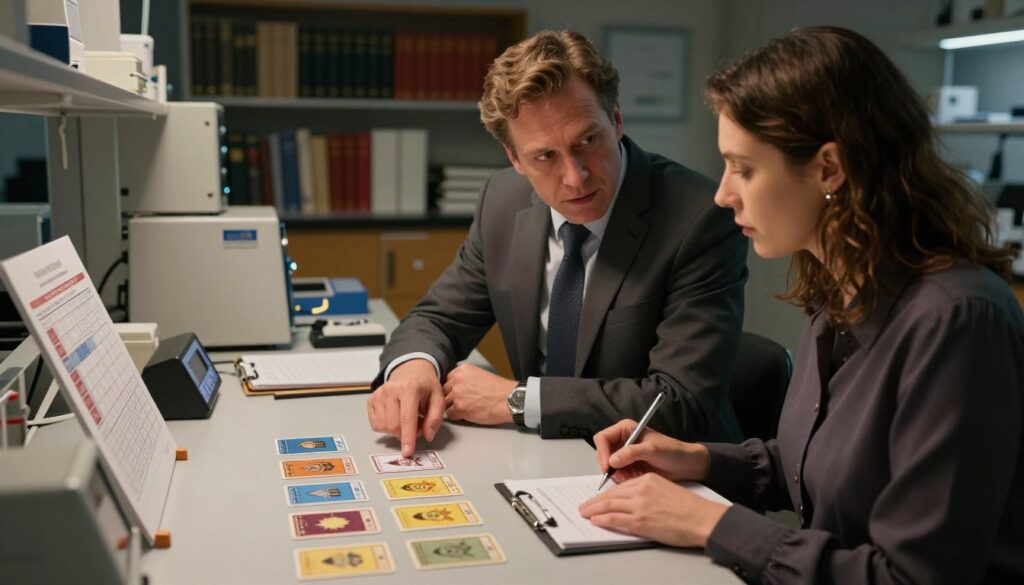
The classic set had five symbols: a square, circle, star, plus sign, and wavy pattern. Labs used these cards to record hit rates and measure statistical significance.
Zener Card Limitations
Researchers found the cards too narrow to capture complex descriptions. The simple symbols limited what a viewer could report.
To address this, teams in the New York and California area moved to richer targets, such as National Geographic pictures. These new targets gave fuller descriptions and clearer evidence for analysis.
Decline Effects
Investigators also noted decline effects: performance often fell with time as subjects grew bored or fatigued. That pattern pushed experimenters to change protocols and rotate subjects.
- Early tests: Zener cards measured basic hit rates.
- Evolution: Complex images replaced single-symbol sets.
- Controls: Experiments ran in shielded laboratory rooms to rule out EM influence.
For practical exercises and modern practice, see this basic protocol guide.
Transitioning to Natural Scene Targets
Researchers began using real sites—parks, plazas, and buildings—to better mirror intelligence needs.

The team sent a demarcation crew to each chosen location while the viewer stayed in the lab. This setup kept the lab blind and preserved test integrity.
Using whole scenes let evaluators judge structural detail, ambience, and sensory cues. Descriptions grew richer and easier to compare with actual sites.
Diverse locations tested whether participants could perceive complex, non-abstract environments. Parks, industrial yards, and campus buildings provided varied visual information.
- Natural scenes helped move experiments toward practical intelligence tasks.
- Each target offered unique cues for descriptive analysis.
- Accuracy of site descriptions became the key success metric.
| Feature | Purpose | Example |
|---|---|---|
| Natural scene | Qualitative assessment | City park with fountain |
| Demarcation team | Preserve blindness | Agent at target site |
| Success metric | Descriptive accuracy | Layout and landmarks |
The Significance of Coordinate Remote Viewing
Coordinate remote viewing—often called Scanate—gave participants only a latitude and longitude as a cue.
This method removed the need for a beacon person at the site. That change made the technique more flexible for intelligence use.
By supplying numeric coordinates alone, researchers tested whether a viewer could access factual details without any physical link to the location.

Early experiments were striking. Viewers produced maps, sketches, and written descriptions of sensitive government installations with notable accuracy.
“Coordinate sessions showed that numerical cues could elicit descriptive information about distant sites.”
- Coordinate remote viewing allowed targeting anywhere on Earth.
- It eliminated beacon influence and tightened experimental controls.
- Successful runs provided intelligence-grade information on otherwise inaccessible targets.
| Aspect | Advantage | Example Result |
|---|---|---|
| Coordinates-only cue | Removes human beacon | Accurate maps of secure facilities |
| Operational reach | Global targeting | Sites across continents |
| Experimental control | Reduces sensory contamination | Clearer scoring of hits |
Pat Price and the Rinconada Park Case Study
One session at Rinconada Park in 1974 became a touchstone for debates about time‑linked perception. The subject, Pat Price, described the Palo Alto pool complex in rich detail.
The description matched pools, ladders, and plant rooms the team later verified. Price also mentioned two large water tanks that did not exist at the site in 1974.
The Mystery of the Water Tanks
Researchers puzzled over the tanks for years. No modern survey or site plan showed them. That gap left the team with anomalous data in the results.
Twenty‑one years later a 1913 photograph surfaced. It confirmed the exact tanks at that location. This fact solved the long‑standing puzzle about the unexpected feature.
Retro Cognition
This case is a classic example of retro cognition, where a viewer appears to access past states of a site. Analysts considered whether the information came from collective memory, historical sources, or an alternative process.
“Pat Price was one of our most skilled subjects; his descriptions often contained surprising, verifiable detail.”
- Accuracy: Many site features matched historical and modern checks.
- Puzzle: The tanks were an unexpected historical hit.
- Analysis: The case strengthened interest in time‑linked data in experiments.
| Aspect | Observation | Implication |
|---|---|---|
| Target | Rinconada Park pool complex | Detailed match to layout |
| Unexpected detail | Two water tanks | Confirmed by 1913 photograph |
| Result type | Retro cognitive hit | Suggests access to past location data |
Investigating the Rings of Jupiter
A 1973 experiment turned its attention skyward, testing perception of Jupiter before the Pioneer 10 flyby.

Ingo Swann attempted to describe the planet as a blind target. He reported seeing a faint ring system, a detail that surprised lab staff.
The Pioneer 10 probe later confirmed faint rings around Jupiter. That confirmation made this session a striking example of how non‑terrestrial targets could be probed before spacecraft data arrived.
Why it mattered: the session showed the program could reach beyond earthly sites and produce verifiable results. The Jupiter case boosted scientific interest and sparked new experiments aimed at planets and moons.
| Year | Subject | Outcome |
|---|---|---|
| 1973 | Jupiter (planetary target) | Participant reported rings; later confirmed by Pioneer 10 |
| Significance | Example of space-based test | Expanded experimental scope |
| Impact | Program credibility | Prompted further planetary tests |
Operational Assignments at Semipalatinsk
In July 1974 a high‑profile mission asked a subject to describe the Semipalatinsk nuclear research center from the laboratory, using only coordinates as a cue.
The viewer produced detailed sketches and written descriptions of a large gantry crane and structural elements at the site. He also reported interior activity, notably the assembly of a large metal sphere.
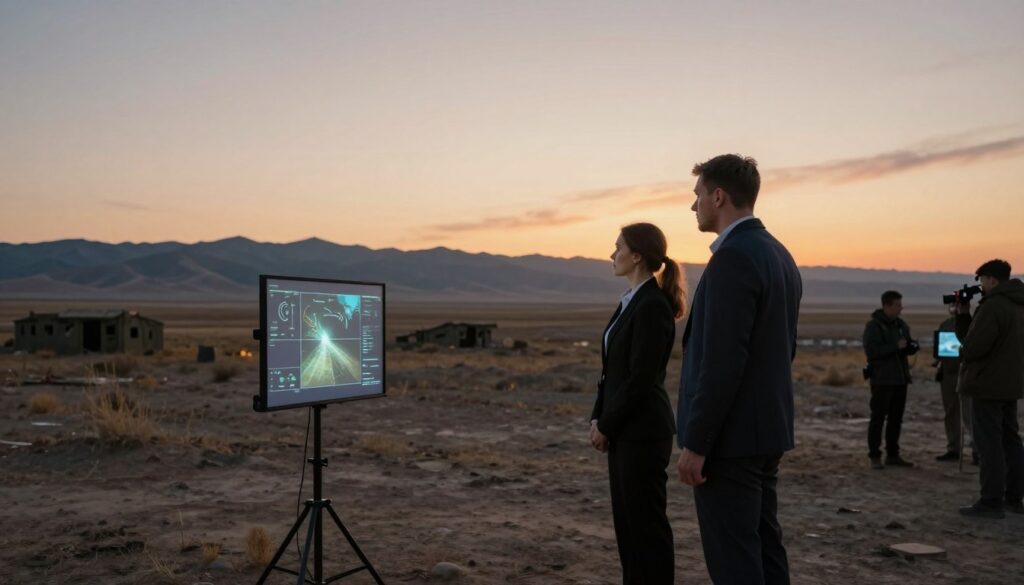
Satellite imagery later confirmed the crane and many site features, giving the CIA valuable information about a secure location. This success prompted further operational use by intelligence personnel during the Cold War.
“The Semipalatinsk assignment became a benchmark example of applying laboratory tests to real‑world intelligence targets.”
- Example: Coordinates were provided; the subject described the target in detail.
- Evaluation: Independent imagery verified many of the descriptions and data.
- Impact: The results led to more tests and operational assignments using similar protocols.
For procedural background and field use, see a related overview at Hal Puthoff’s page.
Precognitive Successes in Intelligence Gathering
One of the program’s most striking operational wins came when a viewer foresaw a major Soviet naval construction months before satellites confirmed it. That event helped keep agency interest alive through the 1980s.
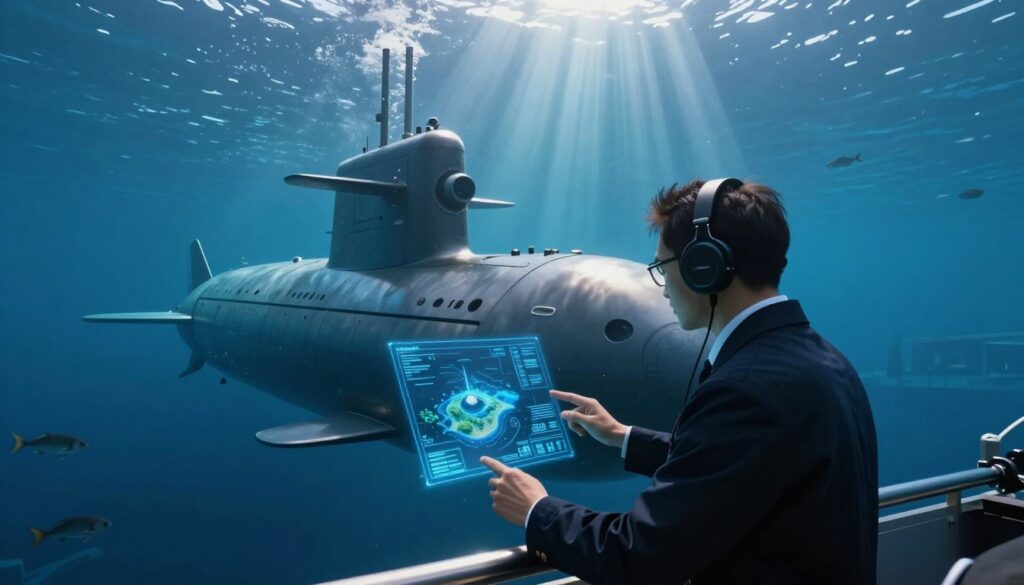
The Soviet Submarine Prediction
In 1979 a subject named Joe McMoneagle produced an extraordinary description of a new Soviet submarine. The viewer reported the vessel’s large size, multiple missile tubes, and an artificial channel built to launch it.
His description arrived months before reconnaissance photos. When imagery later matched the details, intelligence personnel treated the report as valuable early information.
Why it mattered: the precognitive result showed that a trained subject could supply actionable target data ahead of conventional sensors. The case remains a key example of how remote viewing could complement other collection channels.
“The submarine prediction is a striking example of operational precognition that yielded verifiable results.”
- Example of predicting future activity at a specific site.
- Verified by satellite imagery months later.
- Helped sustain program funding and tasking into the 1980s.
The Role of Shielding and Environmental Controls
To eliminate ordinary explanations, the lab wrapped sessions in physical and procedural barriers that blocked known signals.
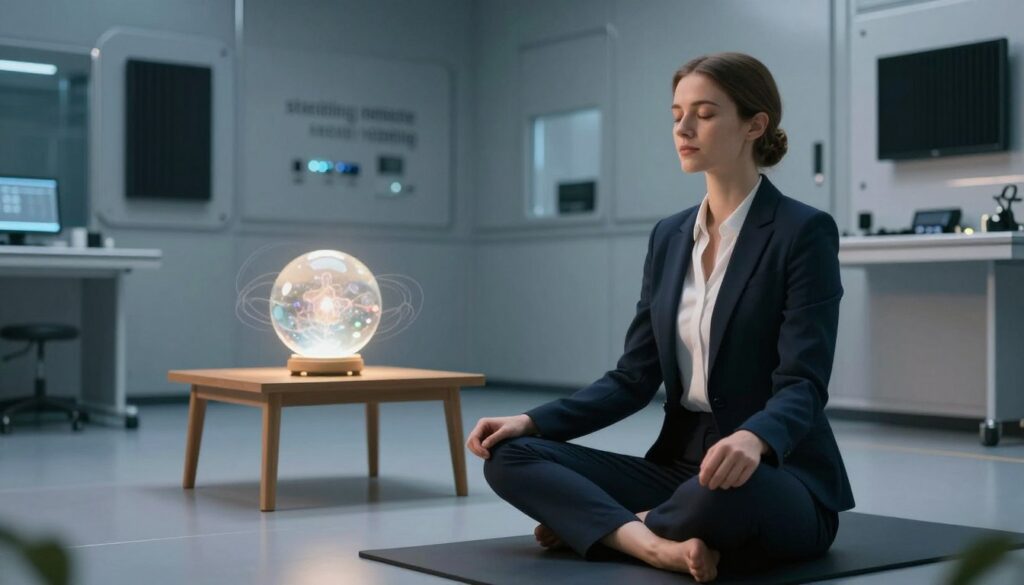
Faraday cages, metal screens, and isolated chambers kept electromagnetic noise out of the test area. These measures helped ensure that any information a subject produced could not come from radios, phones, or stray sensors.
Experimenters also controlled lighting, sound, and human traffic. Quiet protocols and timed routines reduced distractions and kept focus on the target channel.
These environmental controls were essential to rule out conventional causes. Despite strict shielding, the remote viewing effect persisted across multiple experiments.
- Shielding prevented EM interference and helped validate results.
- Isolation limited sensory cues and preserved test integrity.
- Refining controls over time ensured more consistent data in each test area.
“The persistence of the effect under tight controls suggested the phenomena did not rely on known energetic transmissions.”
Continuous improvement of protocols kept the experiment rigorous. By isolating the subject from ordinary channels, researchers strengthened the claim that gathered data reflected an anomalous process worthy of further study.
Analyzing the Accuracy of Psychic Spying
Accuracy checks compared a subject’s sketches and notes to the actual features found at the site.
Investigators tallied matches for layout, materials, and distinctive landmarks to form a clear score.
Mathematical tools such as fuzzy set analysis helped quantify how reliable each remote viewer’s data was.
This scoring turned qualitative descriptions into numbers that could be tested for statistical significance.
Star performers emerged — a few individuals consistently produced high-quality descriptions of many targets.
Personnel prioritized those subjects for operational assignments where actionable information mattered most.
The team also noted important variation: some subjects did well only on certain targets, and shielding or channel controls sometimes affected results.
This variability drove ongoing protocol refinement and deeper statistical analysis.
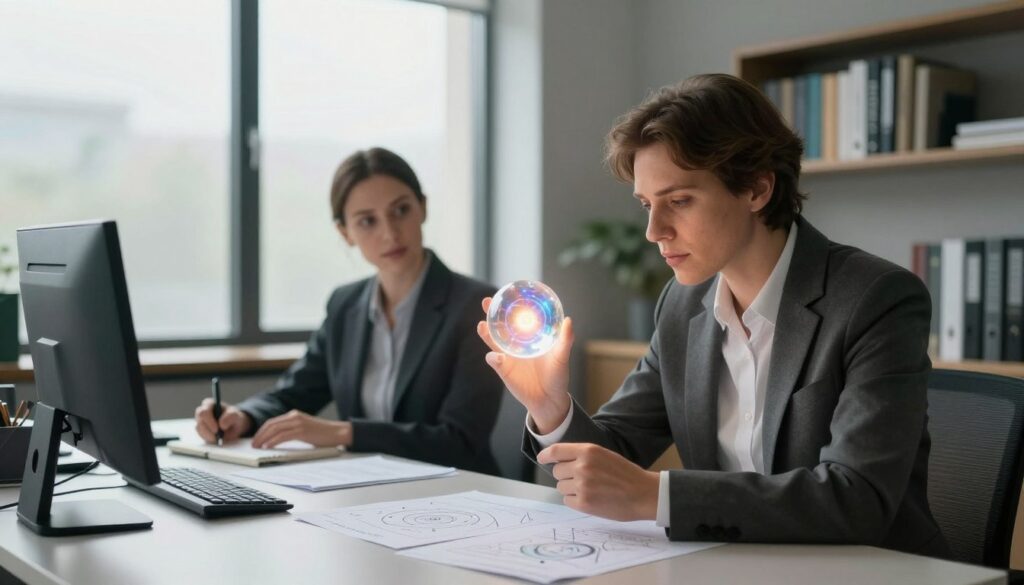
“The evaluation methods turned impressions into measurable outcomes, giving analysts a clearer point of comparison.”
- Rigorous evaluation: Ground-truth comparison ensured fair assessment.
- Quantified scoring: Math tools made trends and outliers visible.
- Operational focus: Reliable subjects were selected for critical tasks.
| Feature | Method | Practical Use |
|---|---|---|
| Descriptive match | Side-by-side comparison | Determines hit rate for each description |
| Statistical scoring | Fuzzy set analysis | Measures reliability across experiments |
| Subject selection | Performance ranking | Assigns personnel to high-value targets |
| Protocol tuning | Control of shielding and channel | Reduces false positives and sensory leakage |
For practitioners who want a deeper overview of training and assessment methods, see a related guide on operational psionics evaluation.
Scientific Skepticism and Peer Review
Skeptics argued the reports fell short of standard scientific rigor. The program faced steady doubt from many academics who saw the claims as extraordinary and in need of clearer proof.
In response, the team published methods and data in peer‑reviewed journals such as Nature and the Proceedings of the IEEE. That step let other scientists examine the protocols, the role of the subject, and how information was scored during experiments.
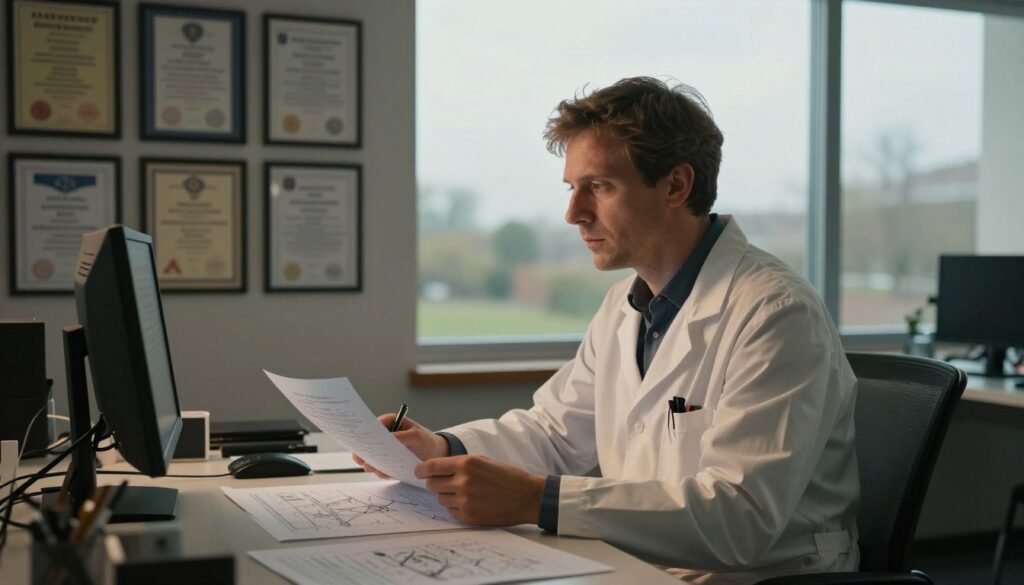
Despite controversy, multiple runs produced data that proponents called supporting evidence for anomalous cognition. Critics pointed to possible flaws. Supporters refined controls, tightened scoring, and repeated trials to address those concerns.
“The choice to publish and defend methods in peer review was essential to moving the discussion beyond anecdote.”
| Criticism | Research Response | Effect on Program |
|---|---|---|
| Insufficient controls | Introduced double‑blind protocols | Improved experimental credibility |
| Statistical questions | Applied advanced scoring and analysis | Clearer metrics for results |
| Reproducibility concerns | Published methods and replications | Ongoing debate; more studies launched |
| Perceived bias | Independent reviews and external reviewers | Stronger defense in scientific forums |
Ultimately, peer review did not end the debate. It did, however, raise the bar for future work and sustain scientific interest in these phenomena. The program’s commitment to rigorous research helped create a record that later teams could test and build on.
Philosophical Implications of Nonlocal Consciousness
The experimental record forced a fresh look at what mind might be. Evidence from lab sessions suggested that awareness can access information beyond ordinary senses. This idea challenges common views of space and time.

Some researchers argued that this phenomena points to a nonlocal model of consciousness. That view echoes ancient traditions that describe an interconnected whole across place and era.
The claim raises big questions about causality, free will, and how facts appear in our minds. Proponents like russell targ suggested the practice is a way to quiet thought and receive useful data from afar.
“Viewing consciousness as nonlocal offers a new light on puzzling experimental hits.”
- It suggests human awareness may be wider than the brain.
- It links scientific results to long-standing spiritual ideas.
- It reframes anomalies as part of a coherent, testable point of view.
For procedural context behind these ideas, see the Hal Puthoff overview. Understanding these implications helps put the program’s findings in a broader part of intellectual history.
Conclusion
Careful experiments at a small research lab produced data that challenged conventional views of perception. The program combined lab protocols and field tasks to test whether a trained subject could report details about a distant target site.
The published results showed repeatable hits that provided useful information for intelligence work. Some operational cases yielded timely data about military sites and construction in contested areas.
Skepticism remains, yet the body of research spans decades and invites further study into how a viewer accesses facts beyond ordinary senses. For a compact profile of a key participant, see the psychic warrior profile.
FAQ
What were the main goals of Russell Targ and Harold Puthoff’s research at the Stanford Research Institute?
They aimed to test whether trained individuals could describe distant or hidden targets without sensory contact, using controlled protocols to evaluate accuracy and repeatability. The work sought practical applications for intelligence and scientific exploration while probing claims about human perception beyond the senses.
How did the Stanford Research Institute program get started?
The program began in the early 1970s with funding and interest from government and private sponsors. Investigators built protocols, recruited subjects, and designed experiments to move beyond anecdote. Institutional support allowed systematic testing in laboratory and field settings.
What role did Ingo Swann play in early experiments?
Ingo Swann provided much of the initial stimulus for the project by producing detailed target descriptions in early trials. His performance helped shape experimental protocols, including the move toward natural-scene targets and procedures that later became known as coordinate remote viewing.
How did Cleve Backster influence the research?
Cleve Backster, known for his work with polygraph-like plant responses, inspired interest in subtle biological and informational signals. His ideas encouraged investigators to explore nontraditional measures and to consider broader hypotheses about consciousness and information transfer.
What methodology did investigators use to evaluate results?
Teams used blind target selection, controlled shielding, independent judging, and scoring methods to limit sensory leakage and bias. They compared descriptions to target photos or site reports and applied statistical tests to assess significance versus chance.
Were Zener cards part of the research, and what were their limits?
Early lab work included Zener card-style tests to establish basic effects. These had clear limitations: high susceptibility to sensory cues, small information content, and rapid decline in performance when subjects adapted or expected patterns. Researchers shifted toward richer targets for more meaningful data.
What is meant by decline effects in these experiments?
Decline effects describe drops in performance over repeated runs, possibly due to learning, fatigue, or experimenter–subject dynamics. Teams adjusted protocols, varied targets, and introduced rest periods to mitigate declines and better isolate genuine signal from artifact.
Why did researchers transition to natural scene targets?
Natural scenes—photographs of landscapes, buildings, or geographic sites—offer richer, multi-faceted information that reduces guessing and provides clearer criteria for judging accuracy. They improved ecological validity and helped align findings with real-world tasks.
What is coordinate-based viewing and why did it matter?
Coordinate viewing asked subjects to describe a location identified only by coordinates or a number. This approach reduced cueing, standardized sessions, and produced surprisingly detailed site descriptions. It became central to operational testing and training programs.
Who was Pat Price and what happened at Rinconada Park?
Pat Price was a prominent subject who produced detailed descriptions of distant sites. In the Rinconada Park case, his session yielded accurate statements about structures and features at a target location, drawing attention from researchers and sponsors and sparking both interest and controversy.
What was the mystery of the water tanks in Price’s reports?
Price described what he perceived as large, cylindrical containers near a target. Follow-up checks found structures that partly matched his descriptions, raising debate about coincidence, interpretation, and the degree of matching needed to claim success.
Did investigators study retrocognition in this program?
Yes. Some tests asked viewers to describe past events at a site rather than present conditions. Results were mixed, with some striking hits and many ambiguous cases, prompting continued discussion about methodology and interpretation.
How did the team investigate planetary targets such as the rings of Jupiter?
Researchers ran controlled sessions asking subjects to describe features of distant planetary phenomena using only remote tasking. Responses were compared to telescopic and probe images. These trials explored whether perception extended beyond Earth and challenged conventional mechanisms.
What were operational assignments like at Semipalatinsk?
Some programs adapted viewing techniques to support intelligence or monitoring tasks at strategic sites, including remote test ranges. Assignments aimed to gather structural or activity-related data where direct access was limited, evaluating practical utility under real-world constraints.
Were there any notable precognitive claims, such as the Soviet submarine prediction?
Investigators reported isolated cases where viewers gave information later interpreted as precognitive, including claims about foreign assets. Such instances received scrutiny; critics pointed to hindsight bias and selective reporting while proponents argued for further controlled research.
How did researchers control for shielding and environmental factors?
Teams used sensory isolation, Faraday cages, audio masking, and double-blind procedures to block conventional cues. They logged environmental variables and rotated personnel to reduce inadvertent signaling and ensure that recorded results reflected the protocol rather than outside interference.
How accurate were the spying-style sessions overall?
Accuracy varied widely across subjects, sessions, and target types. Some viewers produced highly specific, verifiable details; many trials produced ambiguous or incorrect data. Statistical analyses suggested small but sometimes significant effects, but consistency and practical reliability remained debated.
What were the main scientific criticisms and how did peer review respond?
Critics raised concerns about inadequate controls, potential sensory leakage, small sample sizes, and confirmatory adjudication. Some peer-reviewed journals published critical analyses and replications with null results. Supporters responded with improved protocols and transparent scoring to address these issues.
What philosophical questions did the findings raise about nonlocal consciousness?
Results prompted discussion about whether consciousness can access information nonlocally, the nature of information transfer, and the limits of materialist explanations. These debates touched on neuroscience, physics, and philosophy of mind, inviting interdisciplinary inquiry.