

Stanford Research Institute shaped the early system that underpins many protocols used today. This tool builds on that framework to offer a simple way to begin a session.
The interface creates a random number pair as the primary reference. That pair acts as a neutral marker so the viewer can focus without prior knowledge. By keeping the process blind, the practice stays verifiable and useful.
Understanding longitude and latitude helps, but this page emphasizes abstract numbers instead of map locations. Each example we provide aims to keep you psychologically distant from the real-world item while giving clear feedback.
Try the tool on this page to strengthen intuition and practice with measurable outcomes. For details on site use and privacy, see our privacy policy.
Key Takeaways
- The system offers a neutral numeric start for your session.
- A random number pair keeps the exercise blind and provable.
- Examples help maintain healthy psychological distance.
- The approach is based on SRI protocols and modern practice.
- Use the tool to build consistent, measurable skills.
Understanding the Role of a Remote Viewing Target Coordinates Generator
A neutral numerical identifier lets the subconscious connect without prior facts or hints.
The purpose of random number pairs
Researchers at the Stanford Research Institute designed a system that uses number pairs to present a session without giving any background information. The Stargate Project later confirmed that random pairs reduce mental interference and analytical overlay.
Creating a mental bridge for the subconscious
When a viewer focuses on a simple number set—examples include 4821-7293 or 1536-8924—the mind forms an association that is free of meaning. The only detail you get before a session might be a single example like 2847-5193.
- Neutral reference: Numbers keep the conscious mind from guessing.
- Blind protocol: Random selection prevents front-loading.
- Stable foundation: This method protects the integrity of information gathered.
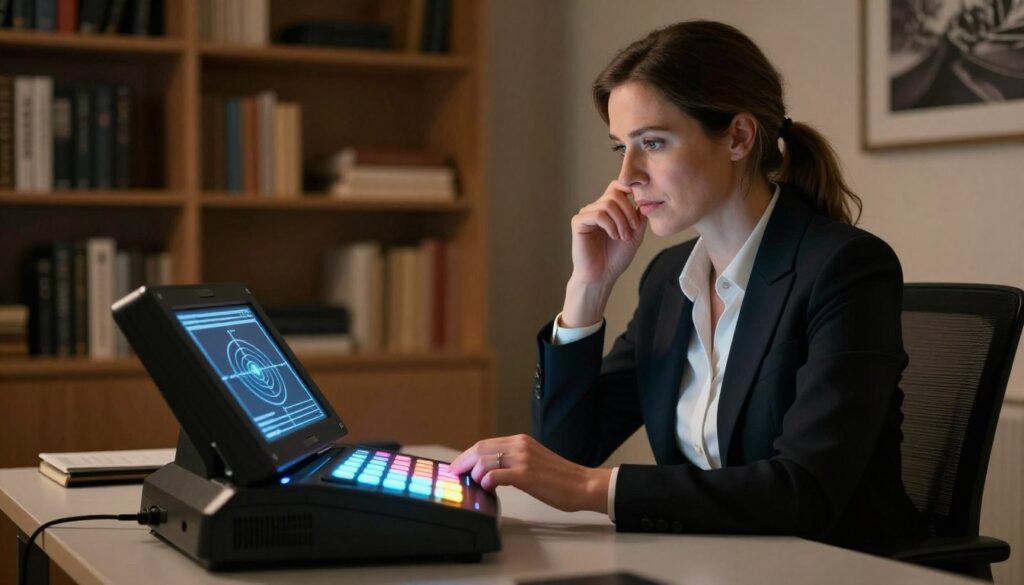
For practical practice and step-by-step routines, try the remote viewing exercises linked here.
How to Use a Coordinate Remote Viewing Target Coordinates Generator Effectively
Start each session by generating a neutral numeric marker that keeps your mind free of assumptions. Click the link to produce a random coordinate that will act as your session identifier.
Keep order and clarity. When you receive the numbers, keep them in the correct order. This simple step helps the viewer stay aligned with the intended marker.
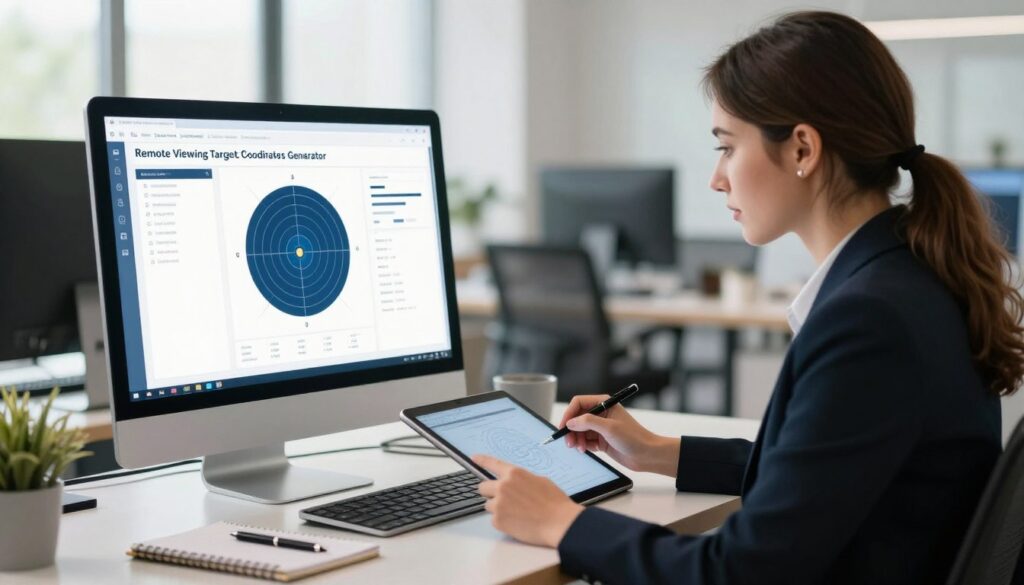
“Clear your mind and focus only on the number; treat it as a neutral anchor for impressions.”
- Use a tool like RandomCoords to see how a point or polygon is generated worldwide. It supports results from more than 140 countries.
- For practice, try a point such as Vredendal, South Africa, or a polygon example like Minsk, Belarus (6 vertices, 6.056 km²).
- After the session, follow the feedback link to reveal the location and score your information against the revealed data.
| Example | Type | Region | Notes |
|---|---|---|---|
| Vredendal | Point | South Africa | Simple practice marker for a single number set |
| Minsk Polygon | Polygon | Belarus | Six vertices; area 6.056 km²; good for advanced practice |
| RandomCoords | Service | Global | Supports 140+ countries for varied session material |
Remember: the number is a tool for your mind to access impressions. For complementary practice on subtle energy and perception, see sending healing energy and explore techniques in psychic powers.
Distinguishing Between Mental Anchors and Geographic Data
Numbers serve as neutral anchors that let the subconscious form impressions without map-based clues.
Why GPS and latitude data are not used
It is a common misconception that numeric markers are actual latitude and longitude pairs. Unlike GPS data, which points to a physical location, our identifiers are arbitrary. They act as mental labels, not map references.
The order of longitude and latitude matters for mapping tools like Google Maps, but that order has no bearing on the abstract numbers used in practice. A single example string contains no information about the physical environment.

“Numbers are neutral; keeping them separate from geographic data protects the integrity of the session.”
- You are not searching a database when you use a numeric label. You create a connection in your mind.
- Keeping the system distinct from map data prevents analytical overlay and conscious guessing.
- These markers are intentionally non-searchable to preserve blind protocol and accurate information flow.
| Concept | What it is | What it is not | Benefit |
|---|---|---|---|
| Numeric marker | Arbitrary identifier for a session | Not a GPS latitude/longitude | Prevents front-loading and bias |
| Order | Important in mapping software | Irrelevant to mental anchors | Keeps impressions independent of maps |
| Searchability | Closed for accuracy | Not searchable like a location | Maintains blind protocol integrity |
For a practical look at how perception techniques work alongside neutral numbers, see this clairvoyant method.
Conclusion
Using a neutral number set is a practical step toward clearer impressions and more consistent sessions. Begin each session with a simple number and let the mind respond without judgment.
Trust the process: the number or coordinate is a tool, not the answer. The real work comes when the viewer allows subconscious information to surface. Regular practice improves accuracy and helps reduce analytical bias.
Visit our numerology readings page for more resources and guidance. Return to this page often to try new targets, refine your skills, and enjoy the steady generation of practice material.
FAQ
What is a Remote Viewing Target Coordinates Generator?
It’s a tool that produces randomized number pairs used as blind cues for an intuitive session. These numeric pairs act as neutral identifiers so a person can focus inward without prior facts about a location or object. The numbers don’t map to GPS or real-world maps; they simply serve as anonymous markers for the mind to lock onto during a session.
Why are random number pairs used instead of names or images?
Random pairs prevent conscious bias and expectation from shaping impressions. When a session begins with neutral digits, the participant relies on spontaneous impressions rather than memory or guesswork. This preserves the integrity of the session and helps trainers and researchers assess accuracy more objectively.
How does a numeric cue create a mental bridge for the subconscious?
The cue functions as an anchor that the conscious mind can hold while allowing deeper impressions to surface. It gives the subconscious a simple focus point, reducing distraction. Practitioners often begin with relaxation and intent, then pair that state with the digits to encourage spontaneous imagery and sensations linked to the anonymous marker.
Can I use these number pairs to find real-world latitude or longitude?
No. The output is not formatted as geographic coordinates and should not be treated as GPS data. Using the numbers as literal map points introduces confusion and undermines the methodological purpose, which is to maintain a blind testing environment for perception work.
How should I prepare before using a numeric cue in a session?
Begin with a brief relaxation routine: breathe slowly, clear stray thoughts, and state your intent to observe without judgment. Keep recording tools ready, and avoid researching any possible associations with the numbers. A neutral environment and a consistent protocol improve repeatability and clarity of impressions.
Are there best practices for recording impressions during a session?
Yes. Capture impressions immediately and in raw form—words, sketches, feelings, smells, or textures. Avoid analysis or labeling during the session. Time-stamp entries and note the exact number pair used. These steps protect data integrity for later review or verification.
How do researchers evaluate accuracy without geographic references?
Evaluators compare independent descriptions to known information about preselected, blinded scenes or objects. They use blind judging, consensus scoring, and statistical methods to measure correspondence between descriptions and actual details. Keeping the cues anonymous ensures unbiased scoring.
Can beginners use the numeric method effectively?
Yes. Beginners benefit from the simplicity of number cues because they remove preconceptions. Short, regular practice sessions with clear logging help novices learn to differentiate spontaneous impressions from imagination. Coaching and group feedback speed skill development.
Is specialized software required to generate these number pairs?
No specialized software is necessary—many people use simple random-number tools, scripts, or online utilities that produce neutral pairs. The key is unpredictability and recordkeeping; the generation method must be blind and reproducible for valid results.
How many number pairs should I prepare for a session block?
Prepare a manageable set—typically three to ten pairs per block—so each session stays focused. Short blocks reduce fatigue and improve attention. Adjust the count based on personal stamina and the goals of your practice or study.
Can these numeric cues be shared between viewers?
Yes, but only if the protocol preserves blindness. Sharing is common in controlled trials where one person assigns a blind cue and another records impressions. Always prevent any contextual hints or metadata that could reveal the real-world referent.
Are there ethical or legal considerations when using blind numeric cues?
Use the method responsibly. Avoid attempting to locate private residences, endangered individuals, or sensitive sites without consent. Respect privacy and legal boundaries; the practice should follow ethical guidelines similar to any human-subject research or personal work involving other people.
Where can I learn standardized protocols and scoring methods?
Look for published studies, peer-reviewed journals on perception research, and training organizations that focus on methodological rigor. Many universities and research groups publish guides on blind protocols, double-blind procedures, and statistical scoring that you can adapt to your practice.