
Remote viewing is a structured practice of extrasensory perception that helps a viewer describe a distant location without using physical senses.
This introduction explains how a disciplined protocol can sharpen your perception and access accurate information about a target location. Quieting the mind lets a remote viewer notice raw impressions rather than assumptions.
Decades of research into human consciousness show this ability can be trained. With consistent practice, your accuracy and awareness grow, and time or distance stop limiting the data you receive.
We will outline simple CRV protocols and safety checks that help separate imagination from true perception. If you want hands-on exercises, check the practical drills at remote viewing exercises.
Key Takeaways
- Remote viewing trains extrasensory perception to describe a distant target.
- Quieting the mind helps a viewer trust raw impressions over bias.
- Consistent practice improves accuracy and awareness.
- Protocols help separate imagination from useful information.
- Research into consciousness supports the skill’s practical development.
Understanding the Basics of Remote Viewing
At its core, remote viewing trains a person to gather clear impressions without relying on ordinary senses.
This method is a structured form of extrasensory perception that lets a remote viewer collect information about a target while avoiding the influence of the physical senses.
“Learning to notice raw impressions helps separate imagination from useful data.”
How it works:
- Viewers quiet their minds and record spontaneous impressions.
- Protocols help people tell the difference between imagination and genuine perception.
- Each session refines natural abilities and expands awareness of consciousness.
| Element | What it does | Why it matters |
|---|---|---|
| Protocol | Structures the session | Reduces bias and improves accuracy |
| Meditative focus | Calms the mind | Allows impressions to surface clearly |
| Neutral recording | Captures raw data | Helps validate findings later |
Many people discover that developing their psychic abilities through this practice leads to a deeper sense of how mind and world interact. For related energy work, see a practical exercise on sending healing energy.
Historical Origins at the Stanford Research Institute
In the early 1970s, a focused research effort at the Stanford Research Institute explored whether minds could access distant targets without physical cues. This work laid the foundation for later programs and shaped modern protocols.
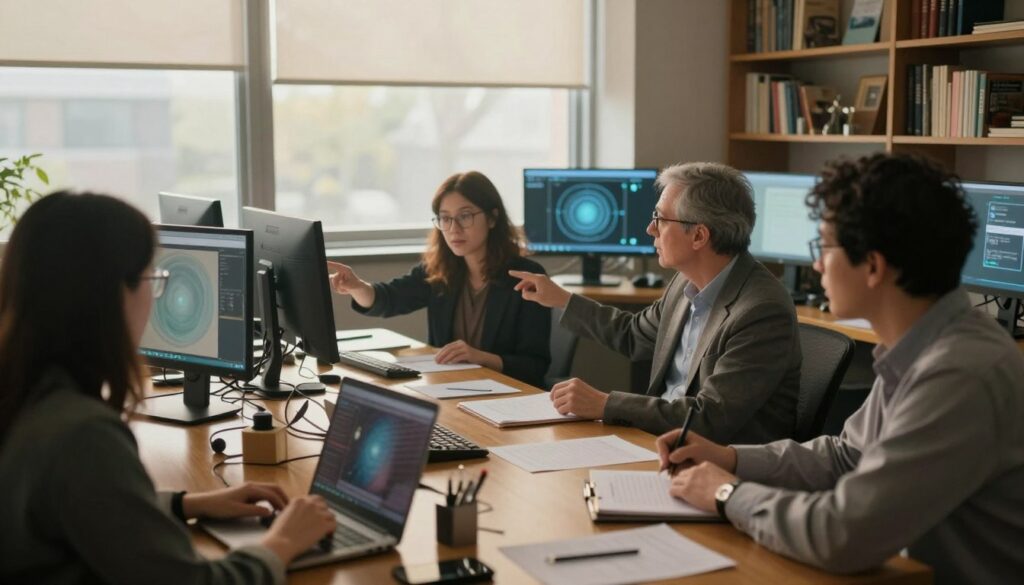
The Stargate Project
The Stargate Project was a U.S. government-funded program that used trained remote viewers during the Cold War. It hired scientists and civilians to describe hidden targets while shielding them from conventional information.
Results often surprised skeptics: many sessions produced descriptions that matched the target with statistical reliability. That success attracted attention from agencies like the CIA and Department of Defense.
Early Experimental Protocols
Physicists Russell Targ and Harold Puthoff designed protocols where each viewer sat isolated and reported impressions about an object or location. Records were kept so researchers could compare descriptions with the actual target.
“Maintaining a neutral state of consciousness was essential for every participant.”
Careful controls and monitoring ensured no outside cues influenced the data. Over time, these methods became the backbone of the remote viewing program and helped build knowledge about perception and information gathering.
Distinguishing Remote Viewing from Clairvoyance
Understanding how a trained viewer works helps separate spontaneous intuition from a documented perceptual skill.
Clairvoyance tends to bring unprompted, visual impressions. A person may receive symbolic scenes that feel personal or abstract.
In contrast, structured remote viewing asks a remote viewer to follow a protocol that reduces early analysis. That structure preserves raw data and makes results easier to verify.

“Training your consciousness helps you notice whether information is symbolic or directly descriptive.”
Both practices bypass the physical senses, but the major difference is repeatability. A disciplined method yields clearer, documentable information. Clairvoyant impressions often require interpretation.
- Clairvoyance: spontaneous visuals and intuitive meaning.
- Remote viewing: protocol-driven data gathering and measurable results.
Many practitioners find their psychic abilities improve when they learn to switch modes. For more on developing these inner skills, see a practical resource on enhancing psychic powers.
A Step by Step Guide to Stage One Controlled Remote Viewing
A clear target keeps the process honest. Pick one hidden image or location and make sure the viewer cannot see labels or hints.
When you close your eyes, the monitor helps keep focus. The monitor’s role is to record timing and keep the session neutral while the viewer reports raw impressions.
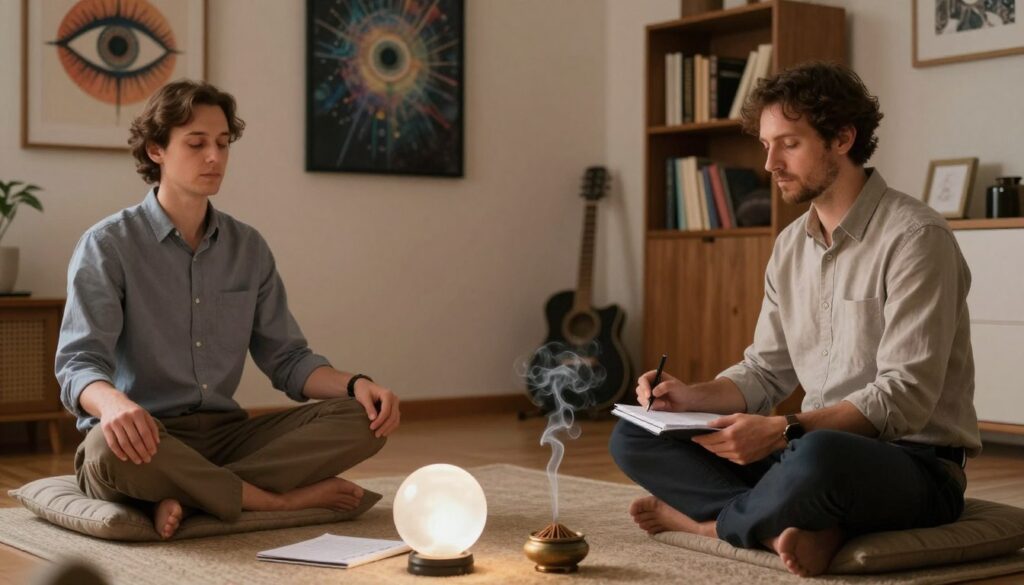
Setting the Target
Choose a target that is simple and single. A clear target reduces guessing and improves accuracy during a viewing session.
Recording Raw Impressions
Record sensations, textures, colors, simple sounds, and feelings without analysis. Trust early impressions even if they seem odd.
Sketching the Essence
Make quick sketches that capture shape, scale, and layout. Sketching helps the body align with the mind and often reveals details words miss.
- Avoid naming the target too early to keep results pure.
- Let perception lead; resist immediate analysis.
- Practice this protocol regularly to hone your abilities.
For those interested in using psychic skills professionally, see a practical resource on becoming a paid psychic.
Essential Mental Preparation for Success
A focused mental routine primes your perception and helps impressions arrive with clarity. Create a quiet space free from external distractions. Remove devices, dim lights, and tell people you need uninterrupted time.

Before a session, close eyes and breathe deeply. A few minutes of slow breathing calms the body and readies your consciousness. This small ritual signals your mind that practice is beginning.
Regular meditation clears chatter and strengthens your ability to notice subtle impressions. With practice, entering that calm state takes less time and feels natural.
Remember: the state you bring into viewing affects the quality of what you receive. People who prepare consistently report clearer perception and more reliable results.
“Dedicate time to mental preparation; it creates the neutral awareness where impressions appear.”
Tip: If you want to develop remote viewing, make preparation a habit. Consistent training builds the focus needed for longer, more detailed sessions.
The Role of the Monitor and Analyst
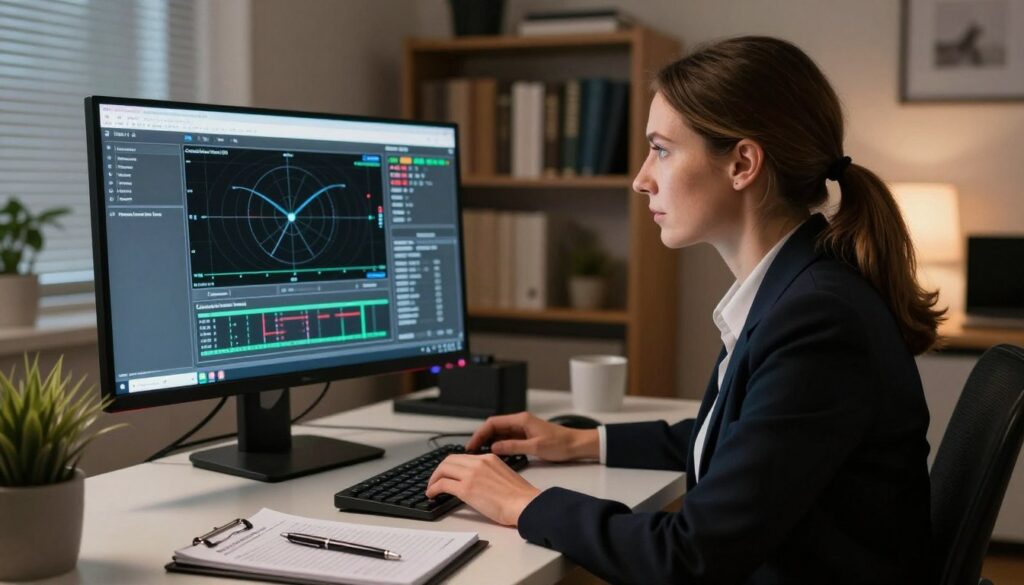
Neutral protocol and careful oversight are what preserve the integrity of any viewing session. In professional remote viewing programs, clear roles protect the data and the people involved.
The Importance of Double Blind Conditions
Double-blind conditions mean neither the viewer nor the monitor knows the target object or location during a session. This removes cues that could skew impressions and boosts accuracy when later checked.
Joe McMoneagle has long stressed that strict double-blind protocols are essential for reliable results. Trainers like Marinda Stopforth teach monitors to stay neutral and focused on timing and task management.
The analyst should be a separate person who compares recorded information with the actual target after the session. Every detail recorded must be preserved so analysis can be fair and verifiable.
- Monitors guide the viewer without revealing hints.
- Double-blind rules protect the integrity of the protocol.
- Analysts evaluate matches against the target after the session.
“A trained monitor supports the viewer while shielding them from bias.”
Common Myths Surrounding Remote Perception
Many assumptions about remote perception come from popular media rather than recorded experiments.
Myth: You must be born with psychic abilities to succeed.
Fact: Research at the Stanford Research Institute showed that training and protocol can teach people how to gather data about a target. That work helped make the practice teachable rather than purely innate.
Myth: The practice is dangerous or harmful.
Fact: Proper sessions are safe. They focus on controlled mental states and do not replace ordinary care for mental health.
“Understanding the limits of perception helps keep practice grounded and useful.”
- Accuracy varies; even skilled practitioners produce vague or incorrect impressions at times.
- The Stargate Project treated the work as a subject of scientific inquiry, not magic.
- Remote perception is disciplined data collection about a specific target, not unlimited access to all information.
| Common Myth | Reality | Why it matters |
|---|---|---|
| Only gifted people can do it | Training improves abilities | Encourages practice and learning |
| Always perfectly accurate | Accuracy fluctuates | Promotes realistic expectations |
| Dangerous or uncontrollable | Safe with protocol | Reduces fear and sensationalism |
| Purely supernatural | Subject of research (e.g., Stanford Research Institute, Stargate Project) | Invites critical study and improvement |
Approach your practice with curiosity and care. For practical tips that improve clarity and consistency in sessions, see practical ways to improve readings.
Scientific Perspectives on Extrasensory Perception
Government-funded experiments shifted curiosity about extrasensory perception from folklore into formal research.

The stargate project and related work under stanford research moved this field into official study. Agencies wanted to know if the human mind could report a sealed target with useful accuracy.
While mainstream science often treats such claims with skepticism, the published results from controlled trials showed surprising matches that merit further study.
Researchers explore how consciousness might interact with physical reality. Practitioners argue that consistent success in tests hints at real mechanisms worth investigating.
Why it matters:
- It frames extrasensory perception as an empirical question.
- It drives better protocols and clearer reporting.
- It invites scientists and practitioners to refine methods during ongoing practice.
“Ongoing debate highlights the need for more rigorous protocols and open study.”
As you continue your training in remote viewing and related work, your sessions contribute data that could shape future conclusions about human psychic abilities and perception.
Spiritual and Personal Growth Benefits
Many practitioners report that regular practice unlocks a quieter mind and a deeper sense of purpose. This change often appears as greater clarity in daily life and more trust in inner signals for decision making.
Expanding Awareness
Expanding awareness often begins as a gentle shift. People notice their sense of self extends beyond the physical body and routine concerns.
This experience can strengthen natural intuition and widen how you perceive relationships and meaning. Some report that viewingremote viewing sessions reveal patterns that feel both personal and universal.
Achieving Mental Balance
Regular practice helps quiet mental chatter and reduce stress. As the mind calms, your ability to handle pressure and make calm choices improves.
Over time, the discipline of practice remote viewing becomes a useful way to stay present. That steadiness carries into work, relationships, and how you spend your time.
- Spiritual growth: a deeper sense of purpose and connection.
- Emotional balance: reduced reactivity and better focus.
- Practical gains: improved decision-making and confidence.
| Benefit | What Improves | Typical Timeframe |
|---|---|---|
| Awareness | Sense of consciousness and purpose | Weeks to months |
| Balance | Stress levels and attention | Several weeks |
| Intuition | Confidence in choices | Ongoing with regular practice |
“Consistent practice changes how you relate to yourself and the world.”
Developing Your Natural Intuitive Abilities
Cultivating subtle perception begins with simple, repeatable habits that respect your pace. Commit a small block of time each day and make practice consistent.
The Monroe Institute offers programs where a monitor helps students refine their ability with expert feedback. In a structured remote viewing program, people learn protocol and receive the corrections that speed learning.

When you close eyes and follow the protocol, intuition guides you toward target information. Trust the early impressions from your body and consciousness rather than forcing analysis.
- Practice regularly; skill improves with honest repetition.
- Use a monitor for objective feedback during a viewing session.
- Be patient—every remote viewer follows a unique path.
- Record results so you can track growth and accuracy.
“Learning to listen quietly reveals small signals that grow into reliable information.”
In short: develop remote viewing through steady practice, supportive programs, and respect for your own pace. Over time, psychic abilities and perception become clearer and more useful.
Conclusion
Mastering this introductory protocol opens a practical path toward clearer perception, and it rewards steady attention.
With regular practice and a little time, your ability to sense a distant target improves. Over weeks and months you gain knowledge and learn how small impressions become useful information about a chosen target.
New viewers often worry they must be born gifted. Most people who keep at it see their ability grow. Students who train together share feedback and help the community expand; this fuels better results in viewing and in life.
If you want structured support, consider the psychic development program. Keep practicing, stay curious, and enjoy the journey.
FAQ
What is controlled remote viewing and how does Stage One work?
Controlled remote viewing (CRV) is a trained protocol for describing distant or unseen targets using focused awareness rather than the five physical senses. In Stage One, the viewer relaxes, clears the mind, and records raw impressions—simple sensory-like data such as shapes, textures, spatial relationships, and basic motion. This phase emphasizes free association and nonjudgmental notes to capture initial input before analysis or interpretation.
How can I prepare mentally and physically for a successful session?
Preparation includes light physical relaxation, controlled breathing, and grounding techniques to reduce distraction. Short meditation or mindfulness exercises help quiet internal chatter. Keep the body comfortable and the environment low-noise. Hydration and moderate rest improve focus. Aim for calm alertness rather than deep sleep to keep access to impressions clear and reliable.
Who acts as the monitor, and why is that role important?
A monitor is a trained person who assigns targets, records time stamps, and maintains protocol integrity during a session. They protect against feedback and bias and ensure double-blind conditions when needed. Their presence allows the viewer to focus fully on perception while someone else handles logistics and later evaluates results.
What are double-blind conditions and why do they matter?
Double-blind conditions mean neither the viewer nor the monitor knows identifying details about the target. This prevents conscious or unconscious cueing and keeps results free from confirmation bias. In research or serious practice, double-blind controls are essential for obtaining credible data and for testing the accuracy of impressions objectively.
How do I record raw impressions during a session?
Use a notebook or digital recorder and jot down simple descriptors: lines, textures, colors, temperature cues, and emotions without interpreting them. Draw quick, rough sketches to capture structure or spatial flow. Resist naming objects or guessing purpose; instead, collect many small, neutral signals that can be analyzed later for patterns.
Is sketching useful in Stage One, and what should I focus on?
Yes. Fast sketches capture the essence—shapes, relative sizes, and arrangement—without overworking detail. Focus on overall geometry, prominent features, and any movement. Sketching helps translate subtle impressions into visual anchors that can guide later analysis and improve overall accuracy.
How often should I practice to improve accuracy and skill?
Regular, short sessions work best—several times per week rather than occasional long marathons. Consistency builds sensitivity and pattern recognition. Keep sessions focused and follow strict protocols to track progress. Maintain a training log to note techniques, results, and any changes you make.
How does CRV differ from clairvoyance or other psychic claims?
CRV uses an organized, repeatable protocol emphasizing controlled conditions, blind targets, and systematic recording. Clairvoyance is a broader term for spontaneous visual psychic impressions and often lacks standardized procedures. CRV aims for replicable output that can be archived, compared, and analyzed under scientific scrutiny.
What did Stanford Research Institute and the Stargate Project contribute to this field?
The Stanford Research Institute (SRI) conducted early government-funded research into anomalous cognition during the 1970s and 1980s. The Stargate Project was a later umbrella for several remote perception programs aiming to test and apply these methods. Their published reports and declassified documents provide protocols, case studies, and statistical analyses that shaped modern practice.
Can anyone develop these perceptual abilities, or are they innate?
Many people can improve intuitive perception with disciplined practice and training. Some individuals report spontaneous sensitivity, but systematic methodologies like CRV help most learners build reliable experience. Motivation, consistent practice, and feedback are key factors in developing skill regardless of initial aptitude.
How do researchers measure accuracy and validate results?
Researchers use blind or double-blind protocols with predetermined scoring methods and independent analysis. They compare viewer reports to target documents or photographs and apply statistical tests to assess hit rates against chance. Replication, controlled conditions, and peer review provide stronger validation than anecdote alone.
What are common myths about remote perception I should ignore?
Ignore claims of effortless, flawless sight without training, promises of guaranteed outcomes, and sensational stories that lack documentation. Remote perception in disciplined contexts requires practice, careful protocol, and honest record-keeping. It is not a magic shortcut but a skill that benefits from methodical development.
Are there ethical or safety considerations when practicing?
Yes. Respect privacy and legal boundaries—never target private individuals or sensitive locations without consent. Maintain confidentiality, avoid causing harm, and use techniques responsibly. In group settings, ensure volunteers understand protocols and potential psychological impacts before participating.
How does spiritual growth relate to developing intuitive abilities?
Many practitioners find that disciplined practice enhances self-awareness, emotional regulation, and a sense of connection. Techniques that foster quiet attention and introspection often translate into better focus, reduced stress, and clearer decision-making, which can support personal development and well-being.
What resources or programs can help beginners learn CRV-style methods?
Look for reputable trainers, published manuals on controlled protocols, and academic papers originating from institutions like SRI. Workshops, online courses from experienced instructors, and peer practice groups with strict blind protocols help beginners learn structure, receive feedback, and track measurable progress.