

Russell Targ spent over two decades as a senior staff scientist at Lockheed Missiles and Space Company. This background in physics shaped how he approached investigations into human perception.
The Stanford Research Institute program ran for twenty-three years with a budget near twenty million dollars. It received backing from both the CIA and NASA, which gave the work national significance.
This introduction outlines how two physicists built rigorous lab protocols at the institute to test claims of anomalous cognition. The team moved from controlled experiments to operational tasks for government clients during the Cold War.
We will examine the scientific methods, the key figures who took part, and the lasting impact on intelligence work. For a deeper walk-through of methods and outcomes, see the detailed overview at this companion page.
Key Takeaways
- Scientific roots: Two physicists applied lab methods to test human perception.
- Major funding: A $20M, 23-year effort backed by CIA and NASA.
- Rigorous protocols: Experiments at Stanford Research Institute aimed for statistical proof.
- Operational use: Findings transitioned from labs to intelligence assignments.
- Historical impact: The program shaped Cold War-era approaches to anomalous cognition.
Understanding the Origins of Remote Viewing
As nations vied for advantage, laboratories began testing whether the human mind could access data at a distance. This effort mixed military urgency with scientific curiosity. It seeded a formal program that ran for many years and shifted from simple trials to structured inquiry.
The Cold War Context
Intelligence agencies looked for any edge that could reveal enemy location or intent. The search for new sources of information led to experiments that were once considered fringe.
ESP—coined by J.B. Rhine in 1934—provided a vocabulary for these claims. Ancient sources, such as the Yoga Sutras, also framed how nonordinary perception might be trained.
Scientific Curiosity
Researchers treated the topic as a question to be tested, not a mystery to be assumed. Early experiments began with card-guessing and moved to tasks aimed at extracting target data across space and time.
Each experiment helped refine controls, blinding, and scoring. Over the years, accumulating evidence pushed the field toward stricter protocols and clearer metrics.
- Origins: Cold War need for unconventional information.
- Approach: From simple trials to formal experiment protocols.
- Perspective: Modern physics met ancient practices to probe perception.
| Years | Method | Goal |
|---|---|---|
| 1930s–1950s | Card-guessing experiments | Test for ESP effects |
| 1960s–1970s | Controlled laboratory trials | Refine protocols and scoring |
| 1970s–1990s | Operational tasks for intelligence | Apply findings to real-world location problems |
| 1990s–2000s | Meta-analyses and replication | Assess evidence and methodological limits |
The Partnership of Russell Targ and Harold Puthoff
At SRI, two scientists combined lab skills and curiosity to test extraordinary claims about perception.
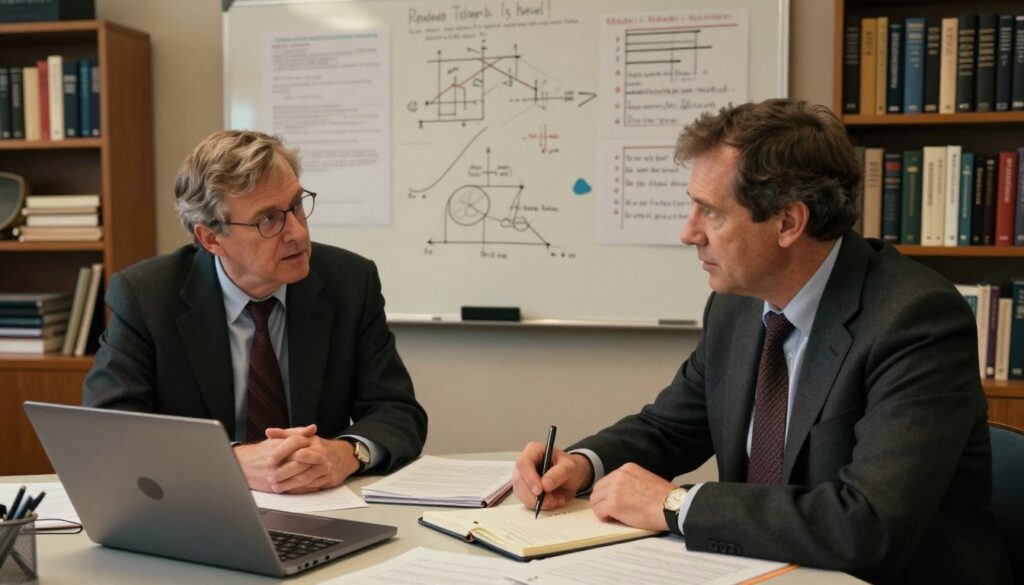
Hal Puthoff founded the SRI program in 1972 and led it through 1985. His background in Naval Intelligence and the NSA gave the work practical focus.
Russell Targ brought expertise in laser physics while Puthoff added perceptual and operational insight. Their collaboration began when a New York artist, Ingo Swann, proposed exploring quantum biology as a bridge between animate and inanimate systems.
- Foundational leadership: Puthoff set the program’s direction and secured agency support.
- Interdisciplinary method: Physics met perceptual research to craft rigorous experiments.
- Publication aim: They sought peer review to legitimize the field within mainstream science.
The partnership was a major part of both men’s careers. For more on Puthoff’s role and timeline, see the Hal Puthoff profile.
Defining the Scope of Remote Viewing Studies
Clear boundaries were essential to turn bold claims into testable science. Researchers set out to determine whether people could acquire reliable information about spatially or temporally distant targets that sensory channels could not access.
Defining Anomalous Cognition
Anomalous cognition was described as the ability to perceive a target across space or time without normal sensory contact. The team treated this as a question of information transfer rather than mysticism.
Central to the work was a model of a perceptual channel. Experiments used strict shielding to prevent leaks and to test the limits of accuracy.
- Studies examined whether a viewer could describe a distant target under controlled conditions.
- Protocols focused on the nature of consciousness and its role in perception.
- Each experiment clarified how a person might connect with a target across time and space.
Early Laboratory Experiments at Stanford Research Institute
The first eight-month pilot program at the research institute cost $49,909 and launched careful tests of perception.
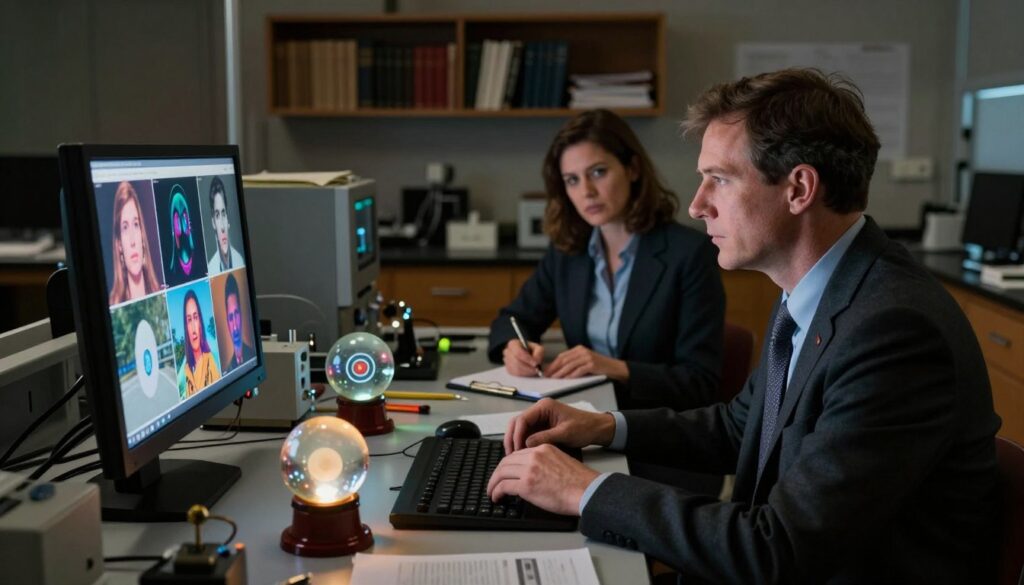
The program used double-blind protocols so a viewer never knew the target while an outbound experimenter visited the site.
Early experiments focused on local San Francisco Bay locations. Subjects described landscapes, structures, and landmarks they had never seen.
Results were notable. Many descriptions matched the verified location closely enough to pass strict scoring rules.
- Design: Controlled tests over several years refined methods and reduced bias.
- Verification: Using local sites allowed precise checks of drawings and reports.
- Impact: Strong results drew attention from intelligence clients and expanded the program.
| Feature | Description | Verification |
|---|---|---|
| Pilot length | Eight months, Biofield Measurements Program | Budget and timeline records |
| Test design | Double-blind outbound experiment protocol | Independent scoring and controls |
| Sites | San Francisco Bay area targets | On-site checks and mapping |
For context on leadership and timeline, see the Hal Puthoff profile. This early work formed the study base for later research in the field.
The Role of Ingo Swann in Pioneering Research
One volunteer’s striking performance in a campus lab set off a chain of formal experiments at the research institute. That person, Ingo Swann, was a New York artist whose demonstrations moved the work from curiosity to systematic inquiry.
Initial Demonstrations
Swann first impressed scientists with psychokinesis tests at City College of New York. He then described the interior of a well-shielded magnetometer at Stanford Research, a striking example that challenged conventional limits.
Influence on Research
His success prompted new protocols. Swann suggested coordinate methods that expanded how a viewer would access a distant target.
The collaboration with subjects like Pat Price helped produce consistent results across multiple experiments. Each example became part of the program’s proof set, shaping research, experimental design, and how teams verified information on site over the years.
- Role: Catalyst for stricter controls and fresh protocols.
- Impact: Practical techniques that guided later experiments.
- Legacy: Swann’s insights remain a core part of the research institute record.
Analyzing the Methodology of Remote Viewing
To test claims of nonlocal perception, teams created methods that treated descriptions as measurable data.

Protocols emphasized blind controls, strict shielding, and repeatable steps. These rules reduced sensory leaks and helped validate information transfer.
Researchers used a rank order method to quantify how closely a viewer’s report matched each candidate target. Princeton teams added a 30-point questionnaire to score specific elements of perception.
- Mathematical scoring turned subjective notes into statistical results.
- Tests accounted for apparent nonlocal phenomena that seemed independent of space and time.
- Ancient ideas about channeling the light of higher faculty informed training and protocol design.
| Method | Purpose | Metric |
|---|---|---|
| Rank order | Compare descriptions to targets | Hit rate / ranking score |
| 30-point survey | Standardize accuracy checks | Numerical accuracy score |
| Double-blind trials | Eliminate bias | Statistical significance |
Combining math with tight controls let teams evaluate each experiment and the mind’s ability to access distant information. For practical practice on methods, see practice exercises.
Exploring the Significance of Russell Targ and Harold Puthoff Remote Viewing Studies
Over many years the team converted anecdote into quantified results that invited rigorous review. Their program produced papers that appeared in respected journals, including Nature, Proceedings of the IEEE, and the Proceedings of the American Institute of Physics.
Why this mattered: the published results pushed questions about consciousness into mainstream research. Multiple papers documented consistent experiments and statistical outcomes across decades.
The archive offered usable information for later teams. Replication efforts worldwide showed that certain viewing techniques could be taught and practiced with measurable effect.
- Academic entry: publication in top journals gave the topic visibility.
- Long-term data: twenty-three years of protocol and results built a searchable record.
- Cross-field impact: the work linked physics, perception, and experimental design.
The collected data remain a vital resource for researchers exploring nonlocal awareness. For a deeper narrative and related profiles, see the psychic warrior overview.
Notable Successes in Operational Intelligence
The program moved beyond lab reports to deliver usable results for government clients. Field work tested whether trained viewers could supply timely information about sensitive targets and sites.
The Semipalatinsk Facility
Pat Price famously described a large gantry crane at a Semipalatinsk nuclear site in 1974. Satellite checks later confirmed the unusual structure.
The West Virginia Site
Coordinate methods were applied to a secret site in West Virginia. A viewer identified characteristics of the building and the mission of that target site. The test showed how the technique could point to function as well as location.
Tracking Hostages
The Defense Intelligence Agency used remote viewing to help locate hostages in Lebanon. Reports from trained subjects produced leads that intelligence officers could act on.
- Practical utility: examples like Semipalatinsk and West Virginia proved the method useful for defense intelligence.
- Verification: independent checks confirmed key details in multiple cases.
- Operational value: the program adapted lab protocols to meet real-world needs.
The Discovery of Rings Around Jupiter
In one session a viewer reported a faint circular feature around Jupiter, a claim that later drew intense attention. The witness was ingo swann, who participated in the program and sketched what looked like a ring.
The report seemed unlikely at the time. Astronomers met the idea with skepticism until the NASA Pioneer 10 flyby released data that matched the description.

This incident stands as a striking example of how a trained viewer could access distant information about an astronomical target. The single experiment bridged lab work and real-world confirmation.
- The result showed that viewing techniques could inform scientific inquiry beyond terrestrial sites and buildings.
- The Pioneer 10 confirmation turned controversy into documented results.
- That success encouraged further experiments and raised questions about perception at great distance.
| Event | Detail | Outcome |
|---|---|---|
| Session report | Ingo Swann described a ring around Jupiter | Sketch and verbal description recorded |
| Scientific reaction | Initial skepticism from astronomers | Questions about methodology and site verification |
| Probe data | Pioneer 10 flyby | Confirmed ring-like structures; strengthened program credibility |
As an historical note, the episode became a hallmark within the field. It remains a clear case where human perception produced testable, verifiable information. For more context on the methods used, see this remote viewing overview.
Investigating Retrocausality and Feeling the Future
A growing body of research asks whether future occurrences can shape present perception. This idea, called retrocausality, has become central to some lines of inquiry into remote viewing.

Professor Daryl Bem at Cornell ran experiments suggesting the future can affect the past in subtle, subconscious ways. His work sparked debate but also new tests that probe time’s role in cognition.
Retroactive Influences on Cognition
Some experiments ask whether a viewer can receive information about a target before that target is chosen. These tests let subjects give descriptions that are later matched to a site or building.
- Design: subjects make choices that are later influenced by future stimuli in the experiment.
- Findings: certain data patterns recur across tests, offering a repeatable example of retroactive influence.
- Implication: results suggest consciousness may access information outside a strict past-to-future order.
| Aspect | What was tested | Typical outcome |
|---|---|---|
| Timing | Pre-selection perception | Bias in earlier responses linked to future stimulus |
| Subjects | Trained viewers and naïve persons | Mixed but notable positive results |
| Relevance | Operational program tests | Supports broader hypotheses about nonlocal cognition |
Studying these retroactive effects helps connect past program experiments with modern physics ideas. The topic remains controversial, yet it continues to generate testable hypotheses and meaningful data.
The Connection Between Consciousness and Physics
Quantum theory invites us to rethink how consciousness may link with the fabric of reality. Modern work shows nonlocal phenomena that do not depend on space or time. This idea gives a scientific frame for how the mind can access distant information.
Entanglement, first discussed by Erwin Schrödinger, is a key concept. It shows correlated systems acting as if linked across distance. Scientists use that idea to model how perception might reach beyond local signals.
The nature of a nonlocal universe aligns with many Eastern traditions that speak of shared awareness. Cleansing the doors of perception, as Blake suggested, becomes a metaphor for reducing noise so the light of consciousness can reveal hidden information.

- Connection: Physics offers theoretical tools for mind–world links.
- Implication: Information may not be confined by physical barriers.
- Promise: Integrating physics and consciousness could expand our understanding of reality.
Challenges and Criticisms in Parapsychology
Skepticism from mainstream labs and universities has been a steady force shaping research practices.
Parapsychology was often dismissed as nonsense despite published evidence from SRI and others. Critics pointed to weak controls, small samples, and disputed statistics.
In response, many teams adopted strict, double-blind protocols. These changes aimed to reduce bias and make experiments replicable.
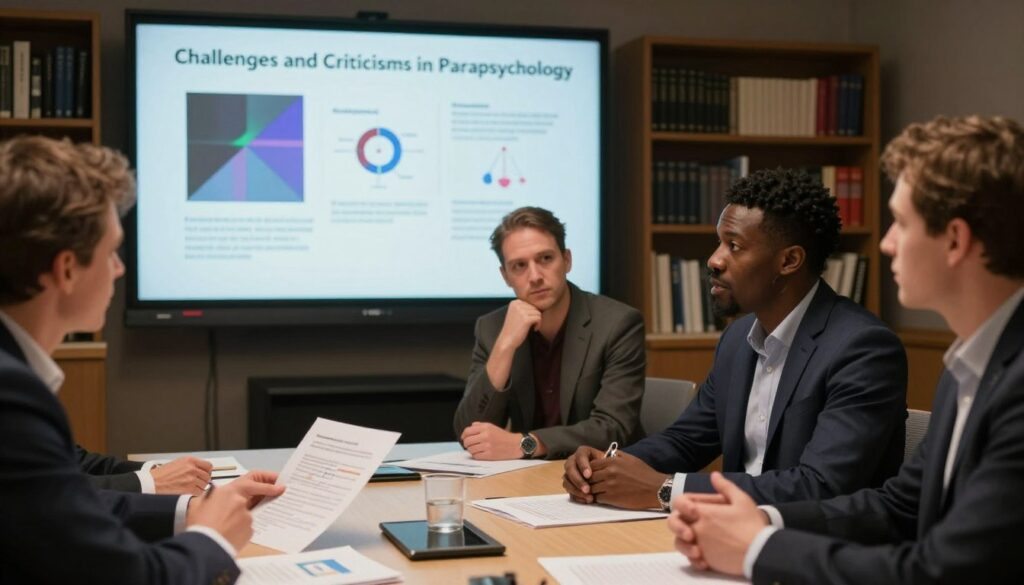
The debate remains active. Some scientists in New York and elsewhere still challenge findings. Others have replicated results and strengthened the case for anomalous phenomena.
- Accountability: Better protocols improve credibility.
- Replication: Independent labs add weight to positive outcomes.
- Integrity: Transparent data and methods matter most.
| Criticism | Response | Outcome |
|---|---|---|
| Weak controls | Double-blind designs | Improved validity |
| Statistical doubt | Pre-registered analysis | Clearer evidence |
| Poor replication | Independent labs repeat experiments | Stronger support for the field |
Overcoming these challenges is essential for the program’s future. Continued rigor will help the field answer hard questions about human consciousness and its nonlocal reach.
The Legacy of the Stargate Program

The Stargate program was a multi-year, multi-site effort to test whether trained perception could yield usable information for intelligence collection.
In 1995 the CIA declassified 270 pages of reports from the research institute, the first clear public admission that an intelligence agency had sponsored the work.
Key outcomes included data from many site and building assessments that helped refine methods and scoring. The program produced case files that analysts could compare to other sources.
The effort involved figures such as Ingo Swann, and it attracted funding and interest from the Defense Intelligence Agency and other offices. Their involvement showed the practical value assigned to this line of inquiry for national security.
- The project added rigorous field data on targets and techniques.
- Declassification made program records available for public review.
- It became part of a longer conversation about nonlocal consciousness and applied methods for gathering intelligence over time.
Today, the Stargate legacy lives on in research, training, and debate. Its files remain a useful resource for anyone studying how unconventional methods intersect with defense intelligence and data-driven analysis.
Practical Applications for Modern Practitioners
Modern teachers adapted lab protocols so a person can learn to quiet the mind and access information about a distant site.

Today, the techniques from the research institute are taught in workshops, online courses, and small groups. These methods help students practice a stable perceptual channel and improve focus.
- Personal growth: viewers use training to increase clarity and decision-making.
- Problem-solving: structured sessions guide a viewer toward insights about a chosen target.
- Practical use: many programs adapt exercises from early experiments for safe self-study.
The cottage industry that grew from the original program offers both guided work with a trained person and self-paced practice. The accumulated evidence from decades of trials supports the idea that these skills can be learned.
For an entry point into methods and courses, see a practical guide to psionics training that explains exercises and ethics for curious practitioners.
Conclusion
,
Decades of careful work have moved controversial claims into a documented archive of methods and outcomes. The research led by Russell Targ and Harold Puthoff helped create a scientific foundation that many now study and test.
Key legacy points include evidence that human consciousness can transcend conventional limits of space and time, and that lab protocols can yield operationally useful information for intelligence work.
By linking parapsychology with modern physics, the program widened our view of how information and mind may connect. Readers are encouraged to keep exploring these topics with an open, critical mind.
FAQ
What were the origins of the studies into anomalous cognition at Stanford Research Institute?
In the 1970s, interest rose from both scientific curiosity and Cold War intelligence needs. Physicists and engineers at a Palo Alto research institute explored whether trained individuals could describe distant locations or hidden targets without using ordinary senses. Funding and attention came partly from defense and intelligence agencies seeking unconventional information sources.
Who partnered to start these experiments and what did each bring?
Two investigators from the Palo Alto group combined backgrounds in physics and engineering with skills in experimental design and documentation. One focused on equipment and signal analysis; the other emphasized protocol development and field liaison with government sponsors. Their collaboration shaped standardized testing methods still discussed today.
How did researchers define the scope and goal of these tests?
The programs aimed to test anomalous cognition under controlled laboratory conditions and in operational settings. Researchers set clear target protocols, blind conditions, and scoring rules to measure information transfer beyond chance, while also exploring broader questions about perception, time, and mind.
What role did Ingo Swann play in early demonstrations?
A creative perceptual expert worked with investigators to produce early, striking sessions that suggested nonlocal description of distant targets. His demonstrations influenced protocol changes and inspired recruitment of other talented participants, helping the team refine testing techniques.
How were laboratory experiments at the Palo Alto facility designed?
Experiments used sealed envelopes, remote coordinates, and double-blind procedures to prevent cueing. Sessions followed scripted prompts and independent judging. Researchers logged results, performed statistical analyses, and repeated trials to evaluate consistency and eliminate artifacts.
What is meant by the term "anomalous cognition" in this research?
Anomalous cognition refers to acquiring information about distant or concealed targets without known sensory channels. The term avoids loaded labels and emphasizes the phenomenon under study rather than implying specific mechanisms.
Were there any notable operational successes attributed to these programs?
Investigators and some intelligence partners reported cases where field sessions produced useful leads, such as descriptions of facilities and missing-person locations. Reports include work on a Soviet test site, a U.S. energy facility, and several hostage-related efforts. Documentation varies in detail and remains debated.
How did the team handle claims of extraordinary discoveries, like planetary rings?
When a viewer described unexpected features of a planetary environment, researchers compared session transcripts with later astronomical observations. Such cases were highlighted as intriguing correlations, though the community urged caution and independent verification before claiming predictive power.
Did the research explore time-related effects such as retrocausality?
Some experiments and analyses examined whether present cognition could correlate with future events. A subset of sessions and statistical evaluations suggested retroactive influences on perception, prompting further theoretical discussion about time, information flow, and consciousness.
What methodological criticisms did peers raise about the work?
Critics pointed to potential sensory leakage, inadequate controls, selective reporting, and statistical concerns. In response, investigators tightened protocols, introduced stricter blinding and independent judging, and published detailed procedures to allow replication attempts.
How did these programs interact with defense and intelligence agencies?
Various government agencies funded and reviewed projects to assess potential operational value. Collaboration included tasking sessions for intelligence problems and delivering debriefs. Agencies later reviewed archived materials when evaluating program utility and cost-effectiveness.
What became of the larger program often associated with this research?
Over time, projects moved through different sponsors and names as oversight and funding shifted. Some elements were declassified and studied by independent scientists, while others were archived within government records. The program left a complex legacy in both parapsychology and intelligence communities.
Are there practical applications for modern practitioners interested in this field?
Contemporary practitioners adapt rigorous protocols, emphasize training, and use statistical methods to evaluate outcomes. Applications range from exploratory intelligence work to personal development and hypothesis-driven research in consciousness studies. Ethical guidelines and transparency remain key.
Where can interested readers find primary papers and archives about these investigations?
Primary sources include peer-reviewed articles, declassified government reports, and institutional archives from Palo Alto research centers. Libraries, university repositories, and official declassification portals host many papers and session records for independent study.