
This introduction outlines the origins and impact of a key training guide used in early perception research at SRI International.
In the early 1970s, Ingo Swann and Hal Puthoff met at SRI to test unusual sensing abilities. Their work grew during the Cold War, when intelligence agencies funded experiments to gain an edge.
Over time, Swann moved from test subject to the chief architect of controlled protocols. The resulting manual shaped how the U.S. military and intelligence tried to standardize human perception.
The article that follows traces the development, the different training documents, and the official reports kept by agencies. It explains how these records later entered the public record and how they relate to the Star Gate program.
For a broader look at related psychic research and context, see this overview on psychic powers and history.
Key Takeaways
- The SRI experiments began in the early 1970s and shaped formal protocols.
- Cold War pressures accelerated government interest and funding.
- Swann evolved from subject to primary method developer.
- The guide helped standardize tests used by military and intelligence.
- Official records differ from training drafts; both inform the program’s legacy.
The Origins of Remote Viewing Research
By the late 1960s, concern about foreign advances in anomalous perception led U.S. agencies to fund small teams that studied unusual sensing. Researchers at the edges of mainstream science began testing whether human awareness could connect with distant targets.
The collaboration between Ingo and Dr. Hal Puthoff at SRI marked a turning point in formal study. Early work asked a simple, bold question: could consciousness interact with physical locations in ways that classical senses did not explain?
These early efforts revealed the need for strict controls. Experiments adopted blind protocols, careful target handling, and statistical checks so results could not be chalked up to chance or sensory leakage.
“Foundational work made clear that rigorous design separates intriguing results from coincidence.”
The initial phase set the stage for structured training and standardized tests. It also introduced the term remote viewing into scientific discussion and emphasized reproducibility as the core requirement.

- Context: Cold War pressures and scientific curiosity
- Focus: testing consciousness against physical targets
- Outcome: demand for rigorous experimental controls
Ingo Swann and the Scientific Community
A shift toward laboratory validation brought respected professors into experimental psi research. This move changed the tone of study and set new standards for measurement.
Collaborations with Dr. Schmeidler
Dr. Gertrude Schmeidler at City College of New York ran sealed-container tests that measured subtle physical changes. Her protocols showed repeatable temperature effects linked to a single subject.
Those results gave the field credibility. Academic oversight meant skeptical peers could review methods and data.
The Sheep-Goat Effect
Researchers found attitudes matter. The so-called sheep-goat effect showed that belief and expectation influenced success rates in controlled trials.
“The subject’s expectation significantly shifted experimental outcomes, highlighting the role of mindset in measurable results.”
Recognizing this effect led teams to refine training and screening for each viewer. It also helped separate anecdote from reproducible work.
- Sealed-system experiments produced measurable physical changes.
- Academic collaboration raised methodological standards.
- Attitude and expectation altered experimental outcomes.
| Study | Method | Key Result |
|---|---|---|
| Schmeidler (CCNY) | Sealed-container temperature measures | Consistent temperature shifts tied to subject |
| SHEEP-GOAT analyses | Attitude surveys + blind trials | Belief predicted performance variance |
| Replication efforts | Standardized training and controls | Improved repeatability of results |
Working with respected academics helped the field adopt familiar scientific tools. For more context on the principal subject and links to historical notes see the profile of Ingo Swann.
Early Laboratory Experiments at the ASPR
At the ASPR in New York, controlled experiments measured whether a person could see distant targets without physical travel. Dr. Karlis Osis and Dr. Janet Lee Mitchell arranged high-altitude visual placements so the sitter would describe scenes from an elevated viewpoint.
These sessions forced the sitter to shift perspective while keeping clear, reportable detail. Results showed sustained conscious clarity, not the dissociation typical of trance mediumship.
Dr. Carole K. Kendig added physiological tests using flicker-fusion methods to look for measurable markers of perceptual shifts. Her work aimed to tie subjective reports to body responses.
The early ASPR studies provided key data that convinced other researchers, including Hal Puthoff, that controlled remote protocols merited formal study.
For practical exercises and historical context, see these remote viewing exercises.
- Team: Osis, Mitchell, Kendig
- Focus: perspective shift and physiological markers
- Impact: data supported further controlled remote research
The Quark Detector and the Birth of SCANATE
A single July 1972 session at Stanford sparked a major shift in how scientists treated anomalous perception. A sitter sketched a heavily shielded quark detector that matched the sealed device. That success made physicists sit up and re-evaluate the claims.
The Turning Point for Intelligence Funding
SCANATE launched in 1973 as a CIA-funded project that aimed to test whether the mind could acquire data without familiar cues. The Office of Technical Services managed the program and set strict laboratory protocols.
The project used abstract targets—assigned by numeric or map coordinates—to avoid sensory clues. Sessions produced reproducible results that convinced sponsors funding was justified.
“Successful sessions during the SCANATE era provided the justification for expanded funding and the formalization of the skill as researchable.”
- Impact: Demonstrated reproducibility under controlled conditions.
- Focus: Training and protocol standardization to reduce bias.
- Outcome: Expanded intelligence interest and further program funding.
Understanding the Ingo Swann Coordinate Remote Viewing Manual PDF
Written as a foundational reference, the text maps the stages and the rationale behind a formalized sensing method. It explains theory and the mechanics that undergird controlled practice.
The document was never meant as a full training course. Instead, it preserves the methodology developed at SRI and ensures consistency across experiments.
Key features include clear stage descriptions, officer-style controls, and notes on data integrity. Those elements helped researchers reproduce results across sites.
The guide outlines the phased protocol that later became central to CRV and related training. Reading it gives students insight into how the U.S. military structured psychic programs in the 1980s.

“The document preserves a rigorous structure intended to protect data quality and experimental validity.”
- Preserves core methodology and stage progression
- Supports consistent application across teams
- Serves as a reference for research and historical study
| Aspect | What it Provides | Why it Matters |
|---|---|---|
| Theory | Concepts that explain protocol choices | Helps interpret session results |
| Stages | Step-by-step protocol descriptions | Enables reproducible practice |
| Controls | Procedures to limit bias | Maintains data integrity |
The Role of the Stanford Research Institute
SRI International provided the institutional setting where structured protocols for remote viewing were developed under the guidance of Dr. Hal Puthoff.
The institute hosted the core team, including Dr. Russell Targ, and offered lab resources that bridged physics and parapsychology.
SRI introduced double-blind target selection and real-time monitoring. These practices helped validate results and reduce bias.
The shift to controlled tests transformed the subject from fringe curiosity into a program of interest to U.S. agencies. The lab’s methods made experiments repeatable and defensible.
SRI’s collaborative culture also encouraged the cueing methods that later shaped formal training. Those coordinate-based prompts became part of the standardized approach.
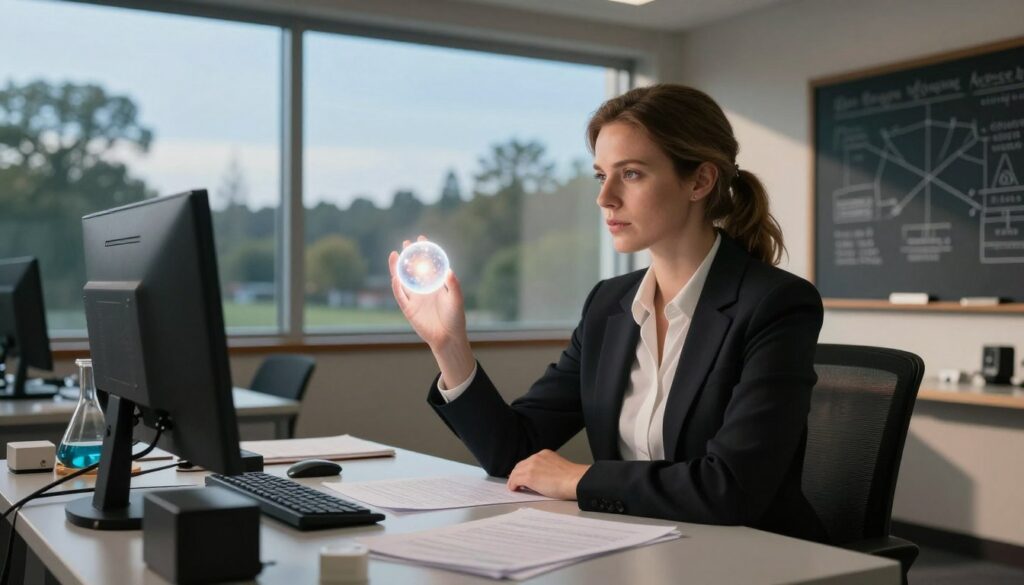
For practical exercises and historical context, see this overview of remote viewing exercises.
Military Integration and the Fort Meade Unit
The U.S. military set up a specialized unit at Fort Meade to move lab protocols into active intelligence work. This team trained personnel on structured methods and strict controls to support real-world tasks.
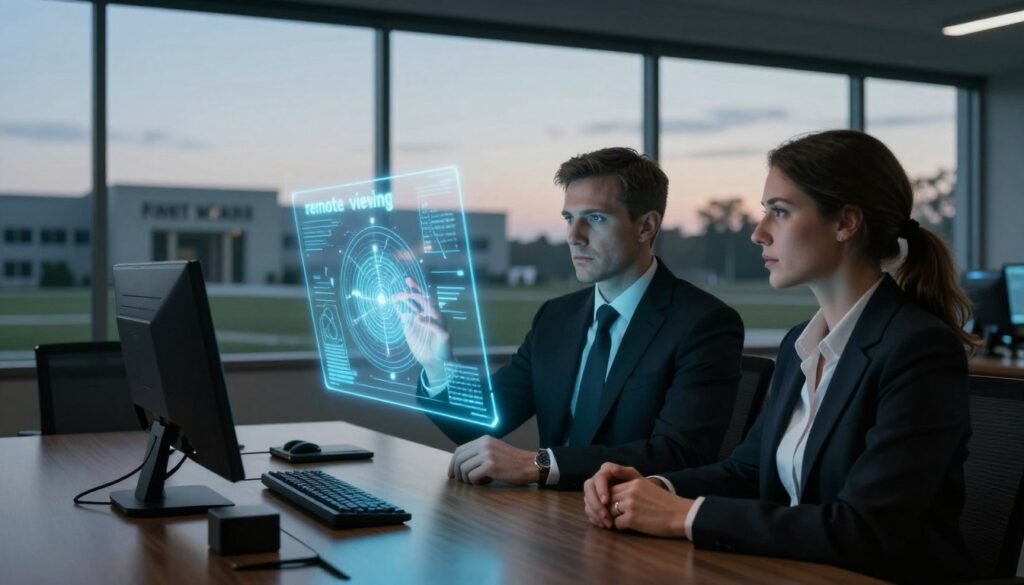
The Star Gate Program
Star Gate became the umbrella program when the unit transferred to DIA oversight. The program formalized how controlled remote viewing and crv methods were used for strategic projects.
Discipline and protocol were stressed. Training emphasized stage steps, officer-style controls, and careful documentation to maintain credible results.
Operational Challenges
Applying lab-tested methods in the field proved difficult. Sensor noise, task ambiguity, and time pressure reduced consistency.
Still, the unit produced notable intelligence results on select projects. Successes showed that, with rigorous training and adherence to protocol, controlled techniques could aid military and intelligence efforts.
“Operational use demanded as much discipline as the lab — and often more creativity to adapt protocols to changing conditions.”
- Unit at Fort Meade integrated scientific protocols into service work.
- Star Gate managed wider program coordination under the DIA.
- Field work highlighted gaps between lab conditions and real operations.
The Development of the Nineteen Eighty-Six Manual
A small, specialty print run in May 1986 aimed to lock down a teachable protocol for future students.
Paul H. Smith led the compilation with other military personnel to preserve the methodology taught by Ingo Swann at SRI International. Notes from trainees, classroom logs, and operational records were pooled to form a single reference.
Tom McNear’s records were crucial. As the first trainee to complete all six stages, his session notes helped ensure the text captured correct sequence and practice.
The Defense Intelligence Agency printed roughly thirty copies for the unit. That limited run made the document rare but effective for internal training and continuity.

Purpose: preserve pure form of the original methodology so new personnel could learn the system even after instructors left. Swann reviewed the draft and confirmed it matched his teaching.
| Item | Content | Significance |
|---|---|---|
| Compiler | Paul H. Smith + military staff | Institutionalized crv procedures |
| Key contributor | Tom McNear notes | Documented all six stages |
| Print run | ~30 DIA copies (May 1986) | Preserved unit training for continuity |
For more historical context and practical material on remote viewing training, see the linked overview.
Distinguishing Between the McNear and Smith Documents
In February 1985, Tom McNear produced a draft titled Coordinate Stages I–VI and Beyond that captured detailed session notes and the original stages used by trainees.
The following year Paul H. Smith compiled and edited a formal manual for the DIA unit. Paul Smith drew on McNear’s notes and input from other personnel to refine the material for military training and intelligence tasks.
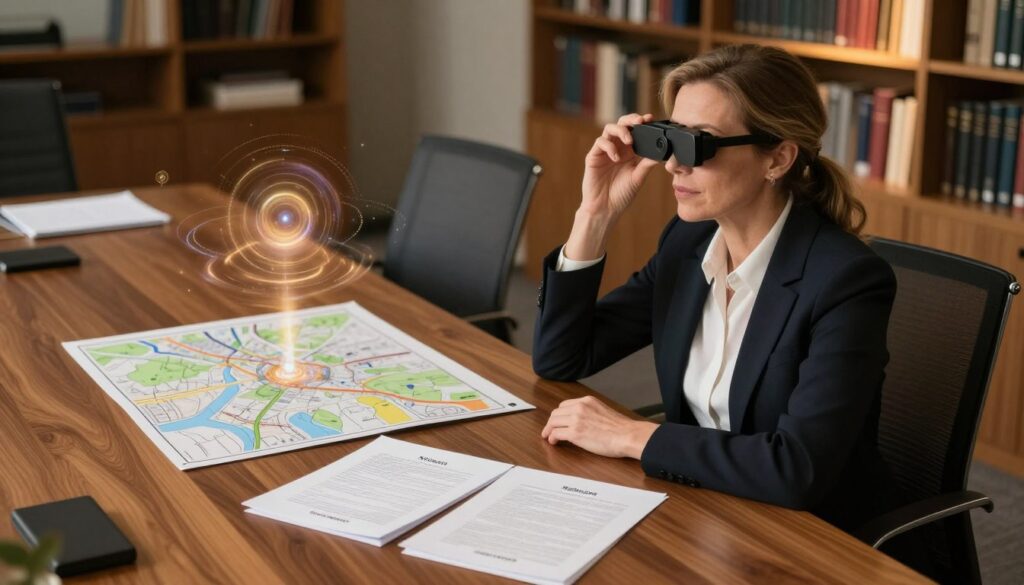
The 1986 text is more comprehensive. It clarifies procedures, adds lesson structure, and addresses problems encountered during early training.
Both documents cover the same core crv method, but they serve different roles. McNear’s draft preserves raw notes and the number of practical examples from early sessions. Smith’s version acts as a polished guide for unit use.
- Tom McNear: primary source, session notes, early stages.
- Paul Smith: editor-author who formalized instruction for personnel.
- Availability: both documents are now studied together by students and operators.
“Studying both texts side by side reveals how operational needs shaped teaching and practice.”
The Controversy Surrounding Authorship and Content
Questions about authorship and content grew as former unit members compared notes and archival records. The debate centers on who shaped the final form and why some material was left out.

Joe McMoneagle’s Perspective
Joe McMoneagle raised doubts about the single-author claim. He argued that several people influenced the text over time.
Records, however, show the project was a collaborative effort led by Paul H. Smith. That archive clarifies authorship for intelligence historians.
Lyn Buchanan’s Contributions
Lyn Buchanan added material based on his classroom work and field practice. Those notes reflected different techniques and examples.
Editors excluded much of that material because it did not match the core methodology taught by the original instructor. The omission sparked debate among personnel and students.
Ingo Swann’s Official Endorsement
Ingo Swann provided a signed letter endorsing the 1986 guide. His endorsement confirmed the text accurately reflected the methods taught to the Fort Meade unit.
“The manual remains the most authoritative record of training provided to the Fort Meade unit.”
| Issue | Claim | Record |
|---|---|---|
| Authorship | Single author vs. collaborative | Led by Paul H. Smith with team input |
| Excluded material | Alternative techniques removed | Omitted to preserve core methodology |
| Authority | Questioned by some personnel | Endorsed in signed letter by the instructor |
Why the Manual is Not a Standalone Training Guide
The 1986 text functioned as a preservation tool, not a full course. It recorded the stages and controls of the crv methodology. It did not include the hands-on coaching that shapes a competent viewer.
Paul H. Smith intended the document to preserve theory and mechanics for trained personnel. The guide assumed readers already knew how to apply stage cues and officer-style protocols.
Effective use required direct interaction with experienced instructors. Live training transmitted lessons learned, verbal corrections, and situational adaptations that the text could not cover.
Many later versions added examples or flashy expansions. Critics argued those additions sometimes diluted core practice and introduced confusion for new students.
“Approach this document as a reference, not a substitute for classroom work.”
- Use the guide to review stages and protocol.
- Seek practical crv training from qualified instructors.
- View derivatives cautiously—compare them to original methodology.

| Function | What It Provides | What It Lacks |
|---|---|---|
| Reference | Stage sequence, controls, theory | Hands-on drills, live feedback |
| Preservation | Historical protocol fidelity | Operational context and lessons learned |
| Class Use | Supplemental reading | Complete crv training program |
Accessing Historical Remote Viewing Archives
Researchers gained fuller access to original course notes and operational files after a 1998 public release. That posting first put the 1986 manual into the public eye and started wider archival study.

University collections, such as holdings at the University of West Georgia, now hold student lecture notes and essays from early training programs. The CIA’s Star Gate FOIA archives include declassified files and Tom McNear training notes.
These documents let historians and practitioners trace how the program evolved. They also allow careful comparison between classroom notes and the formal guide circulated within the unit.
“Open archives provide a transparent view of development and operations.”
Why this matters:
- Scholars can study original training sequences and classroom feedback.
- Declassified files help dispel myths about capabilities and operations.
- Access supports informed research and best-practice reconstruction.
For structured study and practical courses, see this psychic development program as a starting point for guided training and related resources.
The Lasting Impact of Controlled Remote Viewing
The legacy of formalized stage work lives on in classrooms and labs that value reproducible practice.
Controlled remote viewing remains a focus for historians and cognitive researchers who study anomalous perception. The method developed under SRI and at Fort Meade set clear standards for protocol, controls, and documentation.
Practical training still draws on those early lessons. Instructors use the staged approach to teach discipline, record keeping, and test design. That continuity helps preserve reliable practice.
The influence of Ingo Swann and his collaborators is visible in modern curricula. Many practitioners label their systems as derivations, but the original system remains the benchmark for rigorous work.
“Preserving the original framework keeps the core methodology intact for future study.”
- Ongoing research connects historical notes to modern experiments.
- Archived materials protect teachings from misinterpretation.
- Public and academic interest continues to spark new inquiry.
| Area | Lasting Effect | Why It Matters |
|---|---|---|
| Methodology | Standardized stages and controls | Enables reproducible experiments |
| Training | Structured classroom drills | Transfers practical skills reliably |
| Study | Continued academic interest | Tests cognitive limits and claims |
Conclusion
,Looking back, the guide stands as a bridge between lab research and practical intelligence work.
The 1986 document preserves the controlled remote viewing methodology developed at SRI and used by Fort Meade personnel. Contributors such as paul smith and tom mcnear helped fix the stages and lessons so students and remote viewers could study the process.
It is not a substitute for hands-on training, but the manual remains a vital guide for understanding protocol, crv training, and historical programs. As the Star Gate era shows, these documents shaped how the u.s. military applied experimental work to intelligence tasks.
In sum: the record clarifies authorship, captures core practice, and helps researchers judge results and the promise of the mind.
FAQ
What is the Ingo Swann’s Coordinate Remote Viewing manual and who used it?
The manual is a procedural document tied to the controlled remote viewing (CRV) methodology developed in the 1970s and 1980s. U.S. military and intelligence programs, including personnel at Fort Meade and participants in Project Stargate, used the methods described alongside training by practitioners like Paul Smith and Tom McNear. It served as a working guide for students, project staff, and operational remote viewers rather than a full standalone textbook.
Where did this research originate and which institutions were involved?
Research began in parapsychology labs and transitioned into government-funded work at institutions such as the Stanford Research Institute (SRI). Early laboratory experiments at the ASPR and later SRI efforts helped shape protocols. Intelligence units and military programs then explored practical applications, prompting funding and formalization of training materials.
How did Swann’s work interact with mainstream science and academics?
The work intersected with scientists interested in anomalous cognition. Collaborations occurred between field practitioners and researchers like Dr. Jessica Utts and others who examined statistical validity. Debates such as the sheep-goat effect—the influence of belief on results—sparked rigorous scrutiny and mixed reception within the scientific community.
What was SCANATE and how did it relate to the quark detector experiments?
SCANATE referred to protocols and claims tied to long-distance perception tasks developed after early quark detector experiments. Those experimental efforts represented a turning point that helped attract intelligence funding. While the terminology and interpretations vary across accounts, the experiments contributed to evolving methods and programmatic interest.
Is the manual a complete training course for learning CRV?
No. The document is best seen as a procedural supplement. Effective CRV training historically combined manuals with instructor-led coaching, practice logs, stage-based exercises, and feedback from experienced trainers such as Joe McMoneagle and Lyn Buchanan. The manual alone won’t replace guided instruction and hands-on practice.
How do the McNear and Smith documents differ from other materials?
Documents attributed to Tom McNear and Paul Smith often reflect organizational, stylistic, or operational differences in CRV protocols. Some focus on step-by-step session forms, others emphasize instructor notes or operational considerations. Distinguishing them requires comparing authorship, date, and the intended audience—training students, operational teams, or archival records.
Who disputes authorship and what are the main controversies?
Controversy centers on who authored or edited specific versions, and how much original content came from individual practitioners. Figures like Joe McMoneagle and Lyn Buchanan have provided firsthand perspectives about how manuals evolved in practice. Disputes often reflect overlapping contributions, evolving procedures, and differing recollections rather than clear-cut forgery.
Did the military run programs that used these methods operationally?
Yes. Programs such as Stargate and tasking units at Fort Meade explored operational employment of viewing-derived intelligence. They encountered logistical and validation challenges, requiring careful documentation, tasking protocols, and integration with existing intelligence procedures.
Are there accessible archives or collections for historical materials and training forms?
Historical archives, declassified reports, and collections at institutions and libraries hold program documents, session logs, and training materials. Researchers often consult Freedom of Information Act releases, SRI archives, and published memoirs by program participants to trace the evolution of protocols and available forms.
What practical challenges did practitioners face during operational use?
Teams faced issues with tasking clarity, validation of results, personnel selection, and integrating unconventional data into intelligence cycles. Maintaining rigorous session notes, consistent methodology, and trained viewers helped, but operational environments added pressures absent from controlled lab settings.
How important were instructors and feedback in developing viewing skill?
Instructors and systematic feedback were critical. Stage-based CRV training relied on guided exercises, corrective notes, and progressive complexity to build reliable performance. Experienced trainers helped students learn form use, error-correction, and how to separate impressions from inference.
What lasting impact did controlled remote viewing have on intelligence and research communities?
The legacy includes methodological innovations, an expanded archive of experiment and operational reports, and ongoing interest among researchers and practitioners. While mainstream acceptance remained limited, the programs left behind structured training approaches, session records, and case studies that continue to inform discussion and study.
Can I use the manual to train myself or others today?
The manual can serve as a historical reference or supplement for self-study, but best results require experienced instruction, structured practice, and peer or mentor feedback. Contemporary training approaches often blend traditional protocols with adapted coaching methods and careful documentation.