
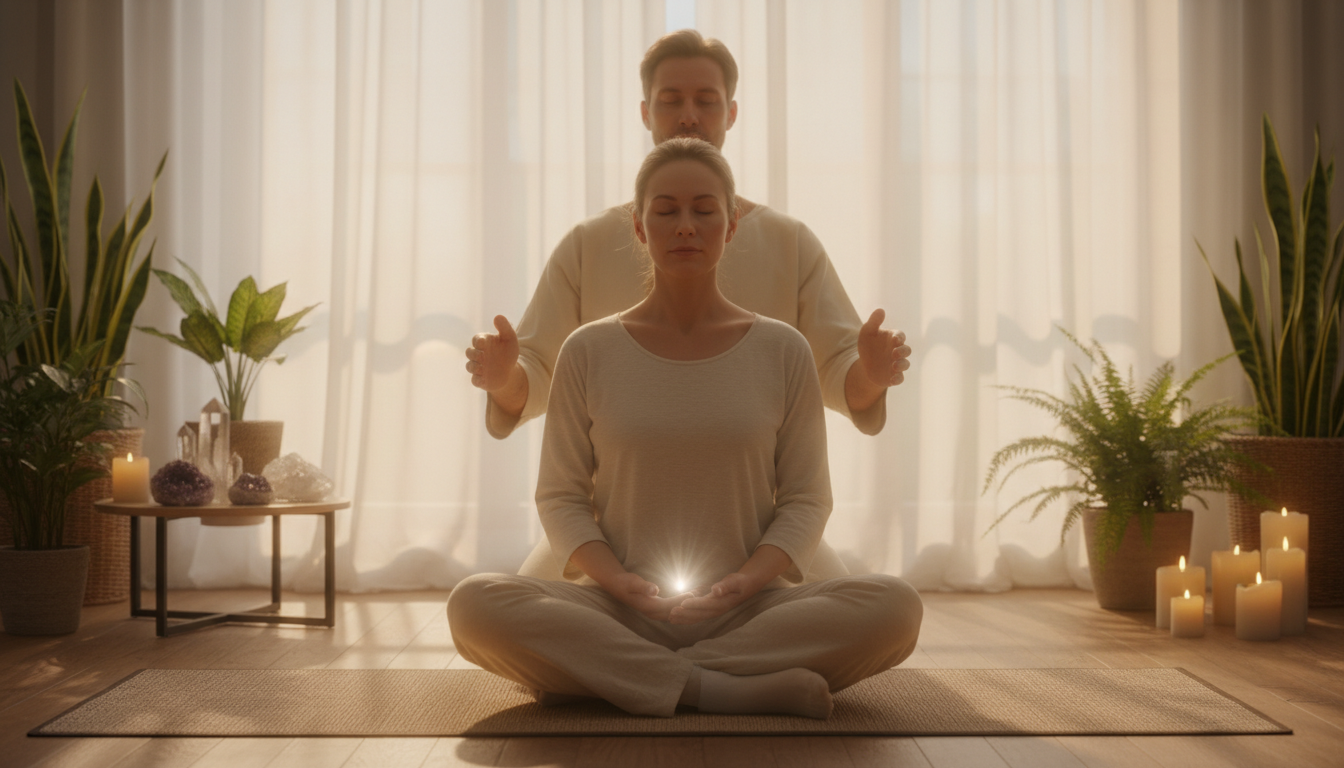
Welcome. This short guide promises a friendly, beginner-safe explanation of a simple, repeatable approach that fits daily life in the United States.
Energy healing refers to channeling a subtle life force through hands or focused intention to help restore balance, often used alongside conventional care per the National Center for Complementary and Integrative Health.
Many start this journey for stress relief, better sleep, emotional balance, and overall wellness. First sessions can feel like warmth, tingling, or deep relaxation. Others notice calm only afterward. All are normal.
Expectations: This practice complements medical care and is not a substitute for professional treatment when managing symptoms, recovery, or mental health.
We will begin with basics, then show how to prepare mind, body, and space. A safe beginner session follows, plus popular methods and tips for picking a practitioner. Stay curious, stay grounded, and repeat small steps for steady progress.
Key Takeaways
- Simple steps can help anyone get started on a healing journey.
- Sessions vary; some sense sensations, others feel calm later.
- This work supports wellness and should complement medical care.
- The article offers a beginner session and practical selection tips.
- Consistency and curiosity yield the best long-term benefits.
Learn more practical guidance in the full guide: get started with a complete guide.
Energy Healing Basics: What It Is and What It Can Support
Hands-on energy work aims to nudge the body’s natural flow toward steadier balance. At its core, this approach involves channeling healing energy through the practitioner’s hands into the client to support the body’s return to equilibrium without forcing change or promising cures.
Work in this field treats the person as a whole—body, mind, and spirit—rather than chasing a single symptom. Practitioners encourage natural flow and gently address places that feel stuck, tense, or reactive, often called blockages.

Common benefits reported include relaxation, improved sleep, reduced stress, calmer responses to anxiety, and occasional emotional release. Real-life reasons people explore this care include daily stress, burnout, emotional overwhelm, and support alongside medical recovery routines.
Research is growing. Some modalities, like Reiki and acupuncture, have trials suggesting support for stress and pain. Always use this work as a low-risk, complementary option within a wider health plan and consult medical professionals when needed. For a practical guide on sending caring intent to others, see a short walkthrough on sending healing energy.
Getting Started: Preparing Your Mind, Body, and Space for Healing Practices
A single, simple intention gives each session a clear focus and keeps practice manageable. Choose one aim such as “support calm,” “release tension,” or “sleep more deeply.” Tracking the same focus across minutes of practice helps you notice gradual change.
Grounding with breathwork
Begin with slow inhales and long exhales for a few minutes. Feel your feet on the floor and notice body energy without judgment. Scan for tight spots—jaw, shoulders, belly—and breathe toward them to promote clarity.
Simple practice setup
Wear loose clothing, sit or lie where you feel safe, and keep water nearby. A light blanket and soft music may help. Optional crystals or personal objects can amplify focus but are not required.
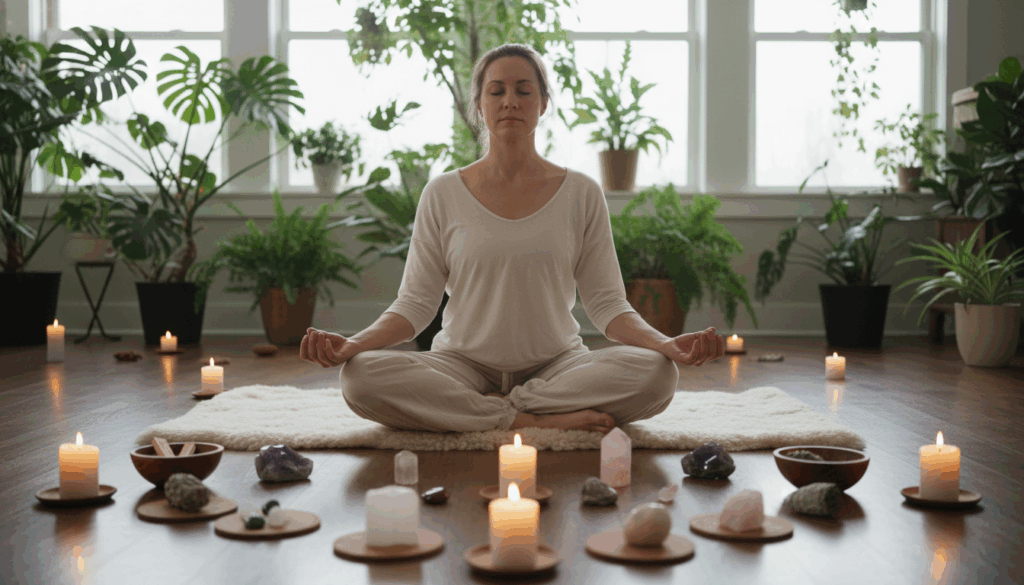
- Set one clear intention before the session.
- Use guided breathwork for 3–10 minutes of grounding.
- Scan the body for tension and relax gently.
- Stop or slow down if strong emotions arise; seek a trained practitioner if needed.
| Item | Purpose | Recommended |
|---|---|---|
| Comfortable seat or bed | Supports relaxation and posture | Yes |
| Water | Hydration during and after a session | Yes |
| Light blanket | Warmth and cocooning comfort | Optional |
| Crystals or personal objects | Focus aid for some people | Optional |
| Quiet or soft music | Background support for calm | Optional |
Most people do not notice dramatic sensations at first. A common early benefit is better rest or a calmer mind later that night. For added safety and guidance on boundaries and protection, see practical psychic protection practices.
How Do You Perform Energy Healing in a Simple Beginner Session
Start by settling the breath and easing the shoulders; this readies both body and attention for the short session.
Center, tune in, and set an intention
Center with three to five slow breaths. Gently focus attention on the wish for calm or balance. Set one clear aim for the session and keep it simple.
Hand placement: touch or hover
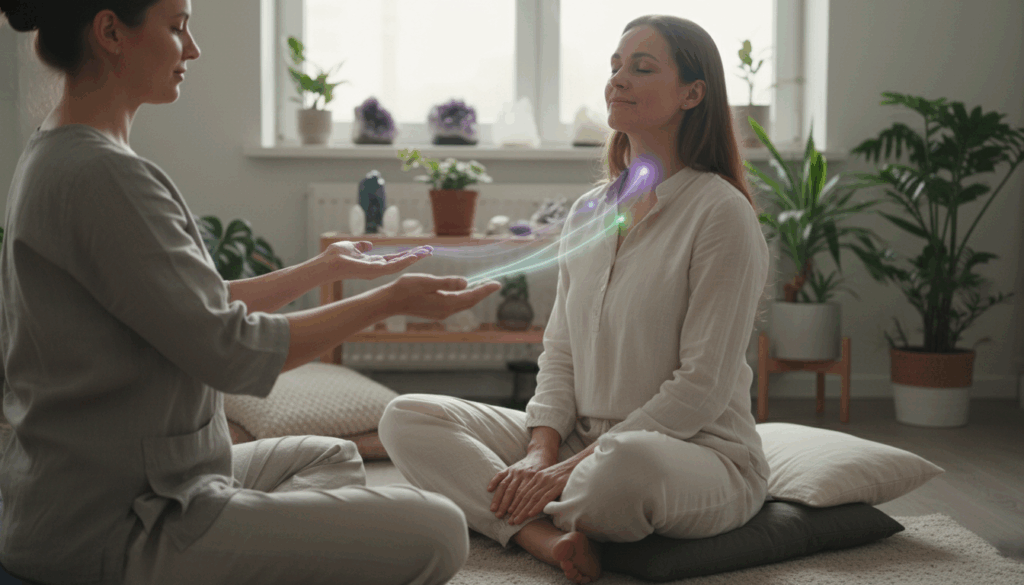
Offer consent first. Use a light touch if the person prefers, or hover hands a few inches above the body for non-invasive work. Both options support comfort and safety.
Scanning and encouraging flow
Move hands slowly from head to toe. Pause where you sense warmth, coolness, tingling, or a sticky heaviness—these may indicate a blockage.
Pause, breathe toward the spot, and imagine softening. Let the body shift rather than forcing change.
Chakra balancing made simple
Hold hands over each major chakra for one to two minutes. Think of chakras as centers that influence body and mind. Gentle attention can help restore balance.
Noticing sensations and closing
Common responses include warmth, pulsing, tingling, or emotional release. No strong sense is still valid and can be beneficial.
To close, place hands at the heart or belly, take grounding breaths, sip water, and jot one brief note about sleep or mood.
| Step | Time (minutes) | Purpose |
|---|---|---|
| Centering | 2–3 | Quiet the mind and set intention |
| Scanning | 5–8 | Locate sensations or blockages |
| Chakra balancing | 6–10 | Harmonize centers and restore balance |
| Closing & journaling | 2–3 | Ground, integrate insights, track progress |
For a longer walkthrough and guided session notes, see a clear beginner outline at a beginner session guide.
Popular Energy Healing Practices and Techniques to Explore
Below is a starter menu of trusted techniques to explore at home or with a trained practitioner.

Reiki basics
Reiki means “universal life force” and is taught via attunement and set hand positions. Many practitioners use light touch or hover hands a few inches above the body to support deep relaxation and stress relief.
Distance Reiki
“Invite the person’s energetic essence between the hands and offer Reiki for the highest healing good.”
Distance Reiki, taught at second degree, uses a distance symbol to send support across time or space. Recipients often treat sessions like a quiet rest or continue daily tasks—responses vary.
Breathwork and chakra options
Breathwork techniques offer accessible tools for emotional release and calm. Try slow, guided cycles for five to fifteen minutes.
People choose chakra-focused work when they feel stuck emotionally or want a clear scan from root to crown.
Other modalities
Options include acupuncture for pain and symptom support, qigong (movement plus breath), EFT tapping for stress patterns, Therapeutic Touch for non-touch balancing, and reflexology for pressure-point relief.
Note: If primary goals involve recovery or pain, pair these practices with clinician-guided care and pick methods that feel safe for your body. For training pathways and practitioner options, consider formal coursework like a certified training program.
What to Expect When Working With a Practitioner (and How to Choose One)
Visiting a trusted practitioner often begins with a short consultation to set goals and share medical history. This quiet start helps tailor the session to your needs and limits.
Typical session flow
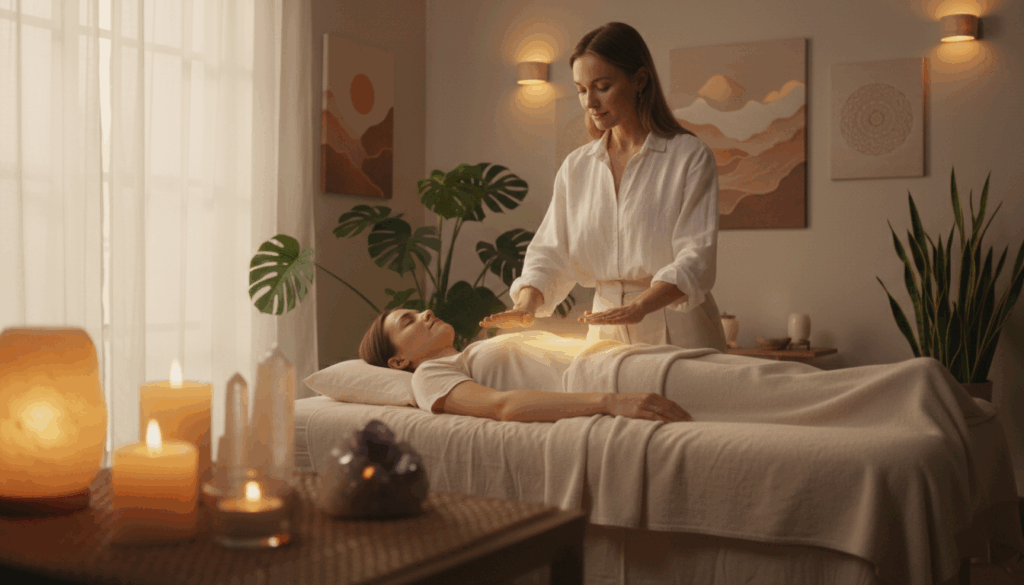
Most sessions follow three clear parts: intake, the treatment while fully clothed on a table, and a brief debrief afterward. Practitioners ask about comfort, consent, and any recent health concerns before starting.
Tools, crystals, and varied sensations
Some practitioners place crystals or small stones to focus intention. These items are optional and never required. People report many sensations—warmth, tingling, pulsing, vivid imagery, or gentle emotional release.
Comfort and safety basics
Wear loose clothing and bring water. Speak up if you feel uneasy or need a pause. A good practitioner respects consent-based touch, clear pricing, and plain answers about training.
Choosing the right practitioner
- Verify training or certifications and client reviews.
- Confirm consent policies and transparent fees.
- Pick a style that respects whether you’re curious, spiritual, or skeptical.
Science, skepticism, and medical context
Research suggests some methods, like Reiki and acupuncture, can support stress and pain relief. More study is needed for many other approaches.
Important: Use this work alongside conventional care for anxiety, chronic pain, or recovery. Talk with your healthcare provider if you’re unsure.
For related counseling options, consider a trusted referral like trusted practitioner support.
| Item | Purpose | What to expect | Tip |
|---|---|---|---|
| Intake | Clarify goals & history | Short questions, consent | Be honest about medications |
| Treatment | Calm, focused session | Fully clothed on table; 20–45 minutes typical | Wear loose layers |
| Tools | Focus intention | Crystals or music optional | Ask before placement |
| Debrief | Integration & feedback | Notes on sensations and next steps | Ask for aftercare tips |
Conclusion
Strong, short, focused sessions repeated over time can quietly improve rest and mood.
To recap: Prepare your space and mind, set a simple intention, use hands-on or hovering placements, scan gently, support flow, and close by grounding. Small, consistent practice helps the work feel natural.
Track sleep, stress, and mood rather than chasing a single sensation. Explore breathwork, Reiki-style hand placements, or chakra attention and mix practices that feel right. Energy healing supports wellness and may aid quality of life, but it should complement medical care, not replace it.
For guided learning and next steps, consider psychic medium classes to expand skills safely and confidently.
FAQ
What is energy healing and what can it support?
Energy healing is a holistic practice that channels subtle life force through the hands to restore balance in body, mind, and spirit. People often report benefits such as deep relaxation, improved sleep, reduced stress and anxiety, and a greater sense of well‑being. It complements medical care rather than replacing it.
What happens during a typical beginner session?
A session usually begins with a brief consultation about health and intentions, followed by getting comfortable and fully clothed. The practitioner may use light touch or hovering hands, scan for areas of blockage, work with chakra balancing, and close with grounding techniques and a short debrief.
How should I prepare my mind, body, and space before a session?
Set a clear intention for the session and choose a focus, such as stress relief or pain management. Ground with simple breathwork to calm the nervous system. Create a quiet, comfortable space with good hydration and optional items like cushions or crystals to support relaxation.
What sensations might I notice during treatment?
Common sensations include warmth, tingling, pulsing, shifts in emotion, or a feeling of lightness. Some people experience little physical sensation yet still report mental or emotional clarity after the session.
What are common hand placement methods used?
Practitioners use either light touch on the body or hovering hands a few inches above. Both methods aim to encourage natural energy flow and are non‑invasive. Hand positions often target major chakras and areas of reported discomfort.
How does chakra balancing fit into a session?
Chakra balancing focuses on harmonizing the major energy centers along the spine to support emotional and physical health. A practitioner may assess each chakra’s tone and use targeted hand positions, breathwork, or guided visualization to restore balance.
Can I learn basic techniques for self‑practice?
Yes. Beginners can learn simple grounding and breath exercises, basic hand placements for self‑care, and short meditations to tune in. Starting with 10–20 minutes a day builds awareness and supports longer term wellness.
What popular modalities should I explore beyond hands‑on work?
Consider Reiki for learned hand positions, qigong for movement and breath, EFT tapping for emotional release, Therapeutic Touch, reflexology, and guided breathwork. Each offers a distinct approach to calming the nervous system and supporting recovery.
How does distance or remote work function?
Distance sessions use intention and focused protocols to send supportive vibes across space and time. Many clients report similar benefits to in‑person work, though experiences vary. Clear communication and a pre‑session intention help align the process.
Are crystals or rocks necessary during a session?
Crystals are optional tools some practitioners use to focus attention or intention. They are not required for effective work; comfort, intention, and breath are the core supports for most practices.
How do I choose a practitioner and evaluate safety?
Look for experienced practitioners with clear client guidelines, good reviews, and a professional approach to consent and boundaries. Discuss medical conditions up front and view energy work as complementary care. Trust your comfort level and ask about training, session flow, and follow‑up recommendations.
What does research say about effectiveness?
Studies show promising benefits for relaxation, stress reduction, and improved mood, though evidence varies by modality. Energy work is best used alongside conventional medical care, especially for serious conditions, while focusing on symptom relief and wellness support.