

This introduction answers the big questionsabout the word that draws curiosity across the United States and beyond.
Witches often live next door, says Deborah Blake, and many practice earth-focused paths rooted in ritual, seasons, and moon cycles. Journalist Alex Mar notes about a million practitioners in the U.S., many calling themselves Pagan or following nature-centered beliefs.
Modern practice looks less like Hollywood and more like focused intent, ritual, and daily habit. Ethical guides such as the Wiccan Rede — “Harm none and do as you will” — shape how people practice and why this matters today.
In this guide we separate myth from fact, explain how magic works as intent and attention, and preview topics from history to coven life. Read on with a respectful lens and learn how language and context reveal the true shape of this living tradition.
Key Takeaways
- “Witches” often describe ordinary people with nature-based spiritual practice.
- Modern rituals focus on intent, seasons, and lunar cycles rather than spectacle.
- About a million U.S. practitioners identify with Pagan or related paths.
- Ethics like the Wiccan Rede guide daily choices and community life.
- This article will separate myths from factual practices and language tips.
Is Witchcraft Real? Defining Magic, Practice, and Belief Today
Witch often serves as an umbrella word for many paths: Wicca, folk herbalism, ritual craft, and solitary practice. Alex Mar notes that when people mean actual practicing witches today, they often mean Pagans who follow earth-centered religion and seasonal rites.
Magick, in modern occult terms, can be framed as focused will that aims to shape outcomes. Aleister Crowley called this the manifestation of intent in the material world. That view makes magical work more about aligning action, ritual, and attention than about flashy effects.
Common beliefs include reverence for the earth, timing rituals to solstices and moon phases, and ethical guides that stress responsibility. Practices vary: some join covens, others remain solitary.

- Witchcraft covers diverse methods and aims rather than one fixed system.
- Belief and practice combine to provide structure and meaning in daily life.
- Simple rituals plus focused steps often support practical change today.
For a related look at focused psychic development, see discover your telepathic abilities.
“When people are talking about actual practicing witches today, what they’re really talking about are Pagans.”
The Long Story: From Ancient Practices to Witch Trials and Pop Culture
Long before courts recorded accusations, communities turned to shamans, herbalists, and wise women for healing and guidance. Anthropologists note similar roles across continents: ritual specialists who mixed medicine, prayer, and local lore.
Persecution followed centuries later. Between the 15th and 18th centuries, European hunts and colonial trials claimed thousands of lives. France alone saw about 2,000 trials between 1550 and 1700. In Salem in 1692, 19 were hanged, five died in jail, and one was pressed to death. Later exonerations and a 1957 Massachusetts apology admitted the grave error.

Fear, politics, and religion often drove accusations. These pressures hit marginalized people and many women hardest. That grim history reshaped how the word changed meaning over time.
Pop culture then recast the image. From The Wizard of Oz to Hocus Pocus and Harry Potter, films and shows gave the modern public broomsticks, hats, and spells to imagine.
- Early ritual roles served community needs long before the charged label arrived.
- Centuries of hunts and trials produced documented tragedies and later apologies.
- Media softened and mythologized harsh history, creating powerful modern images.
“Popular stories have powerful sway over what people expect of those who practice old folk ways.”
For a related look at focused psychic work, see clairvoyant secrets revealed.
Witch, Wiccan, and Pagan: What’s the Difference?
Labels like Wiccan and Pagan help people name diverse spiritual paths, but the lines often blur.
Wicca started in the 20th century in the UK and has a clear calendar: eight sabbats, regular esbats, and magic woven into practice.
Deborah Blake notes, “All witches are not Wiccans, although all Wiccans are witches.”
Witches and Wiccans: Overlap, distinctions, and the Wiccan Rede
Many Wiccans follow the Wiccan Rede, often phrased as “Harm none, do as you will.” That ethical frame guides ritual choices and consent.
Overlap shows up in ritual work, seasonal rites, and spellcraft. Differences appear in theology and formal structure: some Wiccan groups keep initiation and coven rules; others prefer solitary paths.
Pagan beliefs: Nature-based religion, gods and goddesses, and the sacred earth
Pagans usually honor the earth, mark moon phases, and bless harvest cycles. They may honor multiple gods and goddesses as expressions of life, change, and element forces.
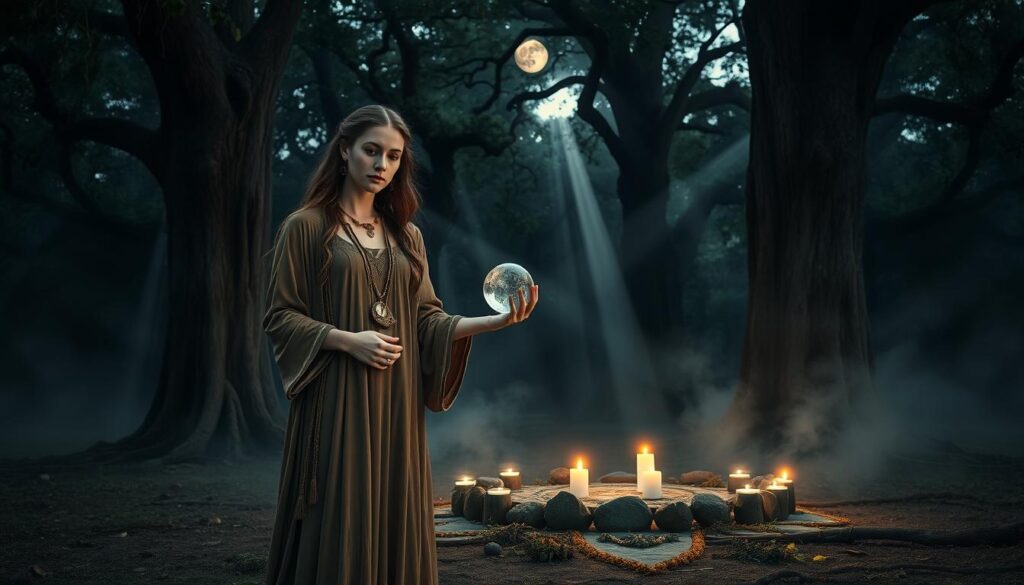
- Practice ranges from organized religion to eclectic solitary work.
- Many witches believe in mindful intent and community ethics.
- Personal responsibility and consent remain core values across groups.
| Group | Focus | Structure | Common rituals |
|---|---|---|---|
| Wicca | Modern nature religion | Formal covens or solitary; calendar of sabbats | Sabbats, esbats, ritual magic |
| Pagan | Broad nature reverence | Loose, varied traditions | Seasonal festivals, deity honors |
| Witch (practitioner) | Practical ritual work | Any form; eclectic to formal | Spellcraft, herbal work, altar practice |
“All witches are not Wiccans, although all Wiccans are witches.”
For readers curious about focused skill, see improve psychic readings for practical tips that match many modern practices.
Spells, Rituals, and Everyday Magic: How Practices Work in Real Life
Everyday magic often looks like clear intention combined with small, repeatable acts. Practitioners liken spells to prayers: a focused request aimed at a practical outcome. A good spell channels purpose and attention through timing, symbols, and simple action.
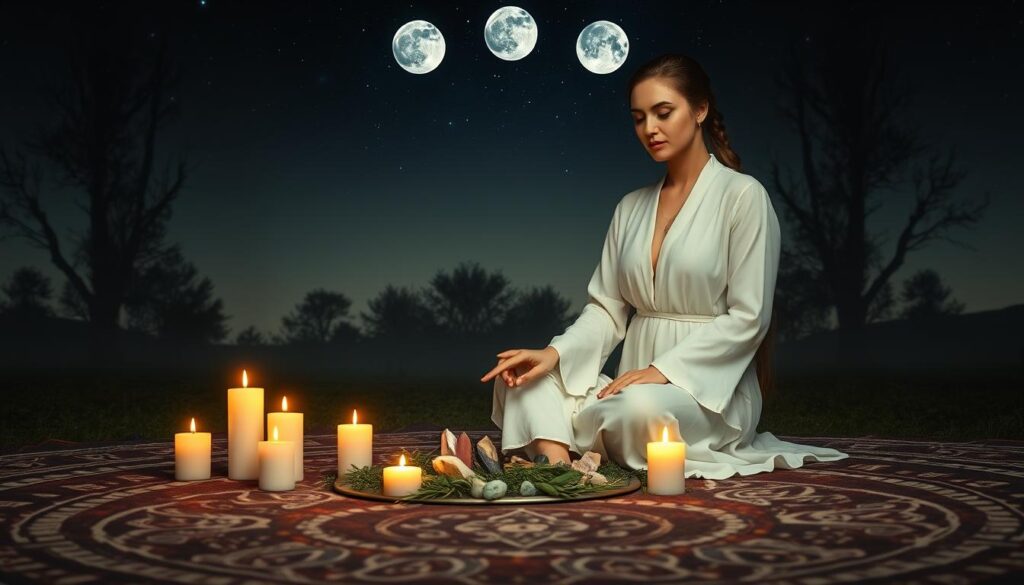
Spells as focused intent
Think of a spell as a short plan: state a goal, choose an action, and focus your energy. Many people use affirmation, visualization, and a concrete step to make the effort feel real.
Tools and ethics
Common tools include candles, herbs, an altar, and tarot meanings for insight. Ritual flow often starts with casting a circle, calling the elements, and directing energy toward the aim.
“Harm none” guides many practitioners, paired with the idea that energy returns in some measure.
Moon cycles and seasons
The moon shapes timing: new moon for beginnings, waxing to grow projects, full for peak power, waning to release. Seasons add another layer—Yule through Samhain mark the sabbats and help align work with nature.
- Short protection or prosperity spells focus on clear intent and consent.
- “Drawing down the moon” is a devotional ritual that links personal energy to lunar force.
- Even small rituals support calm, agency, and habit when practiced responsibly.
Covens and Community: How Witches Gather, Learn, and Celebrate
Gathering in trusted circles helps many learn skills that solitary study can’t always teach.
What a coven looks like: A coven is a small, trusted group that meets for sabbats, moon rites, and life passages. Meetings may take place outdoors or in a home and can range from a handful of members to dozens.
Many people remain solitary for long stretches. Other times they join a coven for shared teaching, support, or ritual practice.
From study to initiation
Some traditions use a “year and a day” of study before initiation. That period builds skill, consent, and safety through mentorship.
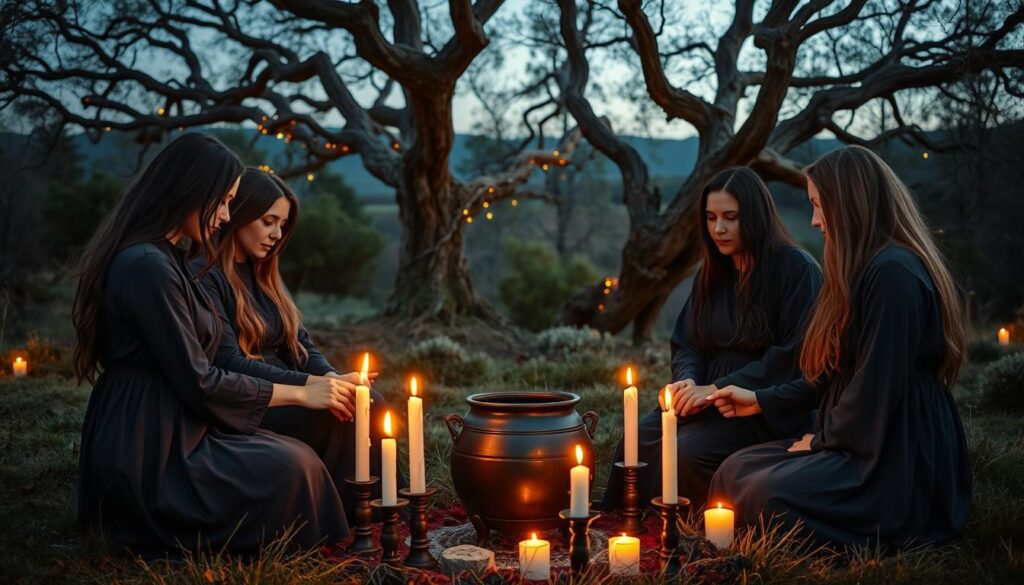
- Shared rituals: casting circles, calling elements, seasonal celebration.
- Flexible membership: visit for a sabbat, step back when time is tight.
- Boundaries and consent guide who leads and how privacy is kept.
| Feature | Typical size | Common activities |
|---|---|---|
| coven | 5–20 | Sabbats, moon rites, initiation |
| solo practitioner | 1 | Personal ritual, study, reflection |
| hybrid groups | Small gatherings | Workshops, mentoring, seasonal events |
“Time together strengthens skills, ethics, and bonds while solo work supports quiet growth.”
Myths vs Reality: Brooms, hats, black cats—and what they really mean
Legends of flying on brooms trace back to domestic tools and altered-state folklore. Popular props grew from household life and theater, later amplified by film and books. That makes many images symbolic rather than literal.
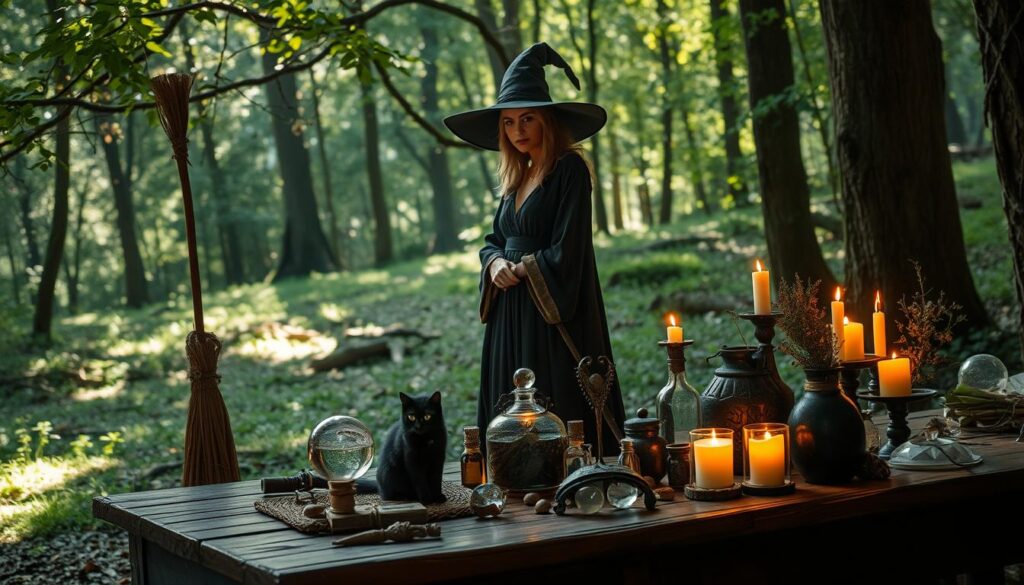
Media metaphors vs material reality
Why brooms and cauldrons stuck: both were common domestic things tied to women who managed hearth and home. Folklore mixed craft, fear, and rumor. Later, storytellers added hats and instant spells for drama.
No serious group practices literal flight. Brooms may appear in ritual form to cleanse space or mark transitions. Such use works as metaphor and action, not as a method of travel.
Why it feels real: will, practice, and outcomes
Many practitioners report tangible shifts after focused work. That effect can come from belief, steady habit, and clear goals. Magic functions as a tool to organize attention and build confidence.
- Media caricatures can shame others or obscure facts.
- Symbols like candles, herbs, and circles keep ritual form and focus.
- Observe outcomes: when practice supports clarity and courage, its power shows up in daily life.
“Understanding the gap between entertainment and practice helps people approach this tradition with respect and curiosity.”
Conclusion
Modern practitioners balance ethical intent with simple, steady rituals that fit everyday life. For many, witchcraft ties to nature, moon phases, and seasonal rites that bring rhythm to each day.
People practice alone or in a coven depending on place and need. Small spells, tarot insight, herbs, and routine support focus and practical outcomes without spectacle.
History taught a harsh lesson after years that harmed thousands; respectful language and consent matter now.
Explore safely, learn from trusted authors and local teachers, and choose the way that honors your purpose and values. For a practical tool, try a guided tarot reading to deepen reflection and direction today.
FAQ
What does it mean to practice magic or occult arts today?
Practicing magic typically refers to intentional rituals, meditation, and symbolic acts aimed at focusing intent. Many practitioners describe it as a form of spiritual discipline that blends prayer, visualization, and connection to nature. Some follow structured traditions like Wicca; others work alone using herbs, candles, or tarot to mark cycles and set personal goals.
How do witches, Wiccans, and Pagans differ?
Witches use techniques and rituals, while Wiccans follow a modern, nature-centered religion that often honors a goddess and a god and observes ethical guidelines such as “harm none.” Pagans is a broader label for diverse nature-based faiths that can include polytheism, seasonal festivals, and reverence for earth-based deities. Overlap is common, but identity and practice vary widely.
Are spells and rituals the same as prayer or therapy?
They share similarities. Spells often involve focused intent and symbolic action, much like prayer or mindfulness exercises. For many people, rituals provide structure, emotional release, and a way to channel motivation. Some find measurable benefits through improved mood, clearer goals, or community support rather than mystical causation.
Do witches belong to formal groups or work alone?
Both. Some practitioners join covens—small groups that meet to celebrate sabbats, perform rituals, and teach one another. Others practice solitary magic tailored to personal needs. Covens offer ritual structure and social bonds; solitary practice offers flexibility and privacy.
What role do the moon and seasons play in practice?
Many traditions use lunar phases and seasonal sabbats to time rituals. The new moon may suit beginnings, the full moon favors release or amplification, and seasonal festivals mark agricultural and life cycles. Timing helps practitioners align intention with natural rhythms and community calendars.
Are common witch symbols—brooms, black cats, pointed hats—based in history?
Most symbols come from folklore, symbolism, and media rather than literal history. Brooms and cats have household and fertility associations; hats and cauldrons grew into visual shorthand through art and theater. Modern portrayals blend myth and metaphor, shaping cultural images more than actual practice.
Can spiritual practices cause harm or benefit others?
Ethical frameworks matter. Many communities follow guidelines like “harm none” to minimize negative effects. Yet intention and action count: rituals that encourage self-care, reconciliation, or charity usually produce positive outcomes. Attempts to manipulate others raise moral concerns and can damage relationships.
How did historic witch hunts shape modern views?
Persecution during European hunts and episodes like the Salem trials created lasting trauma and stereotypes. Accusations often targeted vulnerable people, led to executions, and fed fear-based narratives. These events influenced laws, folklore, and later efforts to reclaim and reframe spiritual practices.
Where can someone learn more or find a community?
Reliable bookstores, university courses in religious studies, and community centers offer grounded information. Established groups such as the Covenant of the Goddess or local pagan meetups provide introductions and public rituals. Seek teachers with transparent ethics and respect for consent and safety.
Are gods, goddesses, and spirits part of practice or just metaphor?
That depends on belief. Some people experience deities and spirits as real presences; others work with them as archetypes or symbolic energies. Both approaches shape ritual, prayer, and worldview. The choice reflects personal experience and cultural background.
What tools do practitioners commonly use?
Typical items include altars, candles, herbs, crystals, athames or wands (symbolic tools), and divination cards like tarot. Tools serve as focal points for intent and help structure ritual. Their power tends to come from the meaning the practitioner assigns, not from any inherent magic.
Can modern media influence spiritual belief and practice?
Absolutely. Films, TV shows, and books shape expectations and vocabulary. Titles from The Wizard of Oz to contemporary series popularize imagery and sometimes inspire people to explore traditions. Media can simplify complex practices, so follow-up study helps separate entertainment from lived faith.
Is there scientific evidence for mystical outcomes?
Measurable effects often relate to psychology—improved focus, stress reduction, or social support. Controlled scientific proof of supernatural causation is lacking. Still, many report meaningful personal change through ritual, intention, and community, which are valid outcomes even without empirical demonstration.
How do ethics and intent shape modern practice?
Ethics guide whether rituals aim to heal or harm. Clear intent, consent from others, and responsibility for consequences form the backbone of many paths. Ethical practice encourages respect for people, nature, and cultural sources, and discourages manipulation or cultural appropriation.