

Michel de Nostredame began life in Saint-Rémy-de-Provence in December 1503 and died in Salon-de-Provence in July 1566.
He trained as a physician and worked as an apothecary. He wrote almanacs, translated texts, and served as an astrological consultant.
Les Prophéties (1555) is his best-known book. It contains 942 poetic quatrains that built a wide public reputation.
His family took the surname Nostredame after converting to Catholicism in the mid-1400s. He gained notice for plague treatments and royal support from Catherine de’ Medici.
This short guide will trace that life through verifiable history, the rise of a public name, and the work that made a mark on the world.
Expect clear separation of facts from later legend, plus a look at academic skepticism about how verses gained modern fame.
Key Takeaways
- Identity: Michel de Nostredame held several roles: physician, apothecary, author, translator, consultant.
- Signature work: Les Prophéties (1555) established a lasting literary reputation.
- Public life: Plague remedies and almanacs raised his profile during his lifetime.
- Origins: Family history includes a conversion to Catholicism in the 1400s.
- Legacy: Modern interest mixes cultural fascination with scholarly caution.
Setting the Stage: Nostradamus in History and Popular Culture
The sixteenth century prized practical medicine, printed almanacs, and a taste for prediction. This mix helped certain practitioners gain public notice and court patronage.

During his time, bestselling almanacs and service to nobles, including royal advisers, carried a strong public profile. After death, more than two hundred editions of Les Prophéties and over two thousand commentaries amplified that reach.
Popular culture keeps returning to these verses whenever dramatic world events appear. TV specials, books, and tabloids link lines to headline-making events, often at year-end or on anniversaries when interest spikes.
- Historical frame: Renaissance medicine, learning, and astrology helped this rise.
- Public impact: Almanacs made the figure a household reference in many regions.
- Modern cycle: Media revivals surge around major events and anniversaries.
Scholars, however, point to vagueness and hindsight in many claimed matches. Later sections will test specific attributions against contemporary sources and context. The name remains a global symbol for prediction, whether or not those claims hold up.
Explore detailed timelines and yearly interpretations at predictions by year.
Early Life and Roots: From Michel de Nostredame to “Nostradamus”
A quiet Provençal village saw the birth of Michel de Nostredame in December 1503, though sources list either the 14th or the 21st as possible dates. Records from Saint-Rémy-de-Provence give a clear place but leave the exact day uncertain.
Family origins and a new surname
One generation earlier, his paternal grandfather Cresquas adopted converted Catholicism, took the Christian name Pierre, and assumed the surname Nostredame—literally “Our Lady.” This choice tied the family name to a public devotion and shaped the family’s public identity.
Growing up in Saint-Rémy and early influences
Michel grew up as one of at least nine children of Jaume (Jacques) de Nostredame and Reynière. A large household meant many duties, lively exchanges, and exposure to different local dialects.
Local tradition names a learned great-grandfather, Jean de St. Rémy, as an early tutor. Modern historians note that documentary evidence for sustained instruction ends around 1504, so that mentoring may have been brief or partly legendary.
Provence’s mix of languages and cultures left traces in his later writing. This multicultural background, plus a family history of adaptation, helped shape his choice of study, his public name, and his early career path.
| Detail | Fact | Significance |
|---|---|---|
| Birth name | Michel de Nostredame | Original identity recorded in local registers |
| Birth date | 14 or 21 December 1503 | Exact day uncertain in sources |
| Family | Jaume (Jacques) and Reynière; at least nine children | Large household; social and linguistic exposure |
| Converted Catholicism | Grandfather Cresquas → Pierre, took “Nostredame” | Name reflects public devotion and social adaptation |
Education and Apprentice Years: Avignon, Apothecary Work, and Montpellier
A brief spell at the University of Avignon ended when an outbreak forced the campus to shut, sending him toward practical work.
At about fourteen, formal study stopped after just over a year. The plague closure reshaped early plans and led to a long period of hands-on learning.
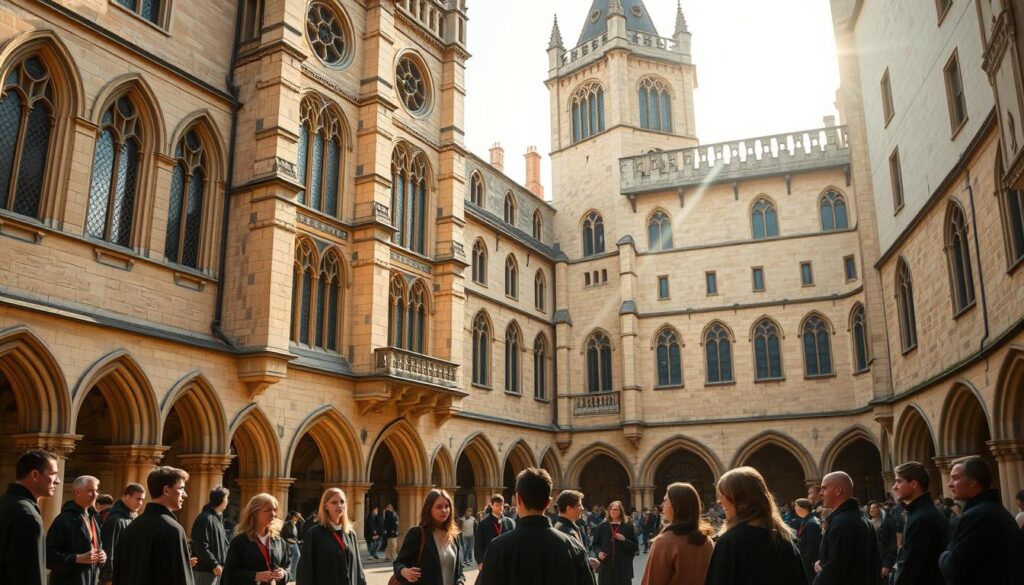
University of Avignon during the plague years
That short stay in Avignon left a clear mark. Losing access to campus pushed him into everyday remedies and local care.
The apothecary path and clashes with university statutes
For several years he worked as an apothecary, compounding remedies and treating patients directly. Those practical years taught craft, inventory, and patient needs in ways books did not.
Studies at the University of Montpellier and medical ambitions
In 1529 he enrolled at the university montpellier to pursue formal medicine. The stay proved brief: statutes barred those who practiced manual trades. Register S 2 folio 87 notes his expulsion for that reason.
Physicians of the era expected some astronomy in training. Study of the stars helped time treatments, so the role of astrologer tied into medical aims.
“He blended hands-on craft with scholarly goals, a mix that later shaped his public reputation.”
- Avignon: early study cut short by plague.
- Apothecary years: practical skills and patient care.
- Montpellier: brief enrollment, expelled for trade rules.
Disputes with authorities followed. Records show an accusation in Agen (1538) and a short imprisonment in 1561 after publishing an almanac without episcopal permission. These clashes highlight tensions between practice, print, and church control.
| Period | Activity | Impact |
|---|---|---|
| c. 1517–1518 | University of Avignon (study halted) | Plague closure; moved to practical work |
| 1520s | Apothecary practice | Hands-on remedies; patient experience |
| 1529 | University of Montpellier (enrolled, expelled) | Expulsion for manual trade; documented in Register S 2 folio 87 |
| 1538–1561 | Disputes with authorities | Accusation in Agen; brief imprisonment for publishing |
These years fused craft and study. Practical work and brief university training together forged a practitioner who mixed remedies, timing, and texts — a bridge between street practice and learned ambition. For a fuller timeline, see this biography overview.
Physician on the Front Lines: Plague, Remedies, and Reputation
Outbreaks in mid-16th-century Provence forced a hands-on medical response across several towns. Field work in Marseille in 1545 included aid to Louis Serre. Over the following years, service continued in Aix and Salon-de-Provence.
Practical hygiene became a core tactic. He rejected routine bloodletting and harmful mercury potions. Instead, emphasis fell on cleanliness, fresh air, and removing infected corpses to limit spread.
The rose pill — a lozenge made from rosehips and simple ingredients — offered comfort when cures did not exist. Such remedies appealed to people seeking relief during panic and loss.
- Local diets and sanitation measures aimed to support patients rather than promise miraculous cures.
- Supportive care likely improved outcomes in some cases, even if not a true cure.
- Years of hands-on work built a reputation for compassion and pragmatic skill.
“Basic sanitation and steady care mattered most when options were few.”

For timeline context and later interpretations, see the review of predictions for predictions 2025.
From Medicine to the Stars: How a French astrologer built his name
By the 1550s he shifted from bedside care to publishing short annual guides that mixed celestial charts with practical advice. This move let a local practitioner reach readers across regions and gain public notice.
Almanacs, astrology, and serving wealthy patrons
Almanacs were widely read books in the sixteenth century. They listed seasons, eclipses, weather hints, and practical notes for the year.
He released his first almanac by 1550 and followed with yearly issues that accumulated thousands of forecasts. Nobles and notable clients then sought horoscopes and tailored counsel, even if he often asked them to bring their own birth charts.
Catherine de’ Medici and royal attention
After Catherine de’ Medici read his 1555 almanacs, she summoned him to Paris for explanations and charts for her children. That royal support helped secure a formal court post as Counselor and Physician-in-Ordinary to Charles IX.
Working method and impact: Critics in medical circles complained about his methods, yet patronage and printed books gave him visible standing. This combination of court favor and steady publication fueled his later literary rise.

Who Was Nostradamus and Why Was He Famous
A single printed volume turned local practice into a lasting public identity.
The physician-astrologer-author blend that shaped his fame
Medical training and apothecary skill gave credibility. Simple remedies and sanitary practices mattered to the public.
Astrology and yearly almanacs extended reach. Combining care, charts, and print made an unusual public figure.

Les Prophéties and the rise of his global reputation
The 1555 book of quatrains made interpretation easy for readers. Editions and translations pushed fame beyond France into the wider world.
“Readers often preferred the idea of prophecy over strict, testable predictions.”
- Hands-on practice provided trust.
- Printed verses offered lasting mystery.
- Court favor sustained public status.
| Role | Contribution | Effect |
|---|---|---|
| Physician | Practical care and remedies | Local trust and credibility |
| Author | Almanacs and Les Prophéties | Printed legacy and repeat readership |
| Astrologer | Charts and forecasts | Appeal to court and curious readers |
His lasting name rests on persona, the allure of enigmatic lines, and a public hunger for meaning. For a closer look at later interpretations and famous predictions, see the linked review.
Inside Les Prophéties: Quatrains, “Centuries,” and style
Les Prophéties arranges short four-line stanzas into larger groupings that invite readers to hunt for patterns across time. This compact book feels like a set of puzzles; its form encourages comparison and ongoing debate.
942 quatrains and the structure of the work
The complete corpus totals 942 quatrains, grouped into sets called centuries. Most centuries aim for roughly one hundred verses; one contains forty-two.
Early printed editions vary. The 1555 release had about 353 quatrains, and later printers added or reordered lines. These quirks explain how the final tally reached 942 across editions.
Obscure language, symbolism, and dated vs. undated verses
Style favors deliberate obscurity. Mixed languages, compressed syntax, and classical flourishes make lines elastic in meaning.
Many stanzas lack dates. Undated passages let readers map imagery onto different eras, widening possible matches and prolonging interest.
| Feature | Effect | Result over time |
|---|---|---|
| Short quatrains | Evocative, easy to quote | Frequent re-interpretation |
| Mixed language & wordplay | Ambiguity in meaning | Flexible mappings to events |
| Dated vs undated lines | Some anchor in a century, many do not | Undated verses invite broader readings |
Common themes include war, leaders, natural disasters, and shifts in power. The stanza form itself—brief, striking, and symbolic—helped the prophecies stay relevant as readers across eras re-read and re-claimed lines.
What Nostradamus Predicted: Claims, Context, and Controversy
Over centuries, readers have matched a few terse quatrains to major moments in history. These links mix literal readings with later storytelling.
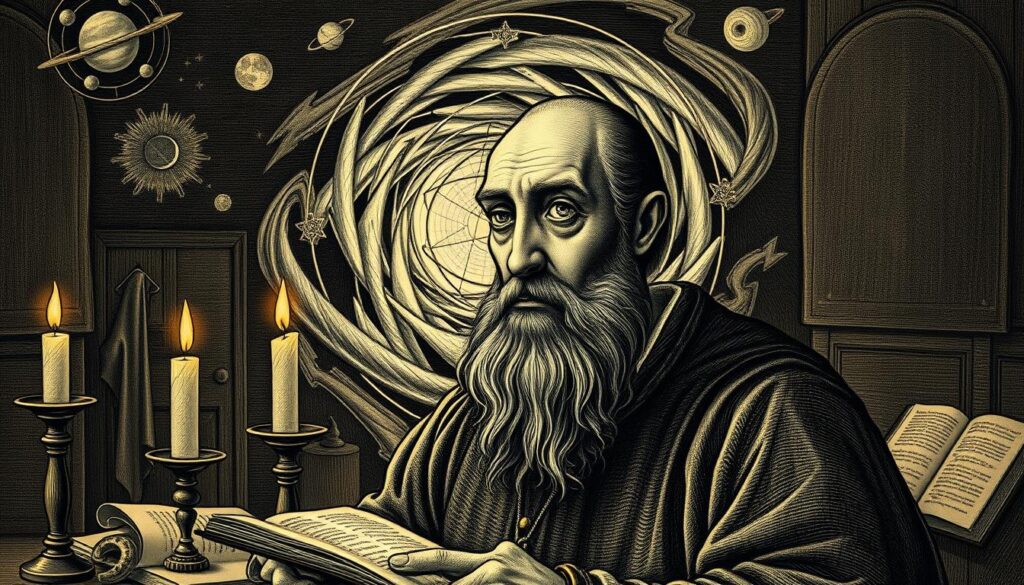
From King Henri II to revolutionary upheavals
Early claims tie a dramatic jousting death to king henri as a vivid example. Later writers pushed connections to the French Revolution and other upheavals.
Attributions to leaders and modern crises
Enthusiasts later read lines as foretelling Napoleon or Hitler. Modern crises like fires, wars, or attacks get retrofitted to short verses when headlines arrive. Such matches often appear after events, not before.
How timing, translation, and hindsight shape a prediction
Loose dating, variant translations, and selective quoting bend meaning. Scholars note that flexible phrasing allows many possible fits, which invites hindsight bias.
“Ambiguity plus later context makes confident readings risky.”
- Common pattern: vague verse → event match after the fact.
- Result: many claimed matches lack clear, contemporary evidence.
| Claim | Typical evidence | Scholarly view |
|---|---|---|
| King Henry II | Post-event interpretations of a quatrain | Unclear dating; likely retroactive fit |
| Napoleon/Hitler | Language mapped to names and deeds | Translations often forced |
| Modern events | Broad imagery used after crises | Hindsight and selective quoting common |
Balanced reading accepts popular curiosity while treating most nostradamus predictions as ambiguous. For sound history, weigh original texts, dates, and translation choices before assuming certainty.
How He Worked: Sources, astrology, and the making of prophecy
His method paired star charts with tight summaries from earlier chronicles to shape pointed, cryptic verses.

Judicial astrology, almanacs, and horoscopes
Judicial astrology served as a respected framework in the sixteenth century for linking planetary cycles to events. Practitioners used it to judge the quality and time of outcomes across politics, weather, and health.
Almanacs repeated tables of planetary motion and offered seasonal guidance. Client consultations often relied on those cycles. At times he asked clients for their own birth charts rather than recalculating them himself, a practice critics seized on.
“Rivals such as Laurens Videl pointed to calculation errors and raised doubts about method.”
Historical and literary sources behind the prophecies
He read widely. Classical authors (Livy, Suetonius, Plutarch), medieval chroniclers (Villehardouin, Froissart), and contemporary works like Mirabilis Liber and Roussat appear in paraphrased form.
Many images in the quatrains echo older passages. This is an important fact: lines often borrow themes and wording from earlier books and chronicles.
- Method: compilation, paraphrase, and projection.
- Effect: evocative stanzas that resist strict testing against dates.
- Reading tip: assess verses by tracing sources, not by sensational fits.
| Element | Role in process | Result |
|---|---|---|
| Judicial astrology | Timing and quality assessment | Gave apparent structure to forecasts |
| Almanacs & charts | Practical tables for readers | Widespread circulation and client use |
| Compiled sources | Classical, medieval, contemporary texts | Familiar images repurposed into verse |
In short, the process mixed learned material with astrological framing to produce suggestive lines. That combination explains why readers find the verses rich but hard to test as precise predictions.
Final Years, Death, and the Tomb in Salon-de-Provence
In his final years, stubborn joint pain gave way to swelling that limited travel and practice. By 1566 a long-standing gout condition had progressed into pronounced edema, making movement difficult and reducing public work.
Gout, edema, and the will
He prepared a detailed will to secure family finances. The document left property and a sum of 3,444 crowns to his wife and children, with clear conditions for upkeep and inheritance. This plan aimed to protect relatives across difficult years.
Death in 1566 and reinterment after the French Revolution
Contemporary records note the date of death as 1 or 2 July 1566 in Salon-de-Provence; minor discrepancies reflect period limits in record keeping. The body was first laid to rest in a Franciscan chapel.
After the French Revolution, many sacred sites were altered. His remains were moved into the Collégiale Saint-Laurent in a reinterment that matched wider changes to church property.
“Publication of new editions after his passing kept public interest alive and helped shape a lasting posthumous reputation.”

Nostradamus Today: Legacy, skepticism, and why people still care
Today the short, enigmatic stanzas serve more as cultural touchstones than testable forecasts.

Academic criticism: vagueness, misinterpretation, and pseudoscience
Scholars argue that many quatrains are too vague and undated to prove foresight.
They call the prophecies non-falsifiable and open to endless reinterpretation.
Translation choices and selective quoting make it easy to fit lines to later events.
That retrofitting explains many claimed matches more than clear forecasting does.
Why the name endures in media, books, and public imagination
Mass media revive the verses around major events, which keeps interest alive.
New books, TV specials, and commentaries push the content into headlines and gift-shop shelves.
For many people the verses offer comfort, curiosity, or a thrill when searching for patterns.
Enthusiast literature and academic study coexist: one seeks meaning, the other tests sources.
“Ambiguity invites many readings; historical study rewards tested evidence.”
| Aspect | Common claim | Scholarly view |
|---|---|---|
| Vagueness | Allows broad fits | Non-falsifiable; invites bias |
| Translation | Names and images matched to events | Variants change meaning; careful tracing needed |
| Popularity | New editions and media cycles | Over 200 editions; cultural persistence |
Bottom line: Treat the verses as literary and historical artifacts rather than proof of a literal prophet.
If you want a different perspective, read a modern take on clairvoyant methods here: clairvoyant secrets revealed.
Conclusion
Key takeaway: a French astrologer and physician built a public identity that mixed practical medicine, almanacs, and poetic quatrains into a lasting cultural name.
Born in Saint-Rémy, trained at the University of Avignon and the University of Montpellier, and apprenticed as an apothecary, the figure treated plague patients and then reached courts through printed books.
Les Prophéties gathered quatrains into centuries, inviting repeated reading across years. Claims about what he predicted—from King Henri II to modern events—rely on loose dating, translation choices, and hindsight more than clear fact.
Balanced view: these prophecies remain a vivid historical artifact. They show how astrology, literature, and public life shape meaning across time while prompting debate about prediction, death, and the shape of the future.
FAQ
Who was Michel de Nostredame and what made him notable?
Michel de Nostredame, a 16th-century French physician and apothecary, gained wide attention as an author of almanacs and prophetic quatrains gathered in Les Prophéties. His mix of medical practice, astrology, and publishing attracted royal patrons and a broad public, shaping a reputation that persisted through centuries.
What shaped his early life and family background?
Born in Saint-Rémy-de-Provence, he came from a Jewish-convert family that adopted Catholicism. Early influences included regional culture, classical learning, and local religious currents, all of which informed his later career as both healer and writer.
How did his education and apprenticeship prepare him?
He studied in Avignon during plague years, apprenticed as an apothecary, and later attended Montpellier. Restrictions at university and practical work in pharmacies pushed him toward hands-on remedies and public health measures rather than a conventional academic career.
What medical practices did he use during plague outbreaks?
He combined folk remedies, hygienic measures, and remedies such as the so-called “rose pill.” His approach emphasized cleanliness, topical treatments, and practical care, which helped build a local reputation across Marseille, Aix, and Salon-de-Provence.
How did he move from medicine into astrology and publishing?
Publishing annual almanacs introduced him to a wider audience. He used judicial astrology and horoscope techniques familiar at the time to frame predictions, attracting wealthy patrons and securing influence at court through printed forecasts.
Did any royals or elites support his work?
Yes. Catherine de’ Medici and other noble patrons took interest in his counsel and publications. Royal attention helped spread his reputation beyond Provence and lent authority to his almanacs and quatrains.
What are the main features of Les Prophéties?
The book organizes 942 quatrains into groups called “Centuries.” Its language mixes French, Latin, and allegory. Poetic obscurity and symbolic phrasing make the verses open to many interpretations and retrospective readings.
Which major events do people claim he foresaw?
Modern attributions link his verses to events such as the death of King Henri II, Napoleon’s rise, Adolf Hitler’s career, and revolutionary outbreaks. Scholars note that loose language and translation choices often enable post-event matching.
How did he produce his prophecies and almanacs?
He drew on judicial astrology, historical chronicles, and contemporary events. Almanacs combined practical calendar information with astrological predictions, while quatrains blended historical references and poetic symbolism.
What happened in his final years and where is he buried?
In later life he suffered gout and edema and wrote wills before dying in 1566. His remains were interred in Salon-de-Provence, with later reinterment after the French Revolution altering the tomb’s history.
Why do skeptics criticize his legacy?
Critics point to vague phrasing, retrospective interpretation, selective translation, and lack of precise dates. Academic historians view many supposed hits as the result of broad language that readers fit to events after they occur.
Why does public interest persist today?
Media, books, and popular culture keep his name alive. The drama of prophecy, mystery in his verse, and recurring global crises fuel curiosity, while almanacs and astrology retain cultural appeal.
Are there credible medical contributions in his work?
His practical remedies and public-health advice reflect contemporary knowledge and some effective hygiene principles. Although not groundbreaking by modern standards, his apothecary experience and pragmatic measures mattered during plague outbreaks.
How many quatrains did he write and how are they organized?
He composed 942 four-line verses grouped into “Centuries.” The arrangement aims at thematic grouping rather than strict chronology, which contributes to interpretive flexibility.
Can translations change the meaning of his verses?
Absolutely. Variations in language, punctuation, and translator bias dramatically affect sense and apparent specificity. Many claimed matches to events depend on loose or creative rendering of original lines.
Where can I find reliable scholarly studies about his life and work?
Look for academic biographies and journal articles in history of science, Renaissance studies, and textual criticism. University presses and peer-reviewed history journals offer researched perspectives that separate myth from documented fact.