

Goal: We’ll explore whether the famous quatrains truly match known events in history. Les Propheties was published in 1555 and presented forecasts in four-line poems. Those verses create a puzzle that still draws interest today.
This section sets an evidence-first path. We will summarize the most cited prophecies, show the lines often quoted, and compare them to documented events in the world.
Expect clarity and caution: wording can be broad and metaphorical, so mapping verses to facts varies among people. We will cross-check claims with historical records and flag weak matches.
For further background on published editions and ongoing debate, see this brief guide: what did nostradamus predict correctly.
Key Takeaways
- Les Propheties uses quatrains that invite many interpretations.
- We’ll weigh famous claims against documented events and sources.
- Broad language in verses makes firm matches difficult.
- Some prophecies seem to fit after the fact; evidence matters.
- Keep an open but critical view as we review each case.
Setting the stage: quatrains, prophecies, and why “accuracy” is hard to judge
To fairly assess the quatrains, we must agree on standards and limits first. Nostradamus’s compact four-line verses span centuries and cover war, flood, plague, and upheaval. That breadth makes the writings rich, yet slippery, for readers trying to tie lines to specific events.

Translations shift meaning. The original text mixes languages and archaic phrasing, so one edition can read very differently from another. Flexible wording invites multiple readings and complicates any claim of clear accuracy.
“Many links to past events are made only after those events happen; interpretation often follows time, not foresight.”
We will treat prediction and postdiction differently. Below are the criteria we use to test each claim:
- Specificity of imagery: unique details over vague metaphors.
- Chronological fit: does the timing match documented records?
- Historical plausibility: could the line reasonably describe the event?
- Generality check: would the wording suit many different historical events?
Keep confirmation bias in mind: striking matches stand out, while mismatches fade. Since many quatrains mention conflict and battle, readers may see overlaps with numerous historical events. For a year-by-year look at common readings, see the guide to Nostradamus predictions by year.
Famous “hits” people say came true: the cases most often referenced
Readers often point to a handful of quatrains as seeming to mirror major disasters and deaths. Below are the best-known examples and why each claim draws both interest and skepticism.
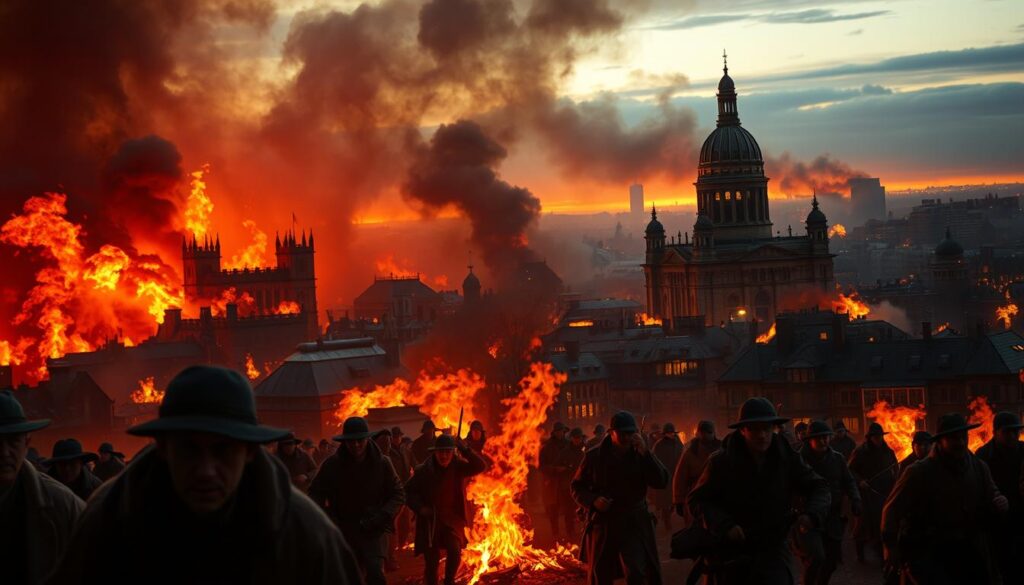
Death of Henry II
Summary: Henry II died after a shattered lance pierced his visor during a joust. The king suffered painful wounds and later died.
Why it fits: Lines about a young lion overcoming an older ruler, eyes pierced through a “golden cage,” and “two wounds made one” map neatly to the joust. Critics note the quatrain mentions field combat and a battle, not a friendly tournament, so accuracy is debated.
Great Fire of London
The reference to the “fire of ’66” and the “ancient lady” falling links to the great fire london episode of 1666. The blaze started in a Pudding Lane bakery and burned for days.
Readers find the date hint compelling, yet imagery like “lightning” and an unclear identity for the “ancient lady” leave room for alternate readings. Many believe the passage came true, while others urge caution.
Hitler, Hiroshima/Nagasaki, and JFK
- adolf hitler: A quatrain about a leader “born of poor people” who gains fame toward the East mentions “Hister,” which could mean Hitler or the Danube. The ambiguity lets readers see a match.
- hiroshima nagasaki: Lines about scourges “within two cities” and people “put out by steel” are read by some as atomic bombing imagery, though they could also refer to plague and famine.
- assassination: For JFK, phrases like “from on high” and a killed accused figure echo the sniper vantage and Oswald’s death, keeping conspiracy debate alive.
Takeaway: These are the most cited cases where a quatrain can seem to fit world events. The language remains flexible, so a single reference could refer to several outcomes rather than serve as definitive proof. For a close reading of a key quatrain, see the quatrain guide.
Other widely cited prophecies and historical events
Several well-known quatrains are often tied to landmark upheavals in European and modern history.
The French Revolution
One verse mentions songs, chants, and calls from the enslaved and imprisoned nobles. Readers link this to the Bastille and the sweeping events of 1789.
Why cautious: the language is broad, so the lines could refer to many popular uprisings across time. The claim often rests on tone more than an exact reference.
Napoleon by anagram
The phrase “Pau, Nay, Loron” is read as an anagram—”Napaulon Roy”—and framed as a hint toward a great man who would act like a king.
Supporters note the quatrain seems to match a rapid rise from modest origins and clashes with church power. Skeptics call the anagram a creative back-formation that could be forced after the rise.
Charles de Gaulle
Some interpreters point to a figure described as ruling in several phases. De Gaulle’s roles—as Free French leader, head of a provisional government, then president in 1959—make him a tidy match for a three-time leader motif.
September 11, 2001
A quatrain mentioning “the sky will burn” and a “great new city” is often linked to the attacks on New York. Debate centers on the line about “forty-five degrees”—is it latitude, an angle, or poetic number-play?
“Many lines gain apparent precision only after an event is known.”
Below is a quick comparison to show how specific or general each reference is.
| Event | Common Quatrain Image | Specificity | Interpretive Risk |
|---|---|---|---|
| French Revolution | Chants of the enslaved; fall of nobles | Low—broad social unrest | Could refer to many uprisings |
| Napoleon | “Pau, Nay, Loron” anagram; great man | Medium—name play is suggestive | Anagram may be retrofitted |
| Charles de Gaulle | Three-time leadership | High—matches known phases | Still open to loose reading |
| September 11 | “Sky will burn”; great new city | Medium—striking imagery | Numbers and terms could refer to other events |

In each case, readers balance the drama of rise-and-fall stories against the fact that many lines are general. Some examples feel persuasive, but the prophecy often gains shape only with hindsight and selective linking across the years.
For further reading on timelines and disputed matches, see the broader guide: nostradamus predictions.
what did nostradamus predict correctly: evidence, ambiguity, and selective reporting
Assessing the claims means parsing language, context, and the record of hits versus misses. The short, symbolic quatrains invite many readings. That makes testing their accuracy hard.

Translations, mixed languages, and poetic metaphor expand possible meanings. A single quatrain can be read in several ways by different people. That ambiguity inflates perceived success.
Postdiction is common: matching a line to an event after it happens is easier than forecasting it. Many famous hits rest on anecdotes, not dated documentation proving a prior, specific prediction.
- Selective reporting highlights hits and hides misses.
- Translation choices can add modern nuance that the original writings lack.
- Ambiguous text increases plausible links to many historical events.
Ask whether a verse names places, years, or clear details, or if it fits many different events. For a recent look at claimed matches and a practical test of reliability, see this recent predictions review.
“Even striking matches need caution; human storytellers favor vivid narratives over uncertain evidence.”
How to read Nostradamus today: context, translation, and the limits of prophecy
A careful read blends translation checks with a reality test: could a line guide action before it happened?
Vagueness and translation challenges matter. The writings mix Latin, French, and local idioms from the 16th century, so editions can shift meaning. Compare several translations and note repeated details that survive across versions.
Retroactive fitting is common. After a major event, readers return to quatrains and find phrases that seem tailored to outcomes. That practice makes general lines feel specific over time.
Separating historical insight from mystical foresight
Consider whether a verse names people, places, or precise years. A single clear name or time strengthens a claim. Broad themes—wars, plagues, floods—repeat across centuries and raise the odds of perceived matches.
- Compare translations and editions for consistent facts.
- Ask if a passage would have been actionable before the event.
- Note when language is symbolic versus literal.
“Enjoy the intrigue, but keep translation limits and interpretive habits front and center.”
For a different take on claimed visions and technique, see the clairvoyant method.
Conclusion
Ultimately, the verses act more like poetic lenses than precise calendars of future events. A single quatrain can echo the rise and fall of a great man, hint at a brutal death, or suggest an assassination without naming a year. That flexible phrasing helps explain why readers link lines to many different events.
People return to these passages when blood and upheaval mark a nation. Memorable lines can seem to have came true, but they often match more than one man or one year. Balance curiosity with careful reading.
Keep this simple test: could the verse identify the event before it happened, or does it fit many moments across the world and years? Explore more historical context at this guide and judge claims with a clear, critical eye.
FAQ
Uncover the Truth: What events are most often linked to Nostradamus’ quatrains?
Scholars and enthusiasts commonly connect quatrains to events like the death of King Henry II, the Great Fire of London, the rise of Adolf Hitler, the bombings of Hiroshima and Nagasaki, and the assassination of John F. Kennedy. Many links rely on loose wording, translation choices, or later interpretation rather than clear, dated forecasts.
Setting the stage: How did he write and why is measuring accuracy difficult?
He wrote short, cryptic four-line verses in a mix of Latin, French, and invented phrasing. Those quatrains are vague by design, which makes matching them to historical events subjective. Translation differences and hindsight bias often shape which verses appear to fit.
How do researchers decide if a quatrain fits an event or is a postdiction?
Reliable assessment looks for specific, contemporaneous references, consistent dating, and minimal reinterpretation. Many popular “hits” only match after poetic wording is stretched or modern names are read into archaic terms.
Did he actually predict the death of Henry II with the “young lion overcome” quatrain?
A quatrain describing a duel, a broken visor, and fatal wounds has been tied to Henry II’s fatal jousting accident in 1559. The language is suggestive but not explicit; historians note that poetic imagery and later association helped cement the link.
Is the Great Fire of London clearly referenced in his writings?
Some verses mention a great fire and a great city in flames, which readers associate with the 1666 London fire. However, phrases like “fire” and “city” are common prophetic motifs, so the connection rests on interpretation rather than a unique, dated claim.
Could a quatrain have referred to Adolf Hitler or his rise?
A quatrain mentioning a figure called “Hister” has been claimed to point to Hitler. Linguistically, “Hister” was a historical name for the lower Danube region, and the similarity may be coincidental. Supporters argue the context fits; critics warn of anagram and hindsight fallacies.
Were Hiroshima and Nagasaki named or clearly described in the prophecies?
Some lines about “two cities” and “steel from the sky” get linked to the atomic bombings. Those phrases can be read as relevant, but they’re not specific enough to prove clear foreknowledge; metaphorical language and later interpretation play large roles.
Is the JFK assassination found in the quatrains with clear details?
Verses referring to a leader struck “from on high” or felled in a public place are cited for JFK. Again, wording is symbolic and open to many fits. No single quatrain gives precise names, dates, or unmistakable context for the assassination.
What about broader events like the French Revolution or Napoleon—are those genuine matches?
Quatrains mentioning revolt, fall of nobles, and a “great man” have been linked to the French Revolution and Napoleon. Napoleon connections often rely on anagram-like readings of place names. These associations can be persuasive but remain debated among historians.
Did he foresee modern figures such as Charles de Gaulle or events like September 11?
Some readers see references to multiple French leaders in certain quatrains and find imagery that fits 9/11. Both cases hinge on broad phrasing and interpretive leaps; mainstream scholarship treats such claims cautiously, emphasizing ambiguity and retrofitting.
How much of the perceived accuracy comes from translation and vagueness?
A great deal. Variations in translating archaic words and poetic images allow verses to be bent toward many events. Vagueness invites selective reading, and people tend to remember hits while ignoring misses.
Can any quatrain be confidently dated to forecast a specific future event?
Confident dating is rare. Most quatrains lack precise timing or unique identifiers that would rule out alternative interpretations. Without contemporaneous records linking a quatrain to a clear forecast, claims remain speculative.
Why do so many people still believe in these prophecies despite the ambiguity?
Human minds seek patterns and meaning, especially around dramatic events. Prophetic language, media coverage, and books that spotlight matches while downplaying misses all encourage belief. Emotional impact and memorable imagery strengthen perceived accuracy.
How should a reader approach these verses today?
Read them as historical texts reflecting 16th-century thought, imagery, and political anxieties. Appreciate the poetic craft, but apply skeptical criteria: check translations, seek scholarly commentary, and avoid assuming any single quatrain proves clairvoyance.