

Michel de Nostredame, the 16th-century French astrologer, wrote Les Prophéties in 1555. Modern news outlets often reach back to those quatrains when global headlines feel tense.
The book is a patchwork of images that readers tie to wars, celestial hazards, or shifting power in the world.
Interpreters link vague lines to contemporary events and future trends. Some claims track neatly to recent misses, like forecasts of an Amazon disaster or a failed New World Order. That history urges caution.
This introduction maps how headlines reframe old verses into present-day predictions. It previews a clear, skeptical look at biography, thematic readings, and a record check so readers can judge claims about the coming decade.
Key Takeaways
- Les Prophéties fuels modern narrative more than it gives clear timelines.
- Media often reconnects verses to current news when uncertainty rises.
- Many putative matches to real events have proven unreliable.
- We will separate historical context from speculative readings.
- This guide aims to inform U.S. readers with calm, practical analysis.
Why 2030 Is in the Spotlight: From Recent Predictions to the Next Decade
A string of striking news stories in 2024–2025 pushed centuries-old quatrains back into public view.
Reporters highlighted lines such as:
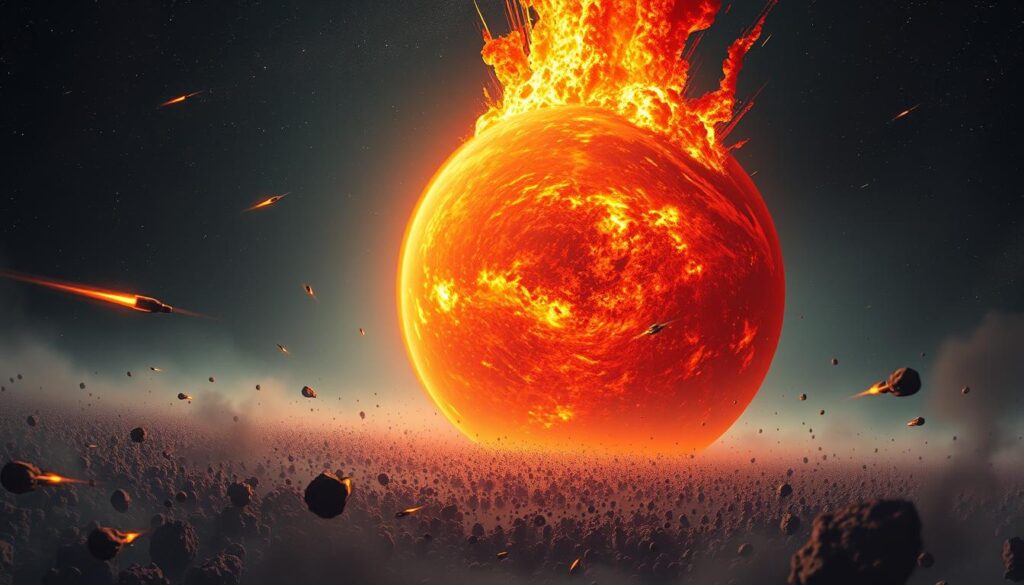
“From the cosmos, a fireball will rise.”
That phrase was framed as a possible comet or asteroid threat. Other vivid lines — like “When Mars rules his path among the stars…” and mentions of “three fires” or an “aquatic empire” — were used to suggest war, disaster, or shifting power.
Interest spikes when tense global events pile up. Headlines love dramatic words, and a single evocative line can be repurposed for many scenarios.
- Viral posts often give timeless verse a fresh time stamp.
- Retroactive readings let the same quatrains fit different moments.
- High-profile claims tied to 2024–2025, like an Amazon catastrophe or a New World Order, did not materialize.
Below is a quick comparison of media framing versus outcome.
| Claim Highlighted | Media Framing | Actual Outcome |
|---|---|---|
| Fireball from the cosmos | Asteroid/comet threat | No global impact recorded |
| “When Mars rules his path…” | War escalation | Localized conflicts, no world war |
| “Seven months the Great War” | Forecast of major escalation | No sustained seven-month continental war |
For a year-by-year list of popular attributions, see a compiled timeline of claimed prophecies by year. This helps separate dramatic headlines from verifiable patterns.
Who Was Nostradamus and How His Prophecies Work
A sixteenth-century apothecary named Michel de Nostredame wrote terse verses that kept readers guessing for centuries. He published Les Prophéties in 1555 and intended a set of 1,000 quatrains arranged in ten “centuries.”
About 942 quatrains appear in the final book. He also produced yearly almanacs and served as a court adviser, which boosted his reach across years and regions.
The man and his methods
Nostradamus began as a physician and french astrologer. His mix of practical almanac work and poetic odds made him both a medical man and a cultural figure.
Why the verses keep fitting new stories
His quatrains use vague syntax, dropped connectives, and layered imagery. That style invites many readings and lets interpreters map lines onto modern events.
- Short, riddle-like poems resist a single meaning.
- Retroactive methods, like number-indexing proposed by some modern readers, link verses to specific dates.
- Famous lore — such as the “young lion” tied to King Henry II — mixes verified text with later storytelling.

| Fact | Detail | Significance |
|---|---|---|
| Dates | 1503–1566; Les Prophéties, 1555 | Places him in plague and printing eras |
| Quatrains | ~942 included of 1,000 planned | Compact format encourages broad interpretation |
| Methods | Almanacs, astrological cues, poetic ambiguity | Facilitates retroactive matches and modern indexing |
For a curated overview of his life and surviving texts, see a focused profile at a dedicated resource.
What Does Nostradamus Say About 2030?
Interpreters frequently turn poetic motifs into forecasts for conflict, climate, and leadership shifts. Below we map common readings to practical implications for the coming decade.
War and the Mars motif
The “Mars” image is often read as a sign of war. Analysts use it to frame how regional fights might widen or cool over time.
Cosmic fireball and extinction fears
Lines about a rising fireball spark concerns for the planet and space hazards. The verses are poetic and not precise, so claims about an extinction event remain speculative.
Floods, droughts, and climate upheaval
Mentions of dry earth and great floods get tied to climate stress. Readers interpret them as signals of long-term environmental crisis affecting lands and waters.
Power shifts and new leaders
Many passages are used to suggest a rise in influence for some countries and a relative decline in the West. These readings mirror current geopolitical reporting more than they act as firm forecasts.
| Motif | Common Modern Reading | Practical Implication |
|---|---|---|
| Mars references | War escalation | Watch regional flashpoints and spillover risk |
| Fireball from cosmos | Asteroid/comet threat | Space monitoring, low probability but high impact |
| Dry earth / great floods | Climate volatility | Infrastructure and migration pressures |
| Leaders rising from sea | New power centers | Shifts in trade and diplomacy |
For a closer look at recent headline-driven attributions, see a concise review of modern predictions here.
War and Global Conflict: Reading the “Great War” and Europe-England Lines
A handful of tense words often becomes the seed for sweeping conflict narratives. Short verses like the “Seven months the Great War” line have been pressed into service as quick timelines. Tabloids argued the quatrain warned of a European escalation and even hinted at a world-scale fight.
“Seven months the Great War” and modern interpretations of escalation
The phrase “seven months” acts as a tidy deadline. Interpreters map it onto escalation scenarios, but the leap from a few lines to a full strategic forecast leaves large logical gaps.
Analysts note that real conflicts usually stretch across years and theaters. Treating a poetic time marker as an operational schedule is risky for decision-making.
“Cruel wars” from England’s flanks: internal and external foes
References to England’s flanks are read two ways: domestic unrest or external pressure. Both readings are plausible, but selective emphasis turns ambiguous geography into decisive proof.
Below is a quick contrast to help separate dramatic reading from practical signals.
| Line Element | Modern Reading | Practical Note |
|---|---|---|
| “Seven months” | Rapid escalation timeline | Most conflicts are multi-year; verify with current intelligence |
| “Great War” | Continental or global war | Historical phrasing is suggestive, not diagnostic |
| England’s “flanks” | Internal unrest / hybrid threats | Check domestic indicators and border tensions |
For a broader review of popular attributions and how lines get reused in headlines, see a compiled review of predictions here.
Climate Signals in the Quatrains: Droughts, Floods, and a “Garden” in Peril
Readers often pair lines of drought and deluge with recent extreme weather to make sense of chaotic seasons.
“The dry earth will grow more parched, / And there will be great floods when it is seen.”
Interpreters point to that couplet when linking verses to modern climate events. Media pieces cited unprecedented floods in Spain and severe storms in the Americas as examples that give the lines fresh resonance.
How readers compress time and widen scope
One year’s drought and the next’s inundation get woven into a single long arc. That compression makes separate events feel like a continuous narrative.
Analysts also expand the verses beyond Europe to other lands, arguing a global pattern of volatility. This interpretation helps the lines feel relevant across the world.
- Practical angle: climate-linked reporting affects policy, investment risk, and household preparedness.
- Garden imagery: references to a poisoned “garden” prompt links to Amazon loss and contamination, even when the text is not explicit.
In short, the quatrains are evocative and sticky, but using them as a strict timeline is risky. For a grounded view that connects poetic language to contemporary issues, see a contextual overview at this related resource.
Cosmic Threats and the “Fireball” Theory
When readers spot cosmic language in old verse, their minds jump to dramatic sky events and global risk.
“From the cosmos, a fireball will rise…”
That couplet is often framed as an asteroid or comet threat to the planet. Journalists and social feeds linked it to recent space news during 2024–2025, nudging the verse toward the near future.
Vague cosmic words trigger end-of-the-world speculation because they tap long-standing fears and current astronomy headlines. References to cycles or months can feel like a countdown, even when the text gives no dates.
Risk agencies model near-Earth objects with telescopes, probability, and impact estimates. Social media, by contrast, stitches a single poetic image into a wider narrative about markets, migration, and geopolitics.
Keep one practical point in mind: a lone quatrain is a story hinge, not hard data. Treat poetic warnings as prompts to check verified science and official risk reports before accepting dramatic predictions about the future.
The “Aquatic Empire” and Other Puzzling Passages
A lone line about the ocean has a habit of swelling into modern power narratives. Commentators framed a leader rising from the ocean as the seed for an aquatic empire idea, and headlines ran with it during tense years.
Is the image literal or symbolic? It can be read two ways. Some treat a leader who will rise from the sea as mythic drama. Others use it as shorthand for naval or maritime power in future wars.
Interpreters often map the phrase to specific countries. That mapping says more about the reader than the verse. Past attributions — like an Amazon disaster or a New World Order — failed to match real outcomes, showing how snug fits unravel in time.
How to read the lines without overcommitting
- See the ocean image as part of a larger symbolic set, not a blueprint.
- Ask whether the passage is poetic chance or a reasoned signal.
- Compare maritime readings with concrete indicators: ship movements, naval budgets, and regional tensions.

In short, enjoy the literary intrigue but keep expectations realistic. Treat puzzling verses as prompts for inquiry, not as confirmed forecasts or policy guides.
Track Record Check: Hits, Misses, and Media Mythmaking
A single famous verse has outlived its context and grown into a modern urban legend. That history matters when people use old lines to frame urgent contemporary events.
1999’s “King of terror” that never came
The widely circulated 1999 line sparked fears of an apocalyptic king. In practice, no global collapse or clear antichrist figure appeared. The episode shows how a terse quatrain can dominate news cycles and public anxiety for a stretch of years.
Unfulfilled 2024–2025 expectations
Recent headlines predicted royal abdications, an Amazon catastrophe, and even a New World order. None of these dramatic outcomes matched the scale some claimed. Reports of sudden death or high-profile assassination plots were also circulated but lacked firm verification.
Why ambiguous wording fuels confirmation bias
Vague wording lets readers map verses to many events. The pattern invites retroactive matches, so people remember near-misses as hits. That process keeps the idea alive while actual outcomes remain mixed across the world.
| Claim | Media Framing | Reported Outcome |
|---|---|---|
| 1999 “King of terror” | Global apocalypse | No global collapse |
| 2024 royal abdications | Immediate throne realignments | No mass abdications |
| Amazon catastrophe | Regional collapse | Localized damage, not total loss |
| New World Order | Rapid geopolitical overhaul | No clear systemic shift |
- This is a reality check: dramatic claims about death, upheaval, and plots often miss clear alignment with outcomes.
- News cycles amplify evocative lines, then move on when timelines slip.
- Understanding misses helps calibrate how much weight to give any single prediction.
Beyond Nostradamus: Baba Vanga and Modern “Prophets” in the News Cycle
When public anxiety rises, predictive voices—old and new—pivot toward the same hot-button subjects. Modern figures inherit the same motifs: conflict, quakes, cures, and cosmic oddities. Media attention stitches their lines into the day’s narrative.
Comparing voices
- Baba Vanga is often credited with forecasts of European war, major earthquakes, and medical breakthroughs that stretch into the future.
- Athos Salomé, labeled a “living” seer by some outlets, warned of AI, quantum threats, and cyberattacks in 2025.
- Preacher Joshua Giles mixed warnings of wider conflict with hopes for cures in the medical sphere.
Echoes and differences
You’ll notice repeated themes across storytellers even when details diverge. That repetition makes separate claims sound like a chorus about the same coming world trouble or opportunity.
Takeaway
- Predictions often reflect present fears more than precise sightlines into the future.
- For practical guidance on AI, cyber risk, and health, rely on experts and agencies rather than headline-friendly prophecy.
- Enjoy the lore, but treat media summaries as prompts to check verified sources if safety or policy choices hinge on them.
What This Could Mean for the United States
When distant lines are read as near threats, Americans rightly ask how overseas tension might affect homeland stability. This brief look ties common readings to practical U.S. concerns: security, markets, and everyday resilience.
Conflict spillover, markets, and climate risks at home
Conflict narratives focused on Europe often raise questions about spillover into supply chains and domestic security. Watch indicators like trade disruptions, refugee flows, and cyber probes.
Headlines can nudge investor mood and shift money flows even if the underlying events are far away. That volatility affects retirement accounts and corporate planning.
Climate-tinged verses feed debate over infrastructure and insurance. When storms or droughts hit, everyday people face higher repair costs and service interruptions.
Time matters: separate near-term shocks from long-term structural changes. Short spikes require tactical responses; slow trends need strategic planning.
Tech warnings about cyberattacks and AI translate into practical steps: patching systems, staff training, and resilience planning rather than mystical solutions.

| Area | Practical Signal | Planning horizon (year) |
|---|---|---|
| Security | Border and cyber monitoring | 1–3 |
| Markets | Volatility; diversify assets | 0–2 |
| Climate | Infrastructure upgrades, insurance shifts | 1–10 |
Bottom line: Treat prophetic buzz as background noise. Prioritize verified indicators, diversified risk management, and measured monitoring for households and businesses.
How Predictions Get Dated, Sold, and Shared
Selling a date is often easier than proving one. Publishers, commentators, and short-form creators use a few simple moves to make vague verse feel urgent.
Number-indexing is a common trick. One bestselling interpreter, Mario Reading, linked quatrains to modern dates (for example, 10/22) and tied those links to royal succession claims after Queen Elizabeth II’s death.
The Guardian reported that sales of related books jumped after major news events. That surge shows how a single headline can drive curiosity and repeat business.
Number-indexing claims, bestsellers, and social media amplification
Here’s the typical order of operations behind a viral prediction:
- Take a short verse and apply a numbering system to force a date reference.
- Publish a book or article with a dramatic headline to attract news attention.
- Clip the idea into short videos and posts that spread faster than corrections.
These steps turn a part of a poem into a time-stamped prediction that feels real for a few years or even a single day.

Understanding this lifecycle helps you spot selective references and marketing hooks. Treat viral decodings as prompts to check primary sources before accepting a dated claim.
Conclusion
To close, treat striking lines as prompts for inquiry, not fixed calendars for the coming year.
Fireball, “seven months,” droughts, floods, and the odd aquatic empire line grab headlines and shape how people read the book. Past misses — like the 1999 scare — show how prophecies bend to present fears.
Use predictions as background noise. Focus on verified signals: casualty counts, market moves, climate reports, and clear intelligence on conflict or assassination risks.
Keep a practical edge: diversify money, track trusted news, and let evidence steer planning. A bit of mystery can stay, but rely on facts as new years unfold in our world.
FAQ
Who was Michel de Nostradame and what is Les Prophéties?
Michel de Nostradame, a 16th‑century French astrologer and physician, compiled Les Prophéties, a collection of 942 quatrains written in cryptic verse. Scholars note the verses mix astrology, historical reference, and symbolic language that invite multiple readings rather than precise forecasts.
Why are people linking Nostradamus to events in and beyond 2030?
Interest spikes when modern crises echo themes in the quatrains—war, famine, celestial events, and political upheaval. Internet sharing and news cycles often pair these vague lines with current headlines, which amplifies associations with specific years and future decades.
How do interpreters date Nostradamus’s quatrains to specific years or decades?
Readers use historical parallels, astrological cycles, and speculative number‑indexing to assign years. This method relies on loose correspondences rather than direct calendrical links, so dates attached to verses remain highly uncertain.
Do the quatrains predict large‑scale wars or a “Great War” in the near future?
Some translations reference prolonged or “cruel” conflicts and mention Mars‑related imagery that interpreters equate with war. However, the language is ambiguous enough that scholars and historians caution against treating these passages as literal battle plans.
Is there any clear prophecy about floods, droughts, or climate disruptions?
Several quatrains evoke water, drought, and ruined gardens, which modern readers link to climate change and extreme weather. Those lines read more as warnings about environmental instability than as precise scientific predictions.
What about celestial threats like comets, meteors, or a “fireball”? Are those tied to extinction risks?
Verses mentioning fire from the heavens have been associated with comets or meteor impacts. Historically, such imagery was a common apocalyptic motif. While dramatic, these metaphors don’t provide technical details to validate an extinction‑level event.
Does any quatrain predict the rise of a maritime or “aquatic empire” leader?
A few passages describe rulers linked to seas or oceans, which some interpret as naval powers, island nations, or leaders emerging from maritime regions. Metaphor and national symbolism complicate direct geopolitical claims.
Have Nostradamus’s verses accurately predicted modern events in the past?
The record mixes hits, misses, and retroactive fits. Famous supposed “hits”—from 20th‑century wars to political assassinations—often rely on vague phrasing and post‑event interpretation. Many clear predictions attributed to him never materialized.
How do cognitive biases shape how people read these prophecies?
Confirmation bias leads readers to emphasize verses that match notable events and ignore contradictions. Ambiguity in the text makes it easy to retrofit outcomes, and media coverage can magnify selective readings.
Should forecasts from other modern figures like Baba Vanga be weighed the same as Nostradamus’s work?
Both occupy similar roles in popular culture: symbolic seers whose sayings are broadly interpreted. Comparing them helps show how modern prophecy functions in the news cycle, but none provide empirically testable predictions.
What could these quatrains imply for the United States specifically?
Interpreters warn of spillover risks—regional conflicts affecting trade, market volatility, and climate impacts on infrastructure. Those themes reflect general geopolitical and environmental concerns rather than specific, verifiable outcomes.
How do publishers and social platforms spread specific dates or dramatic readings?
Sensational headlines, influencer posts, and book marketing favor memorable claims and year‑targeted hooks. Algorithms reward engagement, which can push speculative interpretations into wide circulation quickly.
Can quatrains be used for practical planning or policy decisions?
No. While the quatrains can inspire reflection on risk and resilience, planners should rely on scientific data, intelligence assessments, and expert analysis rather than poetic prophecy when making decisions.
Where can I find reliable translations and scholarly commentary?
Look for academic editions and peer‑reviewed historical studies from university presses or historians of early modern Europe. Avoid sources that prioritize sensationalism or claim exact chronological proofs without evidence.