

Quick answer: a standard set holds 78 units split between two groups. The 22 Major Arcana track big life themes and milestones often called the Fool’s Journey.
The remaining 56 form the Minor Arcana, grouped into four suits: Wands, Cups, Swords, and Pentacles. Each suit pairs with an element and explores daily choices, feelings, work, and thought.
Why this matters: knowing the full structure lets you learn card-by-card meaning with confidence. That clarity improves any reading and gives practical guidance for personal growth.
Most modern guides in the United States teach this same framework. Start with the big-picture arcana, add suit and number details, then practice spreads. For a focused study on skill and craft, see the Eight of Pentacles guide.
Key Takeaways
- A standard set contains 78 units split into Major and Minor arcana.
- Major Arcana map major life lessons; Minor Arcana cover everyday situations.
- Suits link to elements and shape card meaning.
- Knowing the system boosts clarity in readings and guidance.
- Learn from structure first, then study individual meanings step by step.
Tarot Deck Basics: The 78-Card Structure Explained
Quick intro: A full set pairs two clear halves that work together to tell a reading’s story.
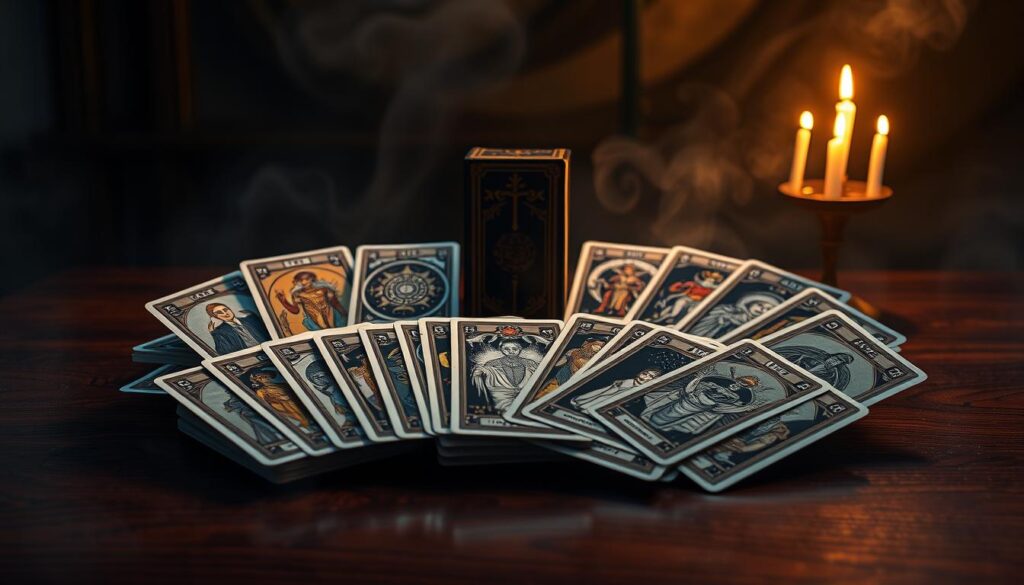
Major Arcana vs. Minor Arcana at a glance
The Major Arcana contains 22 archetypal trumps, running from The Fool (0) to The World (21). These cards spotlight major life themes and big shifts in energy.
The Minor Arcana has 56 practical suit cards. Each suit holds Ace through 10 plus four court figures: Page, Knight, Queen, King. Together they map daily events and personal dynamics.
Why 78 cards became the standard
The familiar number traces back to 15th-century Italian playing sets that paired 22 trump cards with four suits of 14. Early variants existed — a 70-count appears in records — yet the 78 model stabilizied and now guides modern practice.
“Structure gives every image context; number, suit, and archetype shape each card’s meaning.”
- Four suits link to classic elements and keep interpretation consistent.
- Major arcana highlight life lessons; minor arcana ground readings in daily detail.
- Imagery and titles may change, but the underlying framework stays compatible across decks.
How many cards are in a tarot card deck
The quick answer for beginners: a traditional set contains 78 cards total, so if your box lists 78, you’ve got the standard pack used for study and practice.
Two parts make the whole: 22 Major Arcana hold big archetypes and milestones. The 56 Minor Arcana split into Wands, Cups, Swords, and Pentacles and include Ace–10 plus Page, Knight, Queen, King.
Why this number matters
- Spot the difference: oracle sets vary in size, so 78 confirms a classic system for consistent meaning and study.
- Numbering helps: Major Arcana run 0 (The Fool) to 21 (The World), which makes sequencing easier for learning.
- Begin simply: start with one- or three-card readings for fast guidance, and note impressions in a journal to compare with guidebook meaning later.
| Section | Count | Purpose |
|---|---|---|
| Major Arcana | 22 | Life themes, numbered 0–21 |
| Minor Arcana | 56 | Suits, daily situations, pip + court cards |
| Total | 78 | Standard structure for readings and study |
The Major Arcana: 22 cards that map the Fool’s Journey
The Major Arcana presents twenty-two emblematic stages that trace an inner path from innocence to completion. These images mark pivotal shifts in identity, calling, and responsibility.
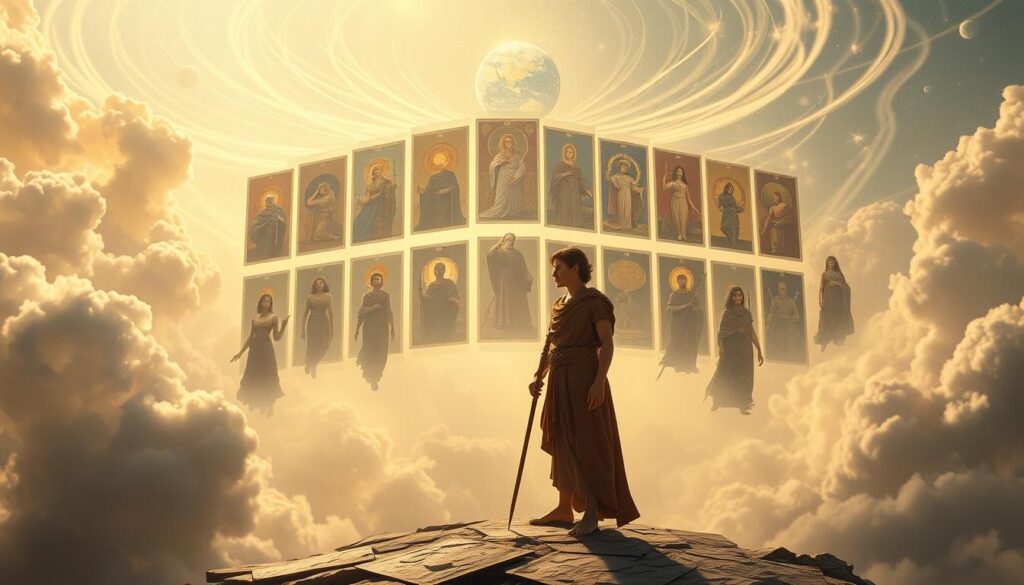
From The Fool to The World: key themes and life lessons
Start to finish: the sequence begins with the Fool’s leap and ends with the World’s integration. Each entry offers a compact teaching about purpose, challenge, or renewal.
Example meanings: The Fool signals new beginnings; The High Priestess stresses inner knowing; Death suggests transformative change; The World shows completion. Upright and reversed positions expand each meaning and add nuance.
When a reading uses mostly Major Arcana
Spreads heavy with major arcana cards point to fate-level themes or long-term cycles. Focus on direction and personal growth rather than small details when many trumps appear.
“Study the sequence (0–21) to see how each stage builds momentum toward integration.”
- Use majors-only pulls to reflect on life chapters.
- Learn the order to speed meaning fluency.
- Balance majors with minor cards for practical next steps.
For focused study of conflict and consequence, consider the Five of Swords guide as a complementary resource.
| Aspect | Focus | Practical tip |
|---|---|---|
| Sequence | Fool (0) → World (21) | Memorize order to trace the journey |
| Upright vs. Reversed | Contrast in meaning | Note both sides for fuller readings |
| Reading weight | Many majors present | Prioritize long-term growth over details |
The Minor Arcana: 56 cards divided into four suits
For hands-on guidance, the Minor Arcana organize experience across four suit families. These 56 pieces focus on near-term events you can influence. Each suit—Wands, Cups, Swords, Pentacles—brings its own tone and domain.
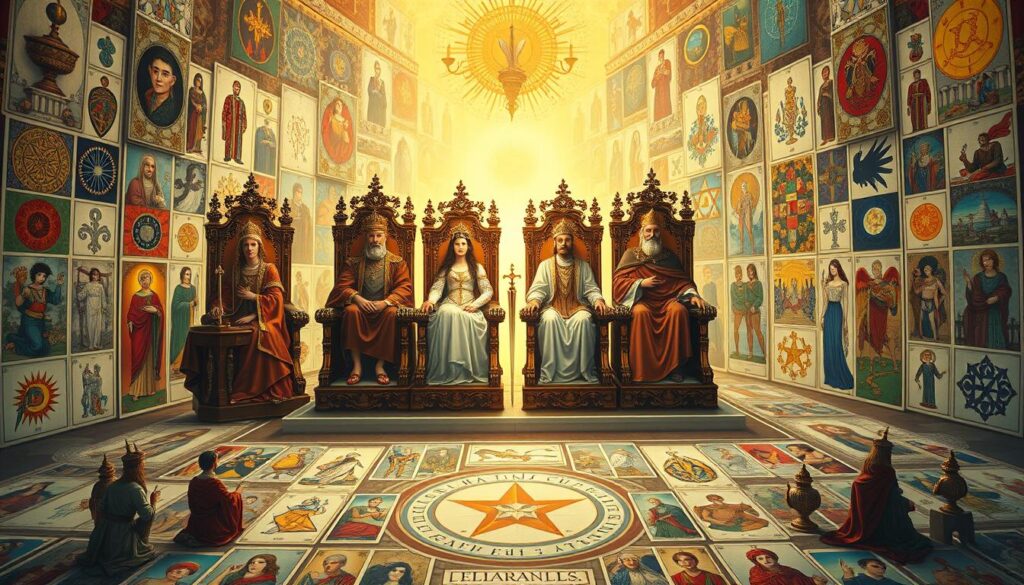
Numbered pip cards (Ace–10) and progressions
Aces show raw starts. Low numbers build momentum. Middle numbers bring tests and choices. Tens signal completion or transition.
Court cards and the people in your life
Court cards often represent roles, personalities, or specific people. Pages point to messages and new steps. Knights show motion and pursuit. Queens reveal mastery and empathy. Kings indicate leadership and responsibility.
- Suit flavors: Wands = creativity and drive; Cups = feelings and bonds; Swords = thought and conflict; Pentacles = work and resources.
- Reading tip: Combine number progression with suit tone for clear meaning. Repeated court cards may point to an outside person or an inner role you hold.
While the major arcana set the broad stage, the minor arcana supply the concrete steps to act on.
Explore specific suit study and then try simple spreads to see patterns unfold; for related insight try the Ten of Cups guide.
The four suits and their elements: Wands, Cups, Swords, Pentacles
Read the suits as elemental lenses. Each one colors meaning and points you to whether a spread focuses on action, feelings, thought, or material matters.
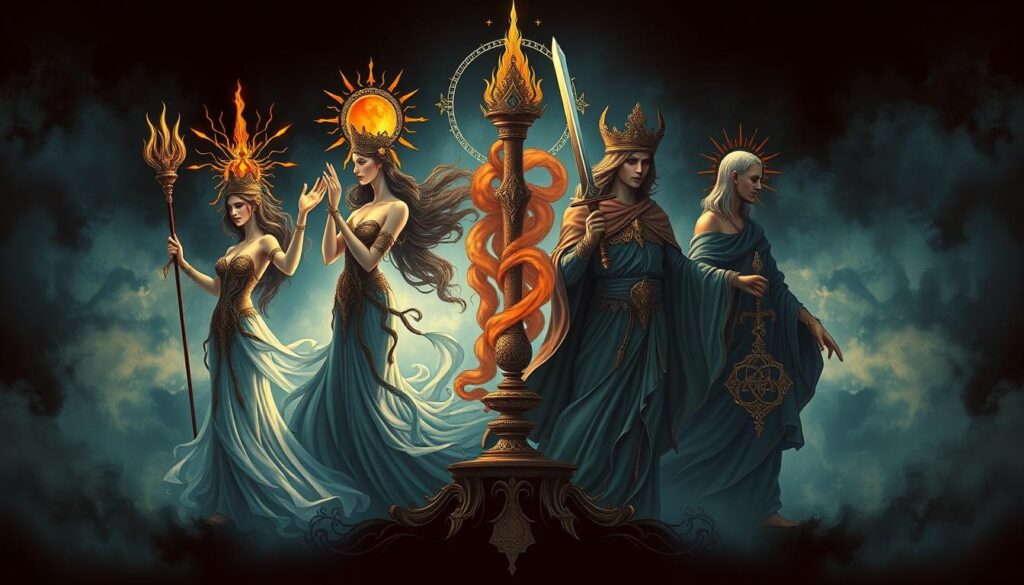
Wands: fire, passion, energy, creativity
Wands channel fire. They show passion, drive, initiative, and bursts of creativity.
When balanced, they push you forward. Unchecked, they warn of haste and scattered energy.
Cups: water, emotions, relationships, intuition
Cups reflect water and feelings. They point to relationships, empathy, and inner knowing.
Use them to track emotional tone. If heavy, they can signal overwhelm or blurred boundaries.
Swords: air, ideas, intellect, communication
Swords work like air—clear, sharp, and analytical. They highlight ideas, truth, and communication.
Their shadow shows up as harsh critique, conflict, or mental overload.
Pentacles: earth, work, stability, material life
Pentacles root readings in earth. They cover work, health, money, and long-term stability.
Too much focus here can lead to stagnation or overattachment to material measures.
“Match the suit’s element to the issue at hand to read the scene quickly and clearly.”
- Quick tip: combine element + number or court rank for precise meaning.
- People cue: court figures often show how people behave—fiery initiators, empathetic connectors, sharp communicators, steady builders.
| Suit | Element | Core meaning |
|---|---|---|
| Wands | Fire | Passion, energy, creativity |
| Cups | Water | Emotions, relationships, intuition |
| Swords | Air | Ideas, communication, clarity |
| Pentacles | Earth | Work, stability, material life |
Origins and consistency: why most tarot decks share the same structure
The modern format traces its roots to Renaissance Italy. Early playing sets paired 22 trump pieces with four suits of 14, producing the 78-count system we still use today. That layout gave players clear rules and artists a repeatable framework.
From early playing decks to modern readings
Stability matters. By the 18th century, French occultists reframed this set for divination, but they kept the same backbone: 22 major arcana and 56 minor arcana organized into Wands, Cups, Swords, and Pentacles.
Variations cropped up, like a 70-count noted in 1457, yet the 78 model endured. That consistency helps learners transfer meaning from one pack to another.
- Look for 78 pieces, four suits, and court cards when buying to ensure a standard set.
- A fixed order lets you compare numbered meanings and follow stories from The Fool to The World.
- In Europe, some people still use the same set for playing games, which preserved the format.
“A stable system lets imagery change without losing interpretive logic.”
| Origin | Key feature | Modern benefit |
|---|---|---|
| 15th‑century Italy | 22 trumps + four suits of 14 | Standardized structure for study |
| 18th‑century France | Occult reinterpretation | Expanded symbolic meaning |
| Present | 78 pieces across majors and minors | Cross-deck learning and consistency |
For a suit-focused example, see the Four of Cups guide for how cups and court figures shape meaning in readings.
Getting started with a tarot deck in the United States
Pick a set whose art draws your eye—comfort with imagery speeds learning. For most beginners, a Rider‑Waite‑Smith style tarot deck is a solid starting point. Its clear symbolism and many guides help you learn meanings fast.
Then learn structure: study the Major and Minor arcana, note the four suits, and match suit images to elements. This gives quick cues during any reading.
Choose a deck, learn meanings, and trust your intuition
Balance study with instinct. Let your first impressions stand before checking a guidebook. Over time your intuition will sharpen alongside formal meanings.
Use the High Priestess as a model when unsure—pause, listen, and trust quiet insight.
Simple spreads to begin your reading practice
Start with a one‑card draw for daily focus. Try a three‑card past‑present‑future to practice linking positions.
- Set an intention before shuffling to manage energy and keep readings clear.
- Anchor meanings to elements: Wands = passion and energy; Cups = emotions and relationships; Swords = clarity and thought; Pentacles = resources and stability.
- Record impressions in a journal and compare them later to refine your meaning instincts.
| Step | Why it helps | Quick tip |
|---|---|---|
| Choose Rider‑Waite style | Clear imagery and many resources | Start here, then explore other styles |
| Daily one‑card draw | Builds routine and intuition | Write one line about first impression |
| Three‑card spread | Practices narrative linking | Use past/present/future labels |
For focused study of practical life themes, review this Seven of Pentacles guide to see suit meaning in action. Readings offer guidance, not fixed rules—use them to find useful steps this week.
Conclusion
This simple 78-piece map blends big archetypes with practical suit signals for clear readings. The structure pairs the major arcana with the minor arcana, giving both sweeping themes and near-term guidance.
Learn the system, practice short spreads, and keep a journal to track meaning and growth. Use suit anchors — Wands, Cups, Swords, Pentacles — for quick context and steady interpretation.
Treat readings as thoughtful conversations. Combine what the set suggests with grounded action for real-life results and personal growth. For focused study on conflict and outcome, see the Four of Swords guide.
With the 78-piece map and regular practice, you gain confidence, clearer meanings, and steady growth — a strong.
FAQ
What is the total number of cards in a standard tarot deck?
A standard deck contains 78 cards split into two main groups: 22 Major Arcana and 56 Minor Arcana. This structure supports readings that explore life themes, personal growth, and specific situations.
What distinguishes Major Arcana from Minor Arcana?
Major Arcana cards represent major life lessons and archetypal milestones, such as beginnings, transformation, and completion. Minor Arcana focus on everyday events and practical matters, offering detail through suits and numbered cards.
Why is 78 the widely accepted standard for most decks?
The 78-card format evolved from historical playing-card systems and early occult traditions. It became standard because it balances broad archetypal themes with granular, suit-based guidance useful in readings.
What is the Fool’s Journey and how many Major Arcana cards illustrate it?
The Fool’s Journey is a narrative arc across the Major Arcana that maps personal and spiritual development. There are 22 Major Arcana cards that track stages from new beginnings through growth and completion.
When do Major Arcana dominate a reading?
Major Arcana appear often when a reading points to significant life shifts, deep lessons, or long-term themes. If multiple Major Arcana show up, it usually signals a pivotal period rather than routine matters.
How is the Minor Arcana organized?
The Minor Arcana has 56 cards divided into four suits. Each suit contains ten numbered pip cards (Ace through Ten) and four court cards, giving practical context to daily life, work, and relationships.
What do numbered pip cards reveal in a spread?
Pip cards describe stages, actions, and conditions linked to their suit’s theme. Aces often signal beginnings, middle numbers show development, and Tens suggest completion or change.
Who do court cards represent in readings?
Court cards—Page, Knight, Queen, King—can indicate people, personality traits, or internal energies. They may also describe roles, behaviors, or stages of development relevant to the question.
How do the four suits map to elements and life areas?
Wands align with fire—passion, energy, and creativity. Cups match water—feelings, relationships, and intuition. Swords connect to air—ideas, intellect, and communication. Pentacles relate to earth—work, stability, and material life.
Can suit meanings vary between decks?
Yes. While the elemental associations remain consistent, modern decks and artists may emphasize different nuances. Readers often blend traditional meanings with personal intuition and the deck’s unique imagery.
Why do most tarot decks share the same basic structure?
The shared structure stems from historical playing-card lineages and early esoteric systems that standardized the set for study and practice. Consistency helps readers compare decks and learn universal symbols.
How did tarot evolve from early playing cards to modern tools for readings?
Tarot began as a card game in Europe, later adopted by occultists in the 18th and 19th centuries who added symbolic layers. That evolution shaped the 78-card format used today for divination and personal insight.
How should someone in the United States begin using a deck?
Start by choosing a deck whose imagery resonates. Learn core meanings for Major and Minor Arcana, practice simple spreads, and trust your intuition. Regular practice builds fluency and confidence.
What simple spreads help beginners learn card meanings?
Try a one-card daily draw to focus on a theme, a three-card past-present-future spread for quick insight, or a simple Celtic Cross variant for a deeper session. These formats train interpretation and intuition.