

Fear often meets this image, yet its true role is gentle and practical. The Death card rarely predicts literal loss. It acts as a sign of deep transformation, urging release so new life can arrive.
Classic imagery shows a skeleton in armor riding a pure white horse while holding a black flag. The white horse hints at purification, armor suggests inevitability, and the flag stands for cycles of endings and beginnings.
People from all walks appear beneath the horse, a reminder that change touches every station. Upright readings point to finality and rebirth. Reversed placements often warn of resistance, stuck patterns, or fear of change.
Later sections will explore real-life uses for love, career, and timing, and how this symbol teams with other cards like Ten of Swords to show power and timing.
Key Takeaways
- Symbol of transformation: Endings open space for rebirth.
- Iconic imagery: Skeleton, white horse, black flag carry clear meanings.
- Upright vs reversed: Move forward versus resisting change.
- Not literal: Modern readings focus on life shifts, not mortality.
- Practical use: Shows changes already in motion and invites release.
What is the Death Card in Tarot?
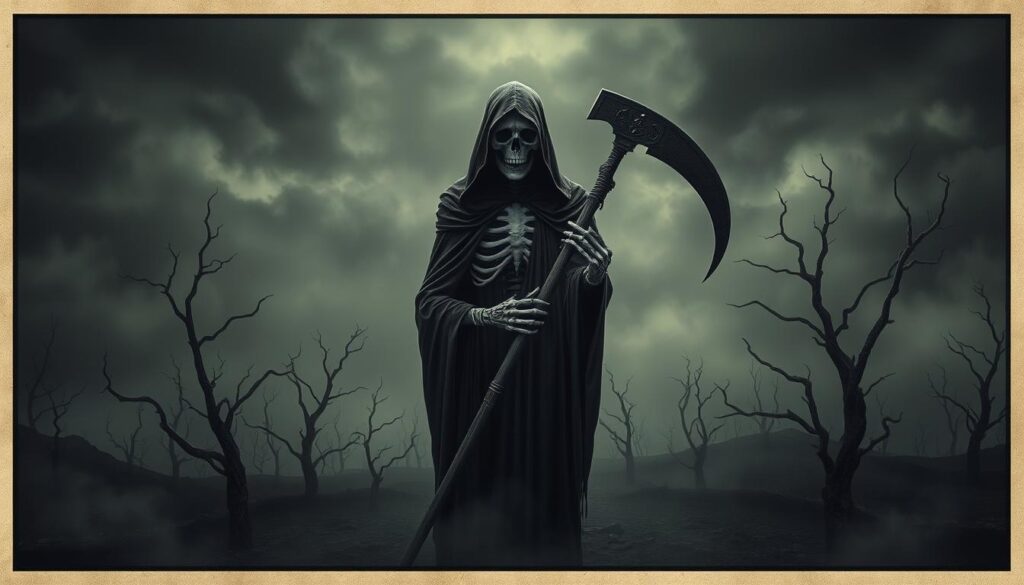
A dramatic label hides a gentle instruction: let go so something new can grow. This arcana rarely forecasts physical loss. Instead, it marks a clear end to a major phase and invites renewal.
Why it may seem scary: the image and name trigger fear. Yet upright readings usually point to transformation, not harm. When this figure appears, changes are often already unfolding. The useful question becomes how to work with shifts rather than resist them.
In daily life and love, that process shows as outgrowing patterns or closing doors that no longer fit. In career or identity, completion of one chapter prepares the ground for another. Skilled readers use spread position and nearby cards to refine meaning so symbolism isn’t mistaken for literal outcome.
- Courage: name fears and step toward deliberate transformation.
- Acceptance: release avoids stagnation and saves energy.
- Context matters: surrounding cards clarify timing and tone.
| Placement | Typical Message | Everyday Example |
|---|---|---|
| Upright | Ending + renewal | Leaving a job to train for a new path |
| Reversed | Resistance, stuck patterns | Clinging to a relationship that no longer grows |
| Timing | Change already underway | Small losses that open bigger gains |
For practice with focused transitions, try pairing study with focused practice to build skill and confidence during change.
Death Card Symbolism: White Horse, Black Flag, and the Skeleton in Armor
A helmeted skeleton rides forward with a plain flag, each element carrying a clear message. These icons work together to teach endings as a cleansing, equalizing force that readies life for rebirth.
White horse and purification: Why Death “cleanses” equally
The white horse signals purity and renewal. It shows how an ending can remove old debris and prepare soil for new growth. When this horse stands out in a deck, readers feel a stronger lean toward healing and rebirth.
Black flag icon: The cycle of endings and beginnings
The black flag acts as a shorthand for cycles. It reminds us every finish contains a seed for a start. Embracing that loop helps turn loss into useful change.
Armor and the living skeleton: The inevitability and power of change
The armored skeleton speaks of steady, unavoidable force. This is not violent power but a slow reorder that strips labels and leaves essentials. Figures from many ranks appear beneath the horse to stress that endings touch every part life, without bias.
Practical note: Decks vary in emphasis. If horse or flag dominates an artwork, readings may favor cleansing over shock. Notice which element a tarot deck highlights when you interpret a spread.

| Symbol | Core meaning | How it shows in readings |
|---|---|---|
| White horse | Purification, equalizing | Emphasizes healing, groundwork for rebirth |
| Black flag | Cycles, endings → beginnings | Signals transition and latent opportunities |
| Armored skeleton | Inevitability, steady power | Calls for acceptance and wise action |
| Figures of all classes | Universality of change | Reminds readers that transformation affects every path |
For a focused practice on holding space during change, try pairing readings with quiet study like a brief reflective spread to build clarity and calm.
Upright Death Meaning: Transformation, Endings, and Moving Forward
This upright position signals a clear turning point: one chapter closes so another can begin. Transformation shows up as an invitation, not punishment.
Core themes include transition, release, and renewal. Honor endings, then act so fresh energy can flow. Let go without clinging and treat endings as a planned cleanup for growth.
Love: Two paths emerge. Couples may choose to evolve together with new agreements and deeper honesty. Or partners may accept that separation allows healthier rebirth elsewhere.
Career: This sign can nudge you to move forward. If work feels flat or misaligned, consider training, a role change, or leaving to find more meaningful challenges.
Finances: Short-term loss often teaches long-term value. Tightening budgets can spark clearer priorities, smarter systems, and steadier planning that pay off over time.
Feelings and actions: Expect a drop in old emotional charge as patterns shed. Practical steps help: declutter obligations, hold honest talks, and pick one new habit that supports who you aim to become.

| Area | Upright message | Action |
|---|---|---|
| Love | Change or release | Talk, renegotiate, or part with care |
| Career | Shift toward purpose | Reskill, apply, or resign |
| Finances | Reset priorities | Create a lean plan, track values |
Reading note: Surrounding cards clarify whether release must be inner work or external change. Use journaling or a small ritual to reframe fear as practical energy for careful steps toward rebirth.
Death Reversed: Resistance to Change, Stagnancy, and Repeating Patterns
When reversed, this figure often acts like a mirror, showing where fear holds you in place.
Core themes here include fear of change, slow decay, and living in limbo. This placement highlights repeating patterns caused by resistance. It asks for honest naming of blocks so energy can return to movement.
Love
Clinging to comfort can mask decay. Couples may avoid tough talks to dodge endings. Growth needs either new agreements or a compassionate release.
Career
At work, staying stuck often shows as tolerating monotony or self-sabotage. Pick one boundary or action this week to break the loop, such as updating a resume or asking for change.
Finances
Money resistance looks like denial of loss or refusal to adapt spending. Accept constraints, adjust habits, and shift values to meet this phase with practical steps.
Feelings and Actions
Start by naming fear: journal, speak with a coach, or hold a short ritual for letting past patterns go. Micro-actions—declutter one drawer, book one meeting—lower activation energy and build momentum.
| Area | Reversed message | Quick action |
|---|---|---|
| Love | Comfort over growth | Schedule one honest talk |
| Career | Stuck routine | Set a boundary or apply to one job |
| Finances | Resistance to change | Create a simple budget tweak |
Note: A reversed sign often delays an ending rather than cancels it. Naming fears and taking small, steady steps restores energy and reduces harm when change finally arrives.
The Death Card in Context: Major Arcana Connections
Pairings change meaning. Some majors soften an ending, while others push it into swift completion. Read nearby symbols to learn pace and purpose.
The Hanged Man brings sacrifice and a new view. That pause loosens the ego so dissolution can work without panic. After this, Temperance helps blend fragments into a healed whole.
When Tower joins
Tower adds sudden clearing. Together, they can force a finish that was overdue. Expect quick events to finalize what already feels worn out.
When Judgement joins
Judgement signals rebirth and calling after endings. Without that card, endings may heal but stop short of full resurrection. With it, new purpose emerges.
| Pairing | Role | Timing |
|---|---|---|
| Hanged Man → Temperance | Sacrifice → integration | Gradual, internal |
| Tower | Rapid clearing | Sudden, external |
| Judgement | Rebirth and calling | Renewal after end |
For career readings, this trio often marks leaving misaligned work and stepping into a truer role. Watch other cards for what must go, what will break fast, and what calling appears afterward.
Astrology of Death: Scorpio Energy, Mars and Pluto
Fixed water gives this major arcana steady depth. Scorpio brings slow shifts that reshape feeling and purpose over time.
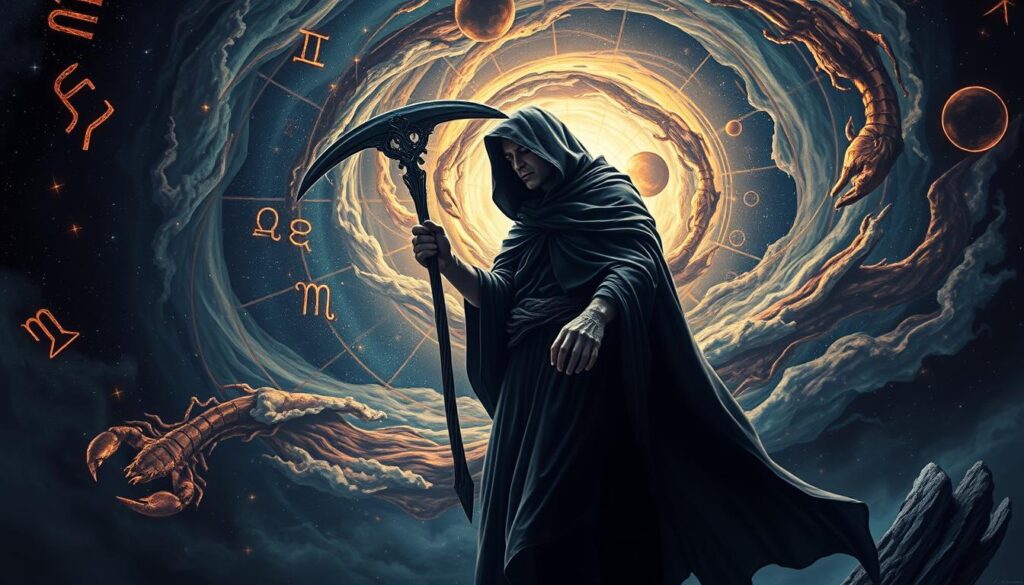
Scorpio’s fixed water: Deep transformation over time
Scorpio blends emotional depth with focused will. That sign holds endings long enough to let true rebirth occur.
Mars and Pluto threads: From clearing to resurrection
Mars lends cutting force, like The Tower’s sudden clearing. Pluto works slowly to renew, echoing Judgement’s call to rise again.
Echoes with Aries authority and power dynamics
The Emperor (Aries) shares Mars’ building power. Together they map a cycle: control, collapse, and calling.
- Energy texture: steady transformation versus sharp spikes.
- Career note: long-term metamorphosis often shows in vocation and identity shifts.
- Timing tip: watch Scorpio season or Mars/Pluto transits for reinforced meaning.
| Influence | Role | Reading cue |
|---|---|---|
| Scorpio | Depth, endurance | Slow, honest change |
| Mars | Cutting, clearing | Quick break or boundary |
| Pluto | Rebirth | Renewed purpose |
Quick guidance: reassure clients that this energy can be internal and gentle. Hold space, tend endings, then welcome new life.
Elemental Lens: Death as Water and Its Allies
Look at this figure as a current: it erodes old form and reveals new passageways for life. As a Scorpio emblem, it belongs to water’s depth—emotional, slow, and quietly relentless.
Moon and High Priestess: Pisces energy dissolves illusions while the High Priestess guards hidden rooms. Together they show how deeper feelings and secrets prepare ground for stirring inner change.
Hanged Man: That pause and sacrificial view primes release. Once we allow that break, the current can finish what needs washing away.
Chariot versus surrender: Cancerian will steers with control. This major asks you to loosen the reins and trust cycles instead of forcing outcomes.

- Position: watery dissolution, not blunt force.
- Practice: try one small area where you embrace change and allow process over perfect results.
- Reading note: multiple water cards amplify surrender, intuition, and inner metamorphosis.
Quick guide: notice emotional tides during transition. Feel fully, let go kindly, and trust the current to reshape both inner and outer forms.
Numerology and Structure: XIII as a Four
Numerology links XIII to a steady four, showing an unexpected kinship between ending and order.
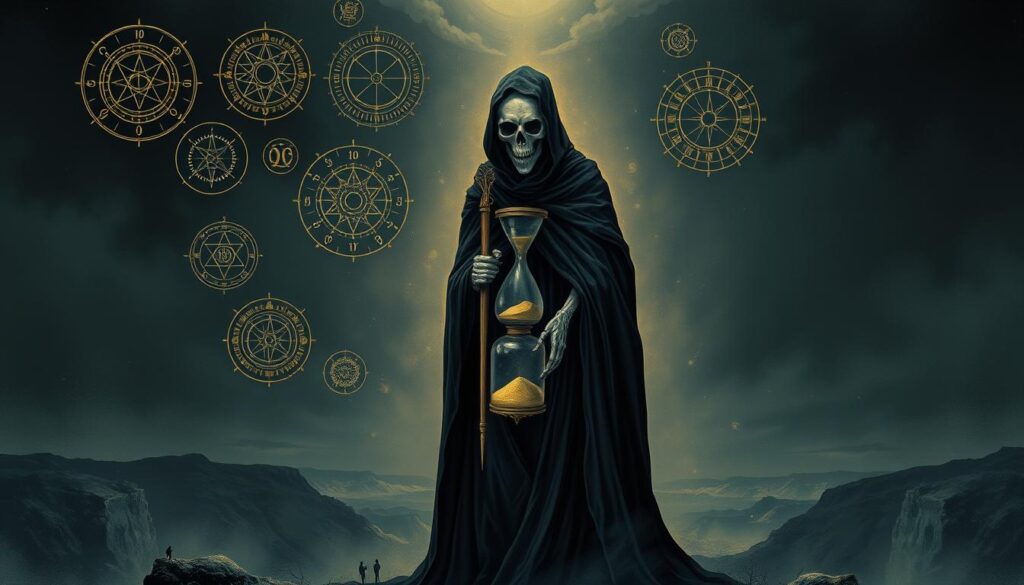
Why the math matters: XIII reduces to 4 (1+3). That ties this major arcana to the Emperor’s plain authority. One face builds systems; the other clears what no longer fits those systems.
Equalizer energy appears when endings restore balance. Closed chapters create boundaries that let clarity and purpose return. This kind of tidy reset can feel like renewed power rather than random loss.
In a septenary view, compare three majors for a sequence: Lovers prompts a choice or severing, this ending completes that choice, and Judgement brings rebirth and calling after release.
| Number | Role | How it shows |
|---|---|---|
| XIII → 4 | Order via ending | Systemic shift, cleared roles |
| Lovers (VI) | Choice | Decision that may need closure |
| Judgement (XX) | Rebirth | New calling after release |
Reading tip: When Emperor and this figure appear together, watch power dynamics, rules, and where an ending actually restores healthy structure.
Try journaling on a choice from the Three of Swords spread. Note what must end so rebirth and steady transformation can follow.
Reading the Death Card in Real Life: Love, Career, and Personal Growth
Real-life readings show endings arriving as mixed feelings—loss braided with bright possibility. Upright often flags an honest finish that clears space. Reversed usually points to stalled motion or clinging.
Spotting endings that are really beginnings
Practical tells: excitement along with grief, doors that close while new options surface, or sudden clarity after a slow fade.
- Feel energy lift even as you mourn.
- Opportunities arrive within days or weeks of a final step.
- Use the white horse and black flag as metaphors: cleansing plus cycle.
Moving forward: Let past go, embrace change
Mark endings with small rituals: a farewell note, a closing conversation, or a calendar milestone. Choose one habit to stop and one to begin.

Sample spreads and positions where this figure shines
Try spreads focused on release and next step. Useful positions:
- What to release
- Door closing / Opening
- Catalyst for growth
| Area | Best position | Quick action |
|---|---|---|
| Love | Pattern to end | One honest question to partner |
| Career | Outgrown role | Reskill or apply to one job |
| Personal growth | Lesson of past | End one habit; start one new |
Timing tip: expect a process over weeks or months; The Tower or eights may speed shifts. The real power comes from choosing cooperation with cycles instead of resisting them.
Common Misconceptions and Mistakes About the Death Tarot Card
Some assume immediate loss when this symbol shows up, yet it usually marks a process, not an event.
Literal fear versus cycle reading: Many people take that label at face value. Do not read it as final harm. Instead, see endings as part of a flow. Emphasize release, timing, and practical change when this tarot card appears.
Skipping grief and rushing to rebirth
Quick joy after an ending often feels healthy, but skipping closure weakens outcomes. Honor loss, name what you will let past, then choose a small action toward integration.
Using reversed as a tool
Death reversed often points to resistance. Use it to spot stuck patterns. Ask what role a person must release to move forward. Add a spread position titled “What to surrender” so release gets equal weight with renewal.
- Compare meanings across your tarot deck to catch nuance.
- Read surrounding majors for pace and scale.
- Avoid assuming breakup or ruin in love readings; check context and nearby cards.
| Mistake | Better move | Result |
|---|---|---|
| Literal doom | Explain cycles | Calmer client, clearer plan |
| Skip release | Ritual or small grief steps | Stronger, lasting rebirth |
| Ignore reversals | Identify resistance | Actionable next steps |
Conclusion
,
Endings often act as quiet invitations to clear space and welcome new purpose.
Death and card appear here as tools for transformation and rebirth. Honor closure, then choose one small action to mark a healthy shift.
Use symbols—the white horse, black flag, armored skeleton—to explain change and to help others read tarot with calm confidence.
Context matters: nearby majors refine timing, pace, and power. Make monthly reviews to track endings and fresh starts.
Reflective prompt: Which part of life feels complete, and which tiny step will you take today?
For focused practice, try a short spread paired with a Seven of Pentacles exercise to notice steady growth.
FAQ
What does the Death card mean beyond literal endings?
This Major Arcana card signals transformation and release rather than physical demise. It points to a major phase closing so new energy can enter. Think of it as clearing space for renewal in life, love, work, or finances.
Why do people fear the Death tarot image?
The imagery—skeleton, horse, black flag—feels intense. Fear comes from a literal read. When seen as symbolic, the card becomes a prompt to embrace necessary change and let go of what no longer serves.
What do the white horse and black flag symbolize?
The white horse represents purification and forward motion. The black flag stands for endings that seed fresh starts. Together they show that endings often cleanse and prepare for rebirth.
How should I interpret the skeleton in armor?
The armored skeleton suggests inevitability and quiet power. It shows that change arrives regardless of resistance, and invites acceptance so growth can follow.
What does an upright Death card indicate about relationships?
Upright, it asks whether a bond needs transformation or a clear ending. It can mean letting go to allow healthier connection or a fresh start after release.
What does upright Death mean for career and money?
In career readings it often signals a big pivot—leaving a role, retraining, or shifting direction. For finances, it can mean loss that triggers new priorities and smarter resource choices.
What does Death reversed suggest?
Reversed, the card points to resistance, stuck patterns, or delayed endings. It urges facing fears, breaking repeating cycles, and making conscious moves to unblock growth.
How do I read Death with The Tower or Judgement?
With The Tower, expect sudden collapse that accelerates transformation. With Judgement, the combo highlights reckoning and a powerful rebirth after release.
Does astrology relate to this Major Arcana card?
Yes. Scorpio energy and planets like Mars and Pluto echo intense inner work, dismantling and regeneration. That astrological lens helps explain the card’s depth and force.
Is Death linked to a specific element or other cards?
It often aligns with water themes—depth, emotion, surrender—and pairs well with Moon or High Priestess motifs. It also contrasts with cards like The Chariot, which emphasize control over surrender.
What numerology does the card carry and why does XIII matter?
Number thirteen reduces to four, tying Death to structure, endings that create new order, and the leveling force that makes transformation practical and stable.
How can I tell if an ending is actually a beginning?
Look for signs of release, new options appearing, or relief after loss. If change brings clarity or space for fresh projects and relationships, it’s a beginning disguised as an ending.
Any tips for reading this card in a spread?
Pay attention to surrounding cards and positions. Context shows if the shift is sudden, gentle, internal, or external. Ask what must be released and what will take its place.
Can Death mean something positive in love readings?
Yes. It can free you from unhealthy patterns or usher in a deeper, evolved connection after honest endings. Positivity comes through growth and clearer choices.
How do I work with this card when it makes me anxious?
Breathe, journal, or meditate on what needs letting go. Use practical steps—declutter, set boundaries, seek support—to transform fear into forward motion and reclaim power.