

Welcome. This short guide maps the Rider‑Waite‑Smith image and its reach into everyday life. The path between two towers, a wolf and a dog, and a crawfish rising from a pool show a fine line between conscious and unconscious.
Reflected light and eclipse‑like details explain distortion and hidden angles. Upright notes include intuition, illusion, and moving carefully with partial facts. Reversed notes point to fear, deception, and the first sparks of clarity.
This Major Arcana piece asks you to balance inner signals and outer checks. It offers an interpretation that frames caution as a tool, not a trap, and shows how uncertainty can nudge action toward a clearer future.
Key Takeaways
- Symbols matter: towers, wolf, dog, crawfish guide meaning.
- Light is reflected: expect distortion and shifted views.
- Upright: trust intuition but verify facts.
- Reversed: watch for fear and the start of clarity.
- Practical use: apply readings to love, work, and money choices.
What does the Moon card mean in tarot? A quick overview for the present
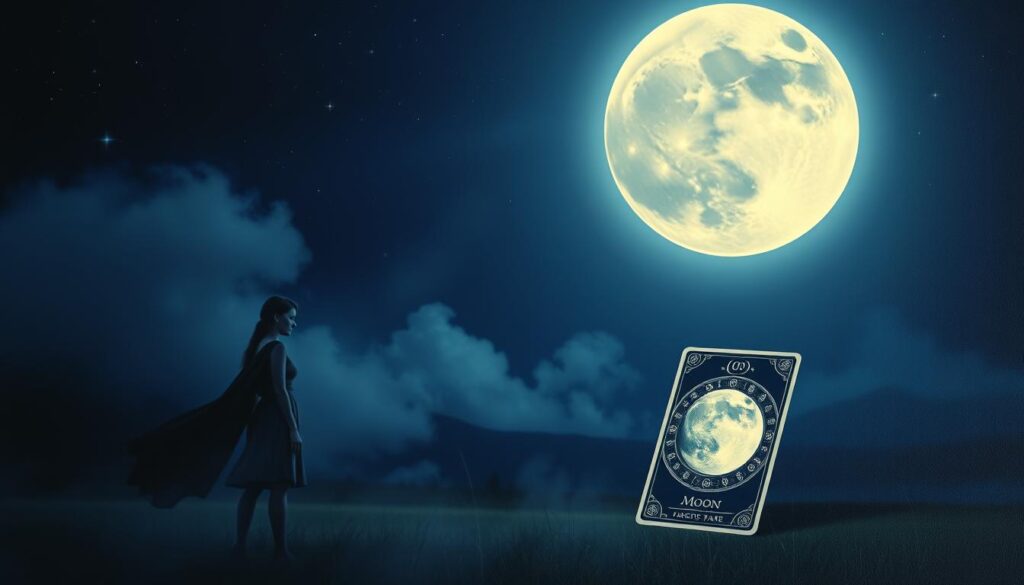
Right now this card often signals a foggy stretch where instincts matter more than surface facts.
Upright energy points to illusion, mixed signals, and secrets. In a short reading it flags cloudy situations and emotions that may color judgement.
Reversed energy leans toward fear, deception, and anxiety, with relief arriving as clarity starts to return.
- Pause before big moves; trust intuition while you gather facts.
- Expect feelings to ebb—name them, but don’t act on every impulse.
- If timing matters, this is a signal that it’s not quite time; let things unfold.
- Take small steps, avoid irreversible choices, and keep notes about dreams or impressions.
Use this overview as permission to hold uncertainty without forcing answers. Ask clearer questions on your next pull and revisit when more light appears. For a related snapshot see a concise comparison at four of cups comparison.
Moon card at a glance: keywords, suit, and Major Arcana context
This archetype flags moments when instinct and uncertainty share the same path.

Core upright keywords
Upright: illusion, intuition, uncertainty, secrets, unconscious.
Core reversed keywords
Reversed: fear, deception, anxiety, misinterpretation, clarity and emerging understanding.
- Placement: This major arcana figure marks big-cycle shifts where confusion and inner guidance coexist.
- As a tarot card, it warns that understanding unfolds slowly; write impressions and check facts later.
- Many a deck treats it as a threshold card asking you to feel forward rather than force answers.
- Quick recall: Upright = trust inner signals and move carefully; Reversed = face fear, clear misread things, invite transparency.
- Visual anchors — wolf, towers, path — help steady your read when spreads feel murky; use these aspects as points of return.
“Name the confusion, then take small steps toward clarity.”
For practical work with steady practice and skill building, see a related study at eight of pentacles.
Symbolism decoded: path, two towers, wolf and dog, and the crawfish
A clear scene teaches by pairing symbols. A winding path shows a slow, careful way between feeling and sight. This invites steady steps rather than leaps.
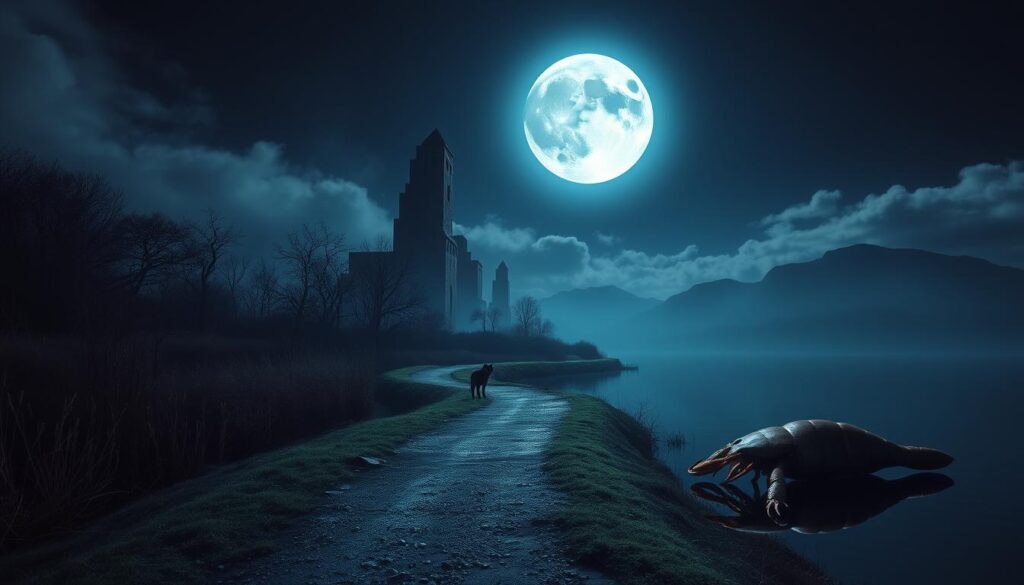
The middle path between conscious and unconscious
Walk the road and notice tension held between aim and impulse. The route asks you to balance both sides as you move forward.
Two towers and the “ramparts of the visible world”
The two towers mark a threshold. These ramparts stand where familiar life ends and unknown begins. Passing them signals entry into liminal space.
Wolf and dog: between tame and wild, day and night
One creature is wild, the other trained. The wolf and dog flank the way and remind you to weigh instinct against habit. Check which side leads your choices.
Crawfish and pool: messages from the subconscious
The crawfish emerges from a pool as an image of subconscious material rising up. Note dreams, hunches, and small signals. This card’s landscape trains intuition by repeating its cues.
- Quick note: Progress comes step by step, especially when shadows lengthen.
- Translate these things into reflection and action during a reading.
Moonlight vs sunlight: reflection, eclipse, and the value of confusion
Reflected beams bend familiar outlines, so perception requires care.
Moonlight is not direct. It carries distortions that make shapes at night look altered.

Reflected light, distortion, and misinterpretation
Light here explains why illusions appear and why acting quickly risks error.
When you spot unclear things, slow down. Note details, and gather evidence over time.
Eclipse imagery and seeing what daylight hides
Some decks use eclipse visuals to show sudden shifts: daylight logic dims and odd truths show up.
Confusion can be useful. It loosens rigid certainty and opens routes you might miss under bright sun.
- Watch the felt edge between dog and wolf to check which side of perception leads.
- If this card repeats, try another deck or spread to test patterns.
- Use slower steps and more sensory checks before naming a conclusion.
| Feature | What it signals | Practical move |
|---|---|---|
| Reflected light | Distortion, misread shapes | Gather observations over time |
| Eclipse imagery | Hidden details become visible | Look for unusual clues when daylight logic fails |
| Confusion | Opportunity to reroute | Slow decisions; test assumptions |
The Moon upright: meaning, themes, and intuitive guidance
Seen upright, this image signals an unclear route that rewards curiosity over quick answers.

Trust inner sense while you gather facts. Upright energy often shows imagination running ahead of evidence. Notice how feelings color interpretation and slow decision speed.
Trusting intuition amid uncertainty and complexity
Use instinct as a guide, not a verdict. Name any fears that rise so they do not steer choices unconsciously. Journaling dreams and odd coincidences can boost understanding and flag hidden threads.
Illusions, hidden information, and moving carefully
This placement warns that things may hide or shift. Move in small, reversible steps and fact‑check impressions before committing to a long way forward.
- Upright asks: trust intuition while acknowledging uncertainty.
- Expect hidden threads, omissions, or surprising angles to affect outcomes.
- Favor curiosity over certainty; clarity often arrives in layers.
“Name the confusion, then take small steps toward clarity.”
Upright applications: love, career, and finances
Upright pulls often show how feelings, plans, and timing blur together, so actions need a careful pace.

Love and feelings: complicated emotions and cloudy judgment
Layered emotions can create mixed signals and replay old beliefs. Slow down conversations and do inner work to clarify real desires.
If someone seems inconsistent, allow space rather than forcing a label. Pressure can distort what is still forming.
Work and vocation: unclear goals, misunderstandings at the job
At work, crossed wires and fuzzy goals call for extra clarity. Use written summaries, confirm roles, and ask for missing information.
Don’t escalate conflicts during a foggy phase; document agreements and revisit when you have more facts.
Money decisions: incomplete information and timing
Major financial moves are risky under unclear conditions. Pause big commitments and compare options side by side.
- Ask direct questions and dig deeper before signing.
- Simple checklist for a quick reading: What’s missing? Who else is affected? What changes with one more week?
- Use emotions as data points, not directives; track repeats versus shifts.
“Take small tests, check facts, and let time reveal missing pieces.”
For a related practical perspective on pacing and investment of effort, see a short study at Seven of Pentacles overview.
The Moon reversed: from anxiety and deception to clarity
Reversed energy often flips a foggy scene into a clearing, but not without some turbulence.

This placement signals a process where confusion and unhappiness either peak or begin to ease. It asks you to name worries and test assumptions.
Dispelling illusions, processing fear, and emerging understanding
Reversed, moon reversed often marks a step toward naming and releasing anxiety. Illusions thin as you ask direct questions and gather facts.
If confusion spikes first, stay calm—turbulence can precede a breakthrough. Expect clarity to grow as you track evidence and revisit old beliefs.
When avoidance backfires and shadow work is needed
Avoidance may help briefly, but it usually backfires. Honest journaling, therapy, or quiet reflection converts vague dread into clear steps.
- Write what you know, fear, and assume without proof.
- Reality‑test gut hits and revisit old “truths.”
- Small discomfort now often prevents larger problems later.
| Signal | What to do | Result |
|---|---|---|
| Anxiety spikes | Name specific fears; note triggers | Lowered tension; clearer thinking |
| Illusions fading | Challenge assumptions; seek facts | More accurate perspective |
| Avoidance patterns | Start shadow work or counseling | Longer‑term relief and growth |
Reversed applications: love, career, and finances
When this placement flips, it asks you to trade paranoia for direct questions and careful checks.

Love reversed: honesty, paranoia, and finding truth
Trust your sense, but verify. If feelings feel tangled, use brave, calm talk instead of accusations.
Ask clear questions and name what you sense. Honesty often turns mixed signals into real dialogue.
Work reversed: clarity regained or sabotage and trickery
At work this placement can free up confusion or expose gossip and sabotage.
Document agreements and keep records. If a situation seems off, loop in a neutral person and confirm facts in writing.
Finances reversed: transparency vs deception
With money, this is a test of information and intent. Best case: goals sharpen and plans gain clarity.
Worst case: hidden fees and misleading terms appear. Press for full statements and pause before signing.
- In love, antidote to paranoia is courageous honesty—ask direct questions.
- At work, guard against gossip and record key decisions immediately.
- With money, separate fear from instinct by testing signals against facts.
- When clarity arrives, write next steps and share them to prevent backsliding.
“Use each red flag as a prompt to ask one more well‑aimed question.”
For a complementary reading on relationship fulfillment, see a short guide to ten of cups.
Psychology of the Moon: subconscious, dreams, and “between dog and wolf”
Between waking and sleep, your brain shifts gears and creative fragments rise up easily.

This card often signals that subconscious material is active. Past experience can project fear into current moments without clear notice.
Hypnagogia, creativity, and the value of not-knowing
Hypnagogia is the thin zone where alpha and theta overlap and odd ideas surface.
Keep a notebook by the bed to catch sparks before they fade. Over time this habit turns blurry flashes into usable insight.
From past experiences to present projections
Psychologically, subconscious material links old memories to present projection. That can make small triggers feel bigger than they are.
- Between dog and wolf hour: a night threshold when the mind shifts modes and creativity spikes.
- Label a feeling, recall the earliest memory with it, then compare then versus now.
- Track recurring dreams or images as messages from deeper layers of the mind.
- Pair emotions and feelings with grounded checks so intuition stays useful, not misleading.
- Not-knowing can be productive: it invites better questions and more adaptive problem-solving.
“Confusion loosens certainty and opens paths you might miss under bright assumptions.”
Lunar cycles in practice: new moon intentions and full moon release
Use new and full phases as calendar prompts: one to plant an intention, the other to release and review. Treat each turn as a mini checkpoint for inner work and outward action.

Rituals, journaling, and dreamwork for intuition
Begin simply. At New Moon set a clear aim and write one concrete micro-action that moves you toward it. Review mid-cycle to course-correct.
At Full Moon list what to let go of—habits or beliefs that dim your light. Close loops with a small symbolic gesture.
- Align with lunar time by noting dates and checking progress.
- Use a short ritual process: cleanse space, write intentions, visualize outcome, then pull one card to guide your way during a quick reading.
- Keep a dream journal to trace symbols over weeks and tune intuition.
- Pick a daily micro-action so momentum builds in real life.
“Track outcomes across phases to learn how your energy ebbs and flows.”
Comparing the Moon across tarot decks and imagery styles
Across decks, a single image can tilt from eerie to gentle while holding the same core story. That steady backbone helps you read visual shifts without losing the archetype.
Rider‑Waite‑Smith foundations
RWS sets a clear blueprint: path, two towers, wolf and dog, a crawfish, and yods as tiny sparks of thought. Many modern deck makers keep those anchors but change emphasis to steer meaning.
How symbols shift across styles
Some cards layer the moon over a sun for an eclipse effect. Others swap towers for trees or make creatures central. Small swaps change mood and guide which instincts you trust.
- Classic cues: path and two towers keep readings rooted.
- Artist choices: spotlighting creatures invites animal‑based nuance; landscape focus asks for slow, steady reading.
- Yods: act as dew of thought—catch those subtle ideas early.
- If a deck leans spooky, explore hidden fears; if calm, check where quiet masks questions.
Compare art across decks to learn flexibility. Use core symbols as constants, then let style color nuance. For related contrast in approach try a focused study at four of swords.
Reading tips: pulling the Moon in a tarot reading today
This draw signals a moment to pair gut feeling with simple, verifiable steps rather than bold leaps.
Questions to ask, timing, and using an intuition guide
When this card appears in a tarot reading, ask clear, tight questions: What am I assuming? What information is missing? What small step tests my hunch?
Use an intuition guide practice: breathe, note the body’s yes/no signal, then pick one concrete next action. Repeat this while journaling or after a short meditation to add context.
- Prefer short horizons for timing; revisit in a week or after a key date.
- Repeat yourself at work to confirm shared understanding.
- Delay big financial moves until you have full information.
When to seek clarity and when to sit with uncertainty
Decide to pause or probe by risk level. If stakes are high and facts are thin, pause. If risk is low, run a small test.
Anchor judgement with a dual checklist: emotional truth and external proof. If anxiety spikes, regulate breathing, step back, and return once calm.
“Use this card as a reminder to gather one more piece of information before committing.”
Conclusion
Let this image act as a mirror: it shows how your mind navigates shadows before clarity arrives. Reflected light and eclipse moments ask for patience, not panic.
Walk the middle way between impulse and proof. Use small tests at work and in love to separate feelings from facts. Name fears, note patterns from the subconscious, and give time for understanding to ripen.
Whether upright or reversed, this major arcana figure teaches the same remedy: check assumptions, move one careful step, and trust that fog often reveals a clearer path forward as you engage the process.
FAQ
What is the Moon tarot card about at a glance?
This Major Arcana symbol points to intuition, illusion, and the subconscious. It signals uncertain terrain where feelings and hidden facts influence choices. Expect dreams, symbols, and indirect guidance rather than clear instructions.
How should I read the Moon when it appears upright?
Upright, it invites trust in gut sense while warning about misperception. It often signals that not all information is visible, so slow down, ask questions, and pay attention to dreams, synchronicities, and subtle feelings.
What does the Moon reversed suggest?
Reversed shows emerging clarity or the aftermath of confusion. It can mean fears are being processed, illusions collapse, or deception gets revealed. Sometimes it flags avoidance or unresolved anxiety that needs shadow work.
How does this card apply to love and relationships?
In matters of the heart, it often means complicated emotions, mixed signals, or hidden motives. It asks for honest conversation and reflection. Reversed can bring truth out or expose paranoia that harms trust.
What about career and work readings?
For vocation, expect unclear goals, hidden office politics, or a confusing project. The card urges gathering facts and clarifying roles. Reversed may indicate that secrecy ends or that deceit is disrupting progress.
How should I handle financial questions when this card appears?
Financially, it warns of incomplete data and risky assumptions. Avoid impulsive moves and verify details. If reversed, transparency may increase, or fraud could be uncovered.
What do the wolf, dog, towers, and crawfish represent here?
These symbols show the split between tame and wild impulses (dog and wolf), thresholds of known reality (towers), and deep, primitive material rising from the subconscious (crawfish). Together they map an inner journey through shadow and insight.
How can I use Moon energy in a personal practice?
Use dreamwork, journaling, and gentle rituals during lunar phases. New moon intentions and full moon releases pair well with this card’s themes. Quiet reflection and creative play help decode hidden messages.
Does the Moon mean danger or just confusion?
It usually signals confusion, not direct harm. Danger can appear if you ignore red flags or act on fantasies. The card cautions against certainty when facts are thin and encourages careful navigation.
How does Moon imagery differ across decks?
Core themes stay consistent, but artists shift emphasis. Rider-Waite-Smith shows classic animals and path imagery; modern decks may highlight dream symbolism, color shifts, or cultural archetypes. Read images for their emotional cues.
When should I seek clarity instead of sitting with uncertainty?
Seek clarity when decisions have real consequences or when anxiety blocks functioning. Sit with uncertainty when exploration, creativity, or emotional processing is needed. The card invites balance between both approaches.
Can this card act as an intuition guide during readings?
Yes. It encourages listening to inner signals, noticing patterns, and using dreams as data. Pair it with grounding cards or questions about evidence to avoid being misled by illusion.