

Curious about what this practice offers? Think of the deck as a friendly tool for insight and a new perspective on your life. It helps people reflect, not predict fixed fate.
In a reading, the reader shuffles, lays out a spread, and reads how symbols and positions relate. Meanings arise from images, suits, and how cards sit next to one another in time.
Most modern decks use 78 pieces: 22 Major Arcana for big life arcs and 56 Minor suits for daily themes. Suits like Wands, Cups, Swords, and Pentacles act as quick meaning cues—drive, feelings, thought, and material matters.
Use this tool to explore options and notice patterns. Whether you pull one card each morning or book a longer session, the aim is clearer choice, calm energy, and fresh insight. For a practical example of focused meaning and practice, see this Eight of Pentacles guide.
Key Takeaways
- Decks offer insight and a new perspective, not fixed predictions.
- Readings combine images, positions, and relationships to form meaning.
- The 78-piece structure splits into Major Arcana and Minor suits.
- Suits act as memory shortcuts: action, emotion, thought, and material life.
- Use short daily draws or full spreads for decisions and creative blocks.
Whats a tarot card: a friendly definition for beginners
Each drawn image acts like a prompt, inviting you to notice patterns in your life. Think of the deck as a mirror that names feelings, options, and small shifts in direction.
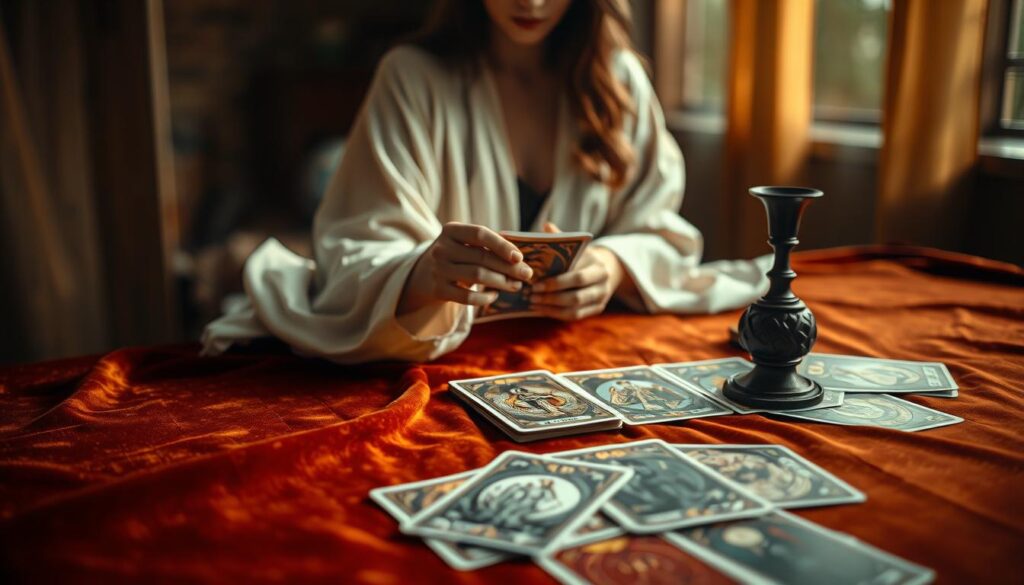
Tarot as a tool for insight, not fixed fate
Readings offer context, not commands. A single card gives meaning as a reflection of the present and the choices available. Position and relationships between cards shape a clear interpretation.
The querent, the reader, and the moment
The person asking and the reader co-create the session. The reader uses the spread to prompt questions and surface inner motives.
- Suits guide focus: Wands for drive, Cups for feelings, Swords for thought, Pentacles for material life.
- Meaning comes from order: How cards sit together matters more than any lone image.
- Simple best practices: Ask clear questions, stay curious, and check your comfort level.
For a focused example of how specific meanings play out, see this Seven of Pentacles guide.
From playing cards to practice: a brief history of tarot
Early European decks began life as simple game tools before their imagery gained deeper symbolic meaning. In the late 15th century, many courts used these painted pieces for leisure and play.

Early European origins and evolution
By the 18th century, written guides started assigning clear meanings and layouts. That shift moved cards from pastime toward reflective practice and divination.
Printed manuals and shared spreads helped standardize interpretation over time. This made learning meanings easier for readers and learners.
The Golden Dawn and the Rider-Waite-Smith legacy
The Hermetic Order of the Golden Dawn in late 19th-century London shaped modern systems and symbolic order. Its members blended mysticism, art, and structure into a reusable framework.
Arthur Edward Waite teamed with Pamela Colman Smith to publish the Rider‑Waite‑Smith deck. The fully illustrated Minor suits—wands, cups, swords, and pentacles—gave clear scenes that boosted meaning and made reading more intuitive.
- From play to practice: the journey shows change in use, not a single fixed path.
- Living tradition: many modern decks adapt imagery while keeping core things like the 22 Majors and four suits.
Inside the tarot deck: Major Arcana, Minor Arcana, and structure
The 78-piece setup groups big life themes and daily moments so meanings land quickly.
78-card layout at a glance
Two main sections divide the deck: 22 Major Arcana and 56 Minor Arcana. The split helps readers mark turning points versus everyday details.
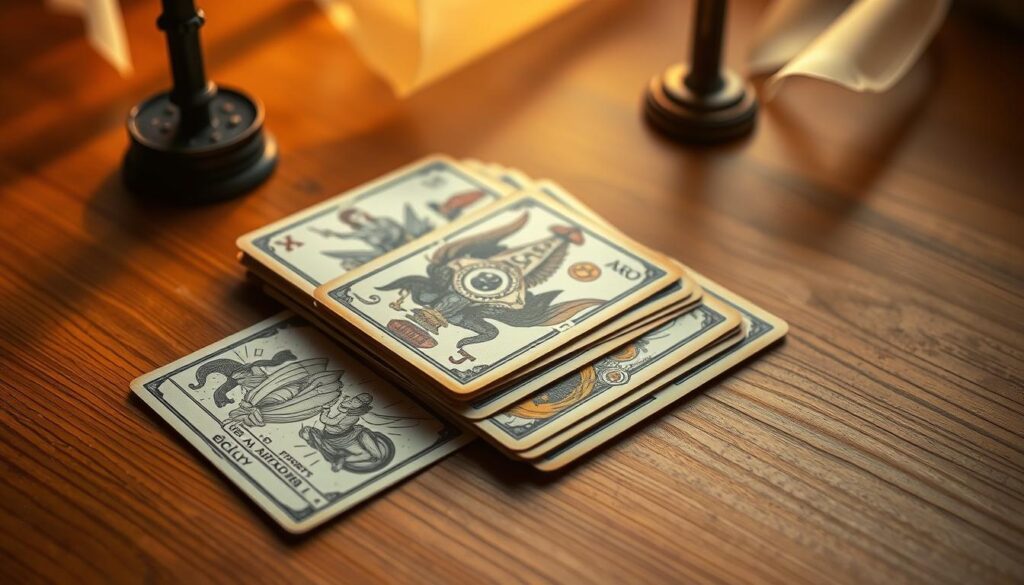
Major Arcana and The Fool’s Journey
The Major Arcana runs 0–21, from The Fool to The World. These pieces map broad milestones and archetypal shifts.
“The Major Arcana often signals turning points, lessons, or chapters in life.”
Minor Arcana and the four suits
The Minor Arcana breaks into four suits: Wands, Cups, Swords, Pentacles. Each suit links to an element and everyday themes.
Pips and court ranks (Ace–Ten plus Page, Knight, Queen, King) add timing and personality to readings.
| Section | Count | Focus |
|---|---|---|
| Major Arcana | 22 | Life milestones, archetypal meaning |
| Minor Arcana | 56 | Daily situations, suit themes |
| Four suits | Wands, Cups, Swords, Pentacles | Action, feelings, thought, material life |
The Major Arcana: archetypes of change, growth, and life’s milestones
The Major Arcana maps core life themes, tracing a clear path from innocence to completion. This 22-piece set forms the deck’s backbone and reads like a mythic story of inner growth.
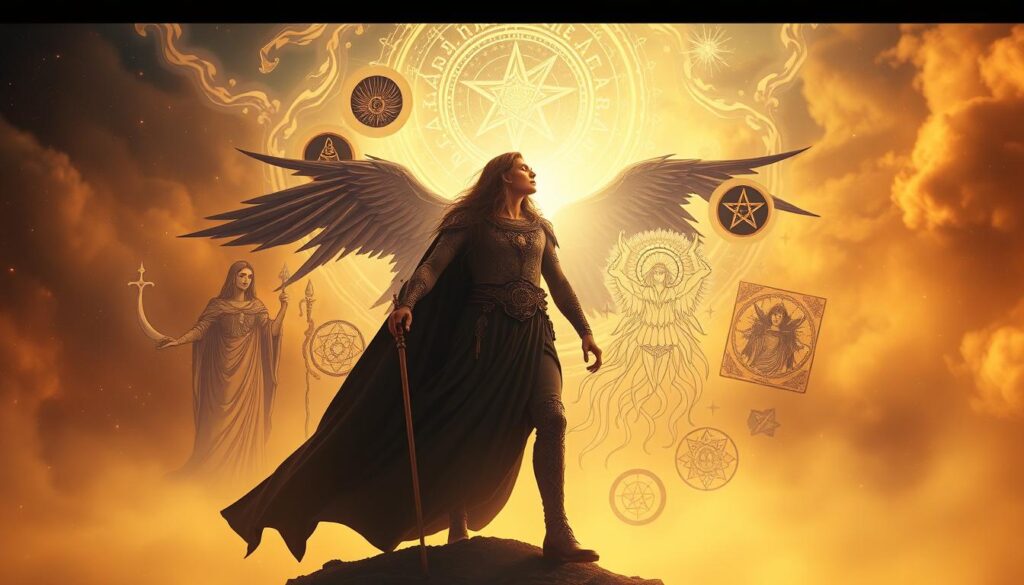
Key figures you’ll meet
The Fool opens the journey with fresh starts and bold curiosity.
The High Priestess points inward, urging trust in quiet intuition and inner power.
Death signals transformation — endings that make room for new beginnings.
The Sun brings clarity, joy, and confidence.
The World marks completion and a sense of integration.
How Majors shape a reading
Majors often anchor a spread, highlighting major change or long-term themes. When several majors appear, expect big lessons or turning points.
- Mixing majors with suits sharpens meaning: wands lean toward action, cups toward feeling, swords toward thought, and pentacles toward material life.
- Look for repeating symbols or numbers to deepen the story without overcomplicating interpretation.
- Want to study one influential placement? Try a majors-only spread to focus on core life movement.
For a close look at how suits and majors interact, check this guide on the Four of Swords.
The Minor Arcana: the four suits and everyday experiences
Each suit in the Minor Arcana points to a familiar area of life, so meanings land fast.

Wands — fire, energy, creativity, and willpower
Wands speak to energy and drive. They flag momentum, ideas that need action, and the time to step forward.
Cups — water, feelings, intuition, and relationships
Cups point to emotions and bonds. They show how intuition and compassion shape choices and close connections.
Swords — air, mind, ideas, logic, and communication
Swords live in the realm of the mind and air. Expect clarity, debate, or mental struggle when many swords appear.
Pentacles — earth, body, work, and the material world
Pentacles ground readings in work, health, and resources. They reveal practical steps, routines, and what’s materially feasible.
- Numbers show cycles: Ace to Ten track spark to completion.
- Court roles: Pages to Kings can be people or approaches.
- Patterns matter: Repeating suits reveal where focus or imbalance lives.
How tarot reading works: spreads, positions, and storytelling
Think of a spread as a map: each placement marks terrain, and the images point to possible routes.
Start by shaping a clear question, then choose a layout that fits your path. A three-card spread offers quick clarity. The Celtic Cross gives depth and nuance for bigger concerns.
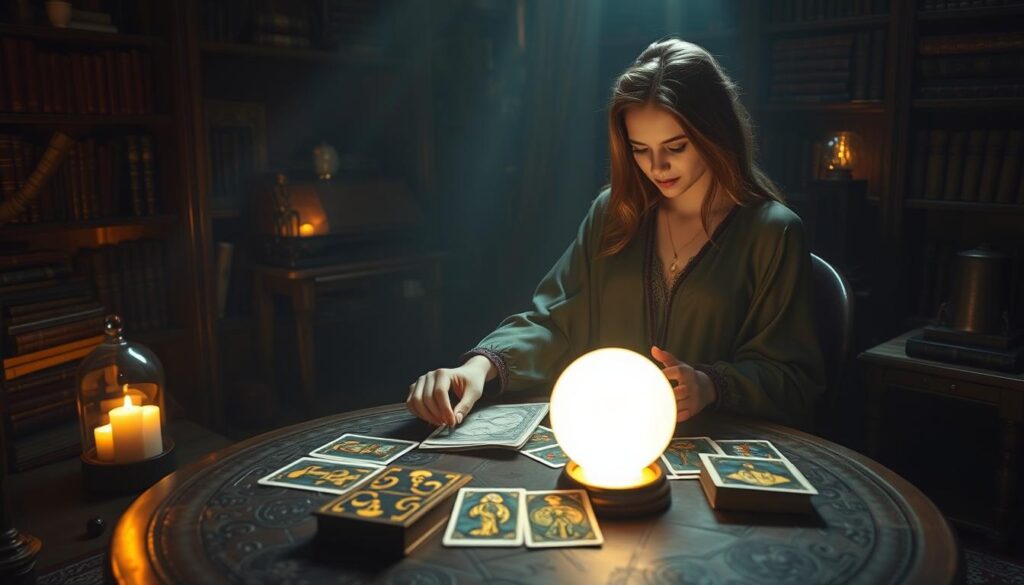
Popular layouts and when to use them
Three-card layouts (Past–Present–Future or Situation–Action–Outcome) are fast and practical. They show movement without overload.
Celtic Cross covers roots, conscious focus, obstacles, and likely outcome. It often uses a Significator and about ten to eleven placements.
Positions and interpreting relationships
Each position has a role: past influences, current energy, likely outcome, or advice. Positions give structure so meanings land cleanly.
Cards interact. They can reinforce, challenge, or redirect each other. For example, wands near pentacles might push action into practical steps. Cups beside swords can show feelings tangled with thought.
Weaving the spread into a clear story
To tell a coherent story, link images and positions into short phrases. Use simple arcs: problem → turning point → next step.
“Look for patterns: repeated suits or themes point to where energy is focused.”
Example: The High Priestess in a present-position can urge patience and inner listening. In an outcome spot she may signal timing or hidden factors that will shape the future.
Pacing matters. Let the reader pause, invite questions, and confirm details with the person during the session. This preserves the client’s agency while offering power and direction.
| Spread | Cards | Use | Focus |
|---|---|---|---|
| Three-Card | 3 | Quick clarity | Past, Present, Future; or Situation, Action, Outcome |
| Celtic Cross | 10–11 | In-depth reading | Roots, influences, obstacles, likely outcome |
| Significator + Mini Spread | 1–5 | Focused topic work | Specific person, decision, or timing |
Finish by summarizing into a short takeaway: what the spread suggests and one practical step. Link insights to strengths, then suggest one move forward.
For a specific example of how meaning shifts by placement, see this guide on the Three of Swords.
Upright vs. reversed cards: reading the spectrum of meanings
How a piece sits — upright or upside down — shifts how its story lands in a spread.
Upright placements tend to show a clear, active meaning. Reversed placements expand that range. They can point to blocked energy, an inward version of the same theme, or an inverse meaning.

Common approaches to reversals
- Blocked energy: The theme is present but stalled or resisting.
- Full inverse: The upright meaning flips into an opposite signal.
- Muted expression: The card’s energy is quieter, internal, or delayed.
Why beginners might skip reversals at first
Beginners often turn all pieces upright to keep readings simple. This lets you explore both light and shadow in the same orientation without extra rules.
- Start by reading upright meanings both ways (bright and shadow).
- Keep one consistent method and note which feels truer over time.
- When reversed appears, ask: Is this timing, inner work, or an external block?
“Consistency matters more than any single method; choose one way and practice it.”
Tip: Restate reversed insights in plain language and suggest one small next step to turn the energy toward healthy change.
Learning tarot: choosing a deck, practicing, and building confidence
Picking the right deck often makes practice feel natural and fun.
Picking a deck that resonates: Many beginners start with the Rider‑Waite‑Smith because its clear scenes teach meaning fast. But hundreds of themed decks exist, so choose what draws your eye and your mind.

Preparing for readings
Set an intention before you begin. Journal a simple question, clear your mind, and respect the person you read for by asking consent and limits.
Practice tips
Shuffle and cut while thinking of the question. Use small spreads first — three-card pulls are ideal for steady progress.
- Track your pulls: Note symbols, feelings, and outcomes in a journal.
- Study habits: Use flashcards, suit drills, and short story exercises to build recall.
- Reading for people: Clarify boundaries and give practical, respectful steps.
You don’t need special powers to learn to read. Curiosity, steady practice, and honest review build confidence and skill over time.
“Practice is a learning loop: pull, note, review, and adjust.”
Try a simple 30‑day plan: daily pulls, one weekly spread, and a monthly review. For focused skill work on intuition and technique, see this guide on how to build clairvoyant skills.
Conclusion
This guide pulls together how the 78-piece system turns symbols into practical insight for everyday choice. The 22 Major Arcana trace the Fool‑to‑World journey while the 56 Minor Arcana split into four elemental suits—Wands, Cups, Swords (Air), and Pentacles—to ground meaning in life details.
Use spreads and positions to shape a clear story, and treat reversals as optional tools while you learn. Remember the Rider‑Waite‑Smith lineage for study, then explore any deck that fits your voice.
Quick checklist: define your question, pick a spread, note key cards, and record one actionable insight. For practice, pull one tarot card today, journal impressions, and review how the meaning unfolds over time.
Tarot supports change by revealing patterns, not by fixing the future. Embrace the journey and grow your reading practice step by step.
FAQ
What is a tarot card and how does it work?
A tarot card is one piece of a 78-card deck used for insight and reflection. Readers interpret symbols, suits, and positions in a spread to tell a story about a person’s life, choices, or path. Readings highlight possibilities and perspectives rather than fixed outcomes.
What’s the difference between Major Arcana and Minor Arcana?
The Major Arcana are 22 powerful archetypes that mark major life themes and turning points. The Minor Arcana has 56 cards across four suits—Wands, Cups, Swords, Pentacles—covering everyday events, energy, feelings, thought, and material matters.
Can readings predict the future?
Readings show potential outcomes based on current energies and choices. They illuminate trends and options so a person can make informed decisions, not guarantee a fixed future.
What is the Fool’s Journey?
The Fool’s Journey is a storytelling framework that follows the Major Arcana as stages of personal growth. It helps readers track development from innocence through challenges, transformation, and completion.
What do the four suits represent?
Each suit maps to human experience: Wands reflect action and creativity (fire), Cups cover emotions and relationships (water), Swords deal with thought and communication (air), and Pentacles relate to work, money, and the body (earth).
How do spreads work and which are common?
Spreads are layouts where each position has a meaning—past, present, challenge, advice, etc. Popular spreads include the three-card (past/present/future) and the Celtic Cross for detailed, relational readings.
What’s the upright vs. reversed meaning?
Upright cards show direct meanings; reversed cards can indicate blocks, delays, inner work, or the shadow side of a card. Many beginners skip reversals to simplify study and focus on core meanings.
How do I choose a deck that fits me?
Pick a deck whose art, symbolism, and energy resonate. The Rider-Waite-Smith tradition is widely used for learning because images match common meanings, but modern decks by artists and brands offer varied perspectives.
Who is the querent and who is the reader?
The querent is the person seeking insight; the reader interprets the cards. Good readings center the querent’s question, context, and consent, with the reader acting as a guide rather than an oracle.
How should I prepare for a reading?
Prepare by setting intention, calming the mind, and formulating a clear question. Many readers journal before and after a session and cleanse or shuffle the deck to focus energy.
How can I learn to read effectively?
Practice regularly with journaling, one-card pulls, and small spreads. Track meanings, note patterns, study archetypes, and learn both Major and Minor Arcana. Consistent practice builds confidence and nuance.
Are there ethical guidelines for readings?
Yes. Avoid absolutes, respect privacy, don’t diagnose medical or legal issues, and get consent before reading for others. Maintain clear boundaries about what a reading can and cannot provide.
What role do timing and energy play?
Timing in readings is flexible—cards can suggest seasons, months, or phases rather than exact dates. Energy influences interpretation; shifts in a querent’s situation can change outcomes, so readings are snapshots of a moment.
How do I interpret relationships between multiple cards?
Look at suits, directional imagery, repeating themes, and position meanings. Cards form a narrative: cause, effect, obstacle, advice. Practicing spreads like the Celtic Cross helps you see interactions clearly.
Can I use different decks for different questions?
Yes. Some decks suit emotional or intuitive work; others suit practical or career-focused questions. Choose a deck whose imagery supports the topic and your personal connection to the material.
What is the best way to track progress while learning?
Keep a practice journal with dates, questions, spreads, and your interpretations. Note how meanings shift over time and review past readings to see patterns and growth in your skills.
Do reversed cards always mean something negative?
Not always. Reversals can indicate internalized energy, delay, or alternative expression of a theme. Context, surrounding cards, and the querent’s situation determine whether the meaning is challenging or neutral.
How long does it take to get comfortable reading?
Comfort varies by person. With consistent practice, basic confidence often develops in weeks to months. Deep mastery of symbolism and storytelling can take years, supported by study, practice, and feedback.
Are there resources for learning and reference?
Yes. Classic resources include the Rider-Waite-Smith deck and guidebooks, works by authors like Mary K. Greer, and online courses from credible tarot teachers. Practice communities and journals also accelerate learning.