

The Death tarot card often sparks worry, yet its core message is renewal. This image marks the close of a major phase and the start of something new.
Think of it as a nudge to release what no longer serves you. It does not forecast literal harm. Instead, this card encourages healthy endings so fresh choices can appear.
In this guide you will find symbolism, upright and reversed meanings, spread techniques, and practical steps to use in a reading. You’ll learn how one card can map a larger story arc from past through present to future.
The guide fits beginners and seasoned readers. It explains how combinations — such as The Tower or The Hanged Man — can intensify shifts and how timing cues hint at next steps. Pair this resource with a journaling practice and revisit meanings as your perspective grows.
For hands-on practice, try this focused spread and then study technique notes like those on the Eight of Pentacles page to sharpen reading skills.
Key Takeaways
- The card signals endings that open paths to renewal.
- It guides release of unhealthy ties rather than predicting physical harm.
- Context and combinations change its tone and urgency.
- Use spreads and journaling to track evolving meanings.
- This guide offers clear, actionable steps you can use in your next reading.
Death Tarot at a Glance: Transformation Over Literal Death
A brief rundown shows the Death emblem as a marker of endings that free space for new life. In upright position, this card marks the end of a major phase and the start of a fresh chapter. It often arrives as a cleansing, decisive push toward transformation.

The energy feels like a sweep that clears clutter you no longer need. When resisted, the change creates pain and stagnation. Paired with The Tower or The Hanged Man, sudden upheaval or a shift in view is likely.
- Snapshot: A signal to meet change with curiosity, not fear.
- Everyday life: Closing a chapter so a healthier one begins on time.
- Energy: Cleansing and decisive, helping you shed unseen weight.
- Takeaway: Endings act as compassionate edits, freeing room for real beginnings.
Ask yourself: “What wants to end so something better can start?” Acceptance smooths transition and sets the tone for constructive action. This glance is a foundation; deeper sections below show how to apply these insights across spreads and decisions.
Symbolism of the Death Card: White Horse, Black Flag, and the Living Skeleton
Read the image like a short story. The main figure rides a white horse that signals cleansing; this is the part of the spread that asks you to clear cluttered priorities and regain clarity.

The white horse and purification through change
The white horse stands for renewal and purification. When the death card appears, imagine choices that wash away old habits and reveal what matters.
The black flag’s white emblem: endings that seed beginnings
The black flag bears a white emblem to show endings already hold a blueprint for new growth. Look for the next sprout, not just the fallen leaf.
Armor, skeleton, and equality before change
The living skeleton in armor is invincible and impartial. It reminds you that core values remain while the rest shifts, and that every status meets the same turning point beneath the horse.
“Symbols guide intuition; notice which icon drew your eye first and let it steer your next step.”
- List one habit to retire and one value to expand.
- Compare imagery across a tarot deck to deepen your sense of the motifs.
For a related exercise, try the four of swords practice to pair rest with release.
What Does Death Tarot Card Mean?
Here we unpack central themes that show endings as doors to renewed purpose.
Core themes: transformation, endings, transition, letting go
The core meaning is an invitation to let go. Upright, this tarot card flags the close of a major phase and clears space for a more aligned life.
Transformation often looks sudden. It can be gradual, too. Either way, release of old ties lets energy move toward a healthier future.

Myths vs. reality: why this feared symbol can be positive
Many fear this image as literal harm. In reality it points to completion, not physical loss.
- Define: an ending that opens room for something better.
- Reading themes: completion, release, pivot, and moving from past to future.
- Timing cue: paired with action cards, act; with reflective cards, process inwardly first.
“What has outlived its purpose?”
Practical step: remove one unhelpful commitment this week and use journaling after your tarot reading to name both the release and the renewal you invite in next.
Upright Death Meaning: How to Embrace a Major Life Transition
When the upright card appears, it signals a turning point that invites honest change. This placement points to the end of a major phase and the start of a different life path.
Love and relationships
Embracing change or closing a door
The upright death card often asks partners to examine dynamics that no longer help growth. It can mean a heartfelt talk, a mutual parting, or a welcomed engagement that shifts the relationship forward.
For singles: release old beliefs that block intimacy so healthier bonds can form.
Career and vocation
Moving on from stagnation to opportunity
At work, this tarot card nudges you to act. Map skills, update your resume, and set a date to apply or pitch. If you hesitate, life events may force the change for you.
Finances and values
Redefining priorities after loss
Financial loss can trigger a needed transformation in spending and values. Build a needs-first budget, cancel low-value subscriptions, and start an automatic micro-savings plan to regain stability.
Emotional check-in: honor tender feelings while choosing steps that help you move forward with integrity.

| Area | Upright Signal | Practical Action |
|---|---|---|
| Love | Shift or closure | Have one honest conversation; set a timeline |
| Career | Move toward opportunity | Update resume; apply or pitch this month |
| Finances | Re-evaluate priorities | Create a needs-first budget; start micro-savings |
“Write one thing you release, then write one present-focused commitment.”
For a linked practice that complements endings and healing, see a related reading on the Three of.
Death Reversed Meaning: Recognizing Resistance and Repeating Patterns
In reverse, the death image often signals a stubborn hold on old patterns. That hold keeps energy stuck and delays needed change. The reversed placement names the cost of staying in limbo so you can act with clarity.

Look for where your past feels safer than the unknown. Below are clear areas to check and small steps to try.
Love and relationships: clinging, dependence, and renewal possibilities
In relationships, the reversed position often shows reliance on comfort over growth. This can look like staying out of fear, repeating familiar arguments, or avoiding hard talks.
- Check dependence: ask if you act from habit or from choice.
- Action: try one boundary or one honest conversation this week.
- Singles: name a repeating pattern (rescuing, avoiding) and try one small behavior change.
Career and workplace: staying stuck in unhealthy environments
The reversed image can point to staying in a job that drains you. Watch for chronic dread, poor boundaries, or repeated conflicts.
- Map signals that scream “stay” out of fear, not fit.
- Plan a realistic exit timeline or redesign your role with concrete asks.
- Audit self-sabotage—procrastination or defensiveness—and adopt one corrective practice per week.
Finances and habits: failing to adapt and course-correct
After a loss, resisting budget changes deepens risk. The reversed placement urges quick, practical steps to stabilize.
- Revise your budget and negotiate bills.
- Set a 60-day plan to regain footing.
- Track emotions gently—fear and grief are normal, but action restores momentum.
“I embrace change in all forms.”
For a complementary practice on patience and returns, see the Seven of Pentacles approach to steady work and timing.
How to Read Death in a Tarot Spread Today
The image gains power when you place it in a spread. Spotting its location and neighbors shows whether a loss is closure or a pivot toward better options.

Position matters: past, present, future, and advice
Past: This position shows a chapter already closed. Reflect on lessons and how that end shaped current choices.
Present: You are in the thick of change. Pick one thing to release this week and one aligned action to stabilize the shift.
Future: Expect an upcoming end. Start contingency planning so the shift becomes an opportunity, not only loss.
Advice placement: Name one attachment to drop and one value to prioritize. Small, decisive edits lead to clearer next steps.
Powerful combinations and their pull
When paired with The Tower, expect sudden upheaval and fast restructuring. Prepare emergency plans and communicate early.
With The Hanged Man, a pause asks for reassessment. Surrender control, gain perspective, then act on the clearest release.
Other majors add tone: some signal culmination, others steady change. Read neighbors as a mini-story, not a single verdict.
Timing, transitions, and spotting endings
Watch for repeating closure cues across the spread. Mark a milestone date to revisit decisions and test whether an ending is complete.
Action steps: release and move forward
- Cancel one draining commitment this week.
- Clear a physical space that symbolizes release.
- Send one message that moves a stalled relationship or career situation toward clarity.
“Choose one release that frees space for a real opportunity.”
| Placement | Signal | One Practical Move |
|---|---|---|
| Past | Lesson learned; foundation shifted | Journal three gains from the ending |
| Present | Active change; high energy | Drop one obligation and set a clear next step |
| Future | Upcoming closure; prep time | Create a contingency plan and a milestone date |
| Advice | Direction to act or release | Name one attachment to let go; state one value to honor |
For a focused practice that pairs rest with release, try the Five of Swords spread to test boundaries during change.
Breaking Negative Patterns: From Resistance to Renewal
Resistance can hide as tidy routines that quietly keep you from starting anew.
The reversed position often marks stuck cycles. It points to holding on when release would free energy for a better path.

Signs you’re resisting and staying in limbo
- Second-guessing: you replay options without acting.
- Bargaining with reality: promises to change later become a pattern.
- Waiting for a perfect moment: it never arrives and life stands still.
Practical practices to embrace change with confidence
- Spot one loop and name it: write “When I feel X, I do Y, which keeps Z.”
- Do a micro-release: remove one small drain this week to build momentum.
- Use the daily affirmation and pair it with action: “I embrace change in all forms” plus one concrete step.
- Try positive subtraction: for every new goal, stop one habit that blocks it.
- Tell a friend your one-week release plan and ask for a check-in to stay accountable.
- Reflect weekly: note what shifted, what felt tender, and your next tiny move.
- Celebrate small wins to reinforce a renewed identity of growth and transformation.
“I embrace change in all forms”
| Sign | Action | Short Outcome |
|---|---|---|
| Endless second-guessing | Set a 48-hour decision window | Less rumination; clearer next step |
| Holding old roles | Remove one draining task | New energy and small wins |
| Waiting for perfect timing | Create a simple plan with one deadline | Forward motion; reduced fear |
For a paired exercise that supports release, try the Six of Swords practice to move through transition with intention.
Death Across Tarot Decks: Traditional and Modern Takes
Across decks, the same theme appears: endings that allow renewal. Classic imagery anchors shared meanings, while newer artwork offers fresh metaphors that can spark different intuitive hits.
Rider‑Waite‑Smith lineage: canonical imagery and meanings
The Rider‑Waite‑Smith scene centers on a white horse, a black flag with a white emblem, and an armored skeleton. Figures from multiple classes lie or stand beneath, signaling that change is impartial and universal.
This arrangement communicates purification and endings that seed beginnings. Use this version as a touchstone when you study other decks.
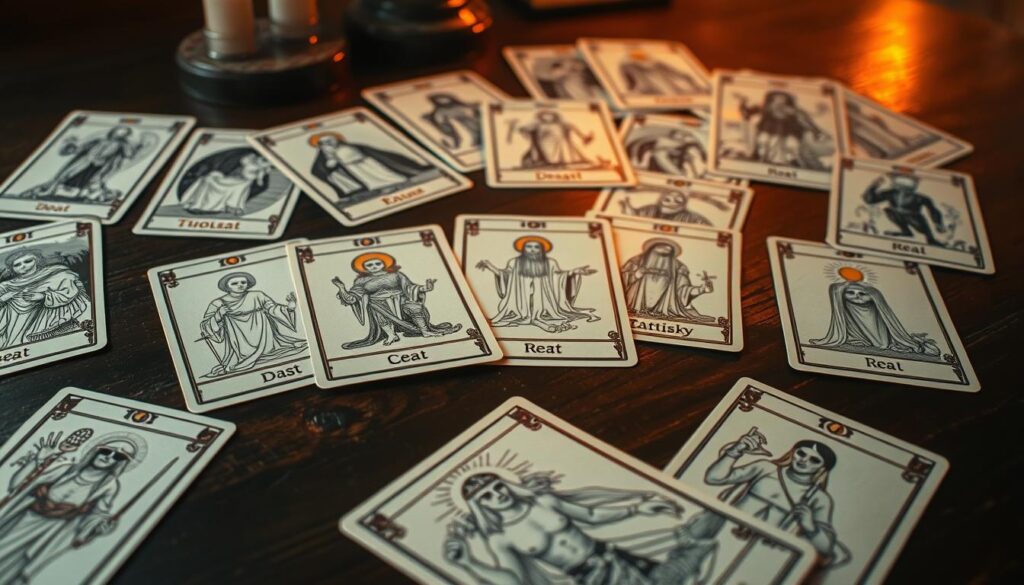
Imagery variations: themes of change, endings, and rebirth
Modern decks swap symbols—flowers, phoenixes, doorways, or seasonal cycles—to express the same structural message: release and renewal. Colors and tone shift, but the underlying meaning stays steady.
Compare the same card across a few decks. Notice which symbols jump out for your current question. That flash often tells you more than any single textbook meaning.
- Classic anchor: white horse, black flag, armored skeleton—equality before change.
- Traditional message: impartial, inevitable transformation that clears space for purpose.
- Modern twists: new symbols (phoenix, doorway) keep the throughline of closure and rebirth.
- Practice tip: build a personal symbol glossary to keep readings consistent across art styles.
| Element | Rider‑Waite‑Smith | Modern deck examples |
|---|---|---|
| Central figure | Armored skeleton on white horse | Phoenix, healer, or doorway figure |
| Flag/sigil | Black flag with white emblem | Blooming flower, spiral, or open gate |
| Theme emphasized | Purification; impartial endings | Rebirth, personal transition, new cycles |
Choose a deck that speaks to you. If the Rider‑Waite‑Smith image resonates, use it as your main frame. If modern art moves you, let its symbols guide your interpretation.
For a deeper comparison exercise, try a side‑by‑side reading and then review notes on the Ten of Swords page to refine how imagery shifts nuance across decks.
Conclusion
, Let this last section turn the card’s energy into a short, practical plan you can use today. The death tarot card asks you to close one door so a truer path can open in life. Its core is compassionate closure that frees energy for clearer aims and fresh meanings.
Read position, neighbors, and timing together. That practice makes the image a steady guide during any reading. Use its insight to handle love or relationship shifts, career moves, and money changes with calmer confidence.
Final action: choose one small release today and one value-aligned step that proves you are ready to move toward renewal. Treat endings and beginnings as partners, and let this guidance keep you grounded and hopeful.
FAQ
How should I understand the Death tarot card in a reading?
Think transformation rather than literal end. The card often signals a major phase closing to allow a new chapter. It points to necessary change, a shift in identity, or the end of habits that no longer serve you.
Why is the white horse important in the image?
The white horse symbolizes purification and forward motion. It suggests that change can cleanse and carry you toward greater clarity and purpose, even when the process feels difficult.
What does the black flag with a white emblem represent?
That banner indicates endings that also plant seeds for new beginnings. The contrast of black and white shows how loss and renewal coexist; one must often finish before something healthier can start.
Who is the skeleton in armor meant to be?
The armored skeleton represents impartial transformation — change treats everyone equally. Armor shows resilience, while the skeleton strips things down to essentials, urging honesty and renewal.
In upright position, what themes should I expect?
Upright, the card centers on transition, release, and rebirth. It can signal breaking old patterns, ending relationships or jobs that limit growth, and beginning a renewed path aligned with deeper values.
Can this card be positive for love and relationships?
Yes. It can mean a relationship is evolving, a commitment ending so a healthier partnership can form, or personal transformation that improves intimacy. Sometimes separation brings needed clarity and growth.
What does the card suggest about career shifts?
Expect major change: quitting, shifting roles, or leaving an industry. The message encourages moving away from stagnation toward opportunities that better match your strengths and purpose.
How should I read the reversed position?
Reversed, the card highlights resistance to change, clinging to the past, or repeating harmful patterns. It advises confronting fear, releasing control, and choosing adaptation to avoid stagnation.
How can I tell if I’m resisting change?
Look for avoidance, repeated mistakes, or emotional numbness. If you feel stuck despite knowing a change is needed, the card is asking you to notice those patterns and take small, concrete steps forward.
How does placement in a spread affect meaning?
Position is key. In the past, it shows a concluded cycle; in the present, active transformation; in the future, an imminent ending that clears the way. Advice placements urge specific actions like letting go or setting boundaries.
Which other cards change the message when paired with this one?
Cards like The Tower amplify sudden upheaval; The Hanged Man points to necessary pause and perspective shift; The Empress or The Star can show healing and renewal after the transition. Context shapes tone.
Does imagery vary across decks and matter for interpretation?
Yes. Rider-Waite-Smith offers classic symbols—skeleton, horse, flag—while modern decks may emphasize renewal, nature, or grief. Read the imagery and artist’s intent alongside traditional meanings for clarity.
What practical actions help after seeing this card?
Release what you can’t control, simplify routines, seek honest conversations, and set small goals. Practices like journaling, seeking therapy or coaching, and creating new daily rituals help you move forward.
Is this card about physical loss or only metaphorical change?
It can signal both. While metaphorical transformation is most common, it may also point to real endings such as grief or major life transitions. Context, surrounding cards, and the reader’s sensitivity guide interpretation.
How do I approach readings that bring up fear around endings?
Stay curious and grounded. Ask clarifying questions, focus on what you can control, and look for next steps. Remember that endings often make space for growth, new opportunities, and restored clarity.