

Start here if you want a clear, practical intro to a reflective practice that uses cards to shed light on your inner life and choices.
This gentle approach treats each spread as a mirror, not a fixed script. Draw one or a few pieces at a time to explore present themes like career shifts, creative blocks, or relationships in a grounded way.
Modern practice stresses accessibility: you don’t need psychic gifts. People learn simple routines, such as a daily draw, and build confidence through short, focused sessions and guided study.
The deck offers structure: 78 cards divide into Major Arcana for big life themes and Minor Arcana for day‑to‑day dynamics. Together they help you notice patterns and weigh options with more clarity.
Curiosity and skepticism both belong here. Treat the process as a conversation with yourself that grows over time. If you want lessons, a short course can fast‑track useful habits and technique.
Key Takeaways
- This practice uses cards to reflect on present choices, not to deliver absolute predictions.
- Beginners can start small: one or a few cards for focused insight.
- No special powers required—daily draws and short routines build skill.
- The 78‑piece deck covers big themes and everyday dynamics.
- Treat sessions as self-conversations; both curiosity and doubt are welcome.
- A short course or guided study speeds up reliable, practical learning.
What is tarot card reading
A focused pull of cards often highlights motives, habits, and small choices that lead to change. Think of a session as a practical prompt: a few images and symbols that help a person examine context around a clear question.
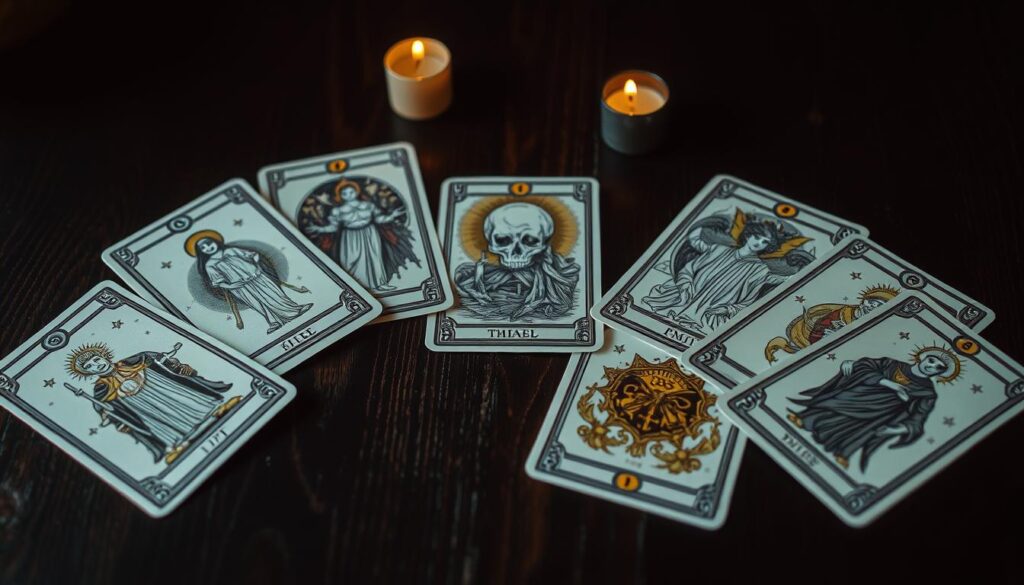
Tarot serves insight, not fixed fate. A reading reviews selected pieces in a spread to interpret meaning about a situation. That process surfaces options and patterns rather than promising a single future.
Querent, reader, and intuition
The querent brings lived detail and the main question. A skilled reader draws and names images, then weaves those cues into meanings that fit the querent’s life.
Intuition helps here: you start with standard notes, then notice words or images that feel loud. Those instincts guide how a spread connects to real choices.
Cards as mirrors of time
Pieces can reflect past influences, current dynamics, and plausible next steps. Even a single card can prompt useful steps; a three-card Past‑Present‑Future spread gives a clear arc.
When to get professional help
Do it yourself for quick clarity or daily guidance. Seek a trained reader when emotions run high, stakes are complex, or you want help with layered spreads.
For more on developing inner senses and clarity, try this guide to psychic vision: exploring clairvoyant abilities.
A brief history of tarot and the structure of a tarot deck
Cards first showed up in Europe as simple playing pieces before gaining symbolic layers used for guidance.
Origins and evolution: Playing cards appear in records from the 14th and 15th centuries. Only in the 18th century did people begin to attach divinatory meanings. Over time, cultural shifts and creative groups shaped how a deck is used today.
Key modern influences: The Order of the Golden Dawn brought ritual and systematized symbols into modern practice. A. E. Waite then worked with Pamela Colman Smith to produce the Rider‑Waite‑Smith deck, whose imagery still guides many artists and learners.
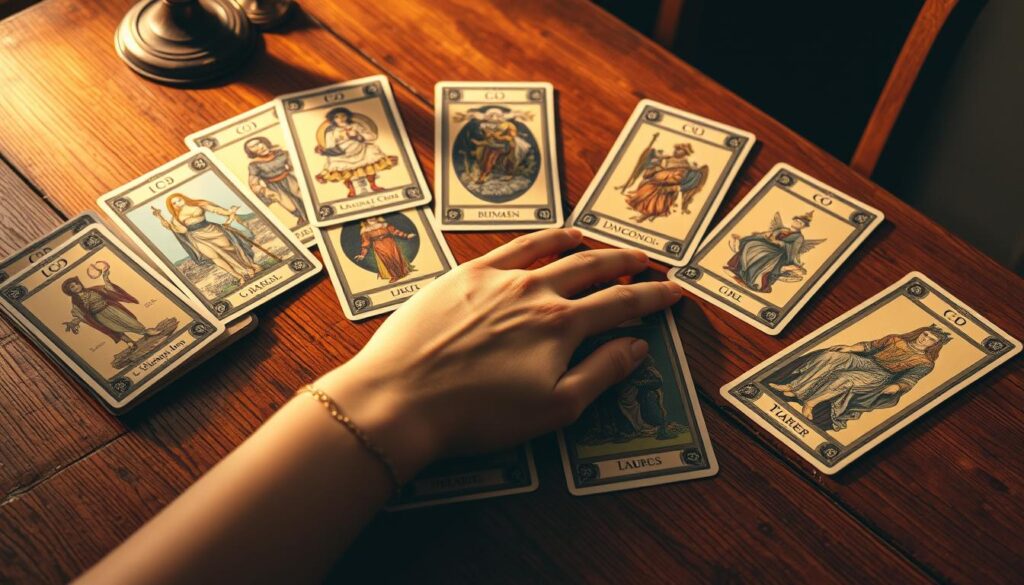
What’s in a standard deck?
A standard set has 78 pieces: 22 Major Arcana that mark big life passages and 56 Minor Arcana for everyday dynamics.
- The Minor Arcana splits into four suits—Wands (Fire), Swords (Air), Cups (Water), and Pentacles (Earth).
- Each suit runs Ace through Ten and includes court roles; names vary (Page/Princess, Knight/Prince, Queen, King).
Notes on symbolism: Cards like Death often mean transformation rather than literal end. Deck lineage—Tarot de Marseille, Thoth, Rider‑Waite‑Smith—affects tone and style, so choose a deck whose artwork and history feel right to you.
For a focused example of how a single suit can show emotional themes, see this Four of Cups guide.
How a tarot reading works in practice
A practical session begins with focused intention and a calm shuffle to connect question and deck.
Shuffling and cutting: Hold a clear question, mix the cards while breathing, then cut to finalize. This small ritual sharpens focus and helps the spread reflect relevant themes.
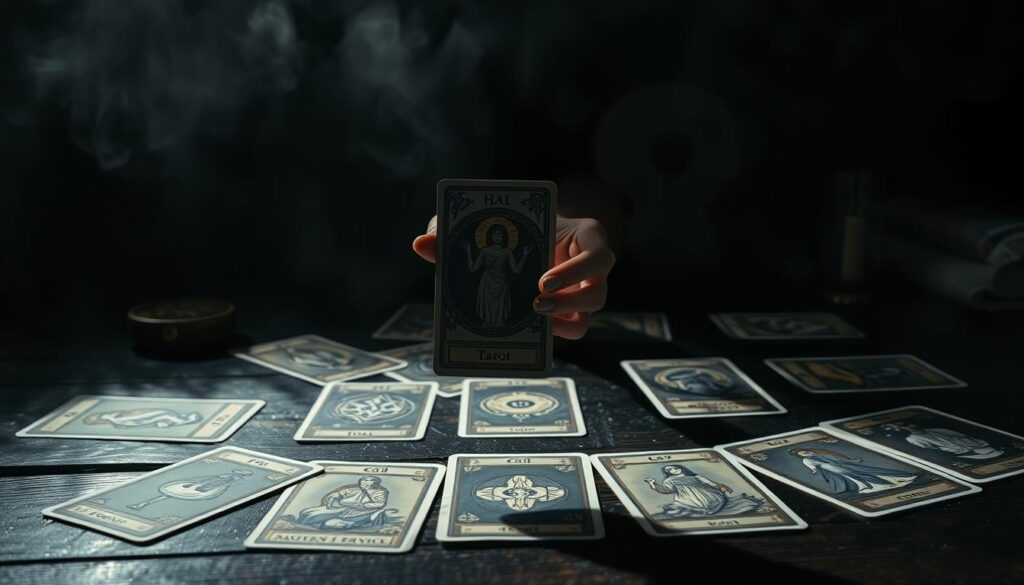
Common layouts and when to use them
- Single pull — a quick nudge for daily clarity and action.
- Three-card spread — flexible: Past/Present/Future or Situation/Action/Outcome.
- Celtic Cross — a deeper map of influences, often ten positions that reveal root, obstacle, and likely direction.
Upright versus reversed
There are three main approaches: read reversals as blocks, as opposite meanings, or ignore reversals by turning every card upright. New readers may prefer the upright method to reduce noise.
Weaving a story
Positions matter. A single symbol can shift meaning based on its place in a spread. Look for repeating suits, linked imagery, and how cards face each other.
“Take time to notice first impressions, then check guidebook notes.”
After a session, write key words and practical takeaways in your own voice. Over time, this practice helps the reader see patterns and trust both structure and instinct. For an example of interpreting challenge cards, see this Five of Swords guide.
Choosing your first tarot deck and preparing for readings
Picking your first deck should feel like choosing a companion for quiet work and growth.
Popular starter options
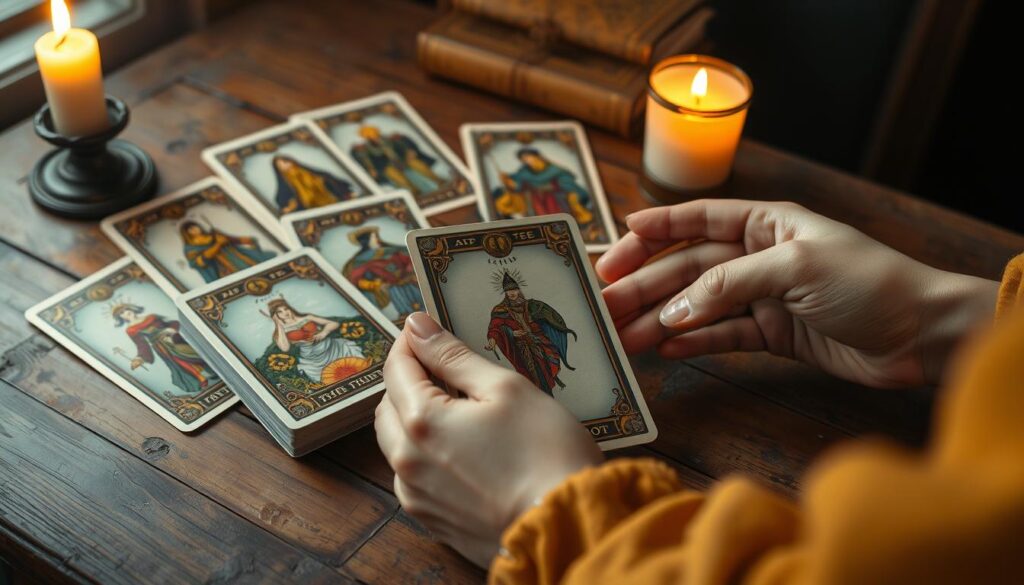
Beginner-friendly classics include the Rider‑Waite‑Smith for clear imagery. The Tarot de Marseille and Crowley Thoth suit people who enjoy historic or esoteric systems.
Themed decks let you connect through modern art or familiar icons. Try handling a few decks to see which visuals invite curiosity.
Practical prep and etiquette
Journal your aims, meditate briefly, and bring a notebook to capture insights. Check a reader’s policies before your session and avoid testing the reader; collaboration works best.
- Choose one or two decks to learn their voice deeply.
- Pick art that feels inclusive and easy to relate to.
- Set a quiet space, a clean surface, and clear intentions.
| Deck | Best for | Why choose it |
|---|---|---|
| Rider‑Waite‑Smith | Beginners | Simple, widely referenced imagery |
| Tarot de Marseille | Historic study | Traditional symbols, stripped art |
| Crowley Thoth | Esoteric depth | Rich symbolism, complex system |
| Themed decks | Personal connection | Modern art, easier personal intuition |
“Let color and symbol guide you; your intuition is your best compass.”
Learning to read: spreads, suits, and building meaning over time
Daily pulls turn fleeting impressions into patterns you can trust over time. Start with one short pull, note a quick word or feeling, then compare it to guide notes later. This habit trains attention and builds steady skill.

Daily draw practice and exploring the four suits and elements
Try a simple routine: pull one card each morning, write first impressions, then add a short line about action. Over weeks, those entries reveal trends and helpful cues.
The Minor Arcana’s suits map to elements: Wands/Fire for creativity and drive, Swords/Air for thought and conflict, Cups/Water for emotion, and Pentacles/Earth for material life. Noting which suit appears often helps shape a focused narrative.
From keywords to narratives: developing confidence and flow
Beginners often lean on guidebook words, then move toward their own language. Link positions, repeating imagery, and the person’s question into a short story that points to clear steps.
“Turn keywords into advice: what could this image gently ask you to do next?”
- Use the same deck so imagery grows familiar.
- Compare Major Arcana shifts with Minor Arcana details to see big and small influences.
- Reframe a spread as three action statements someone can try today.
Practice patiently. With time and steady practice, your readings gain clarity, nuance, and a confident flow. For a practical daily practice guide, see this resource.
Conclusion
Use the images as prompts that help you pause, notice options, and choose with more care. This practice centers reflection over prediction so your actions match your aims.
Start small: pull one card or try a three-card spread and write a quick takeaway. Over time, those short sessions shape clearer thought about love, work, and daily life.
Both self-readers and professional readers add value. When things feel complex, an experienced reader can hold space and map a fuller path.
Capture final notes in your own words, keep a short journal, and consider a brief course or group practice to refine skill. The cards offer options; you decide the future with steady, kind attention.
FAQ
What does a tarot card reading offer to someone new?
A session gives practical insight into current patterns and options. Instead of promising fixed outcomes, it highlights influences, choices, and likely trends so you can act from clarity. Readers use symbolism and intuition to translate images into plain guidance for life, work, and relationships.
How do the querent and reader work together?
The querent shares a clear question or area of focus, and the reader frames the spread and interprets cards. Collaboration matters: honest context from the querent and active listening from the reader produce useful, grounded answers that respect free will.
Are cards predictive or reflective of the present?
Cards act like mirrors: they reflect past influences, present dynamics, and potential outcomes based on current choices. They point to possibilities rather than fixed fate, helping you compare options and anticipate consequences.
When should I hire a professional instead of doing a self-reading?
Choose a professional for complex issues, emotional crises, legal or health decisions, or when you want an objective perspective. Self-readings suit daily guidance and personal growth. A trained reader can offer structure and ethical boundaries for sensitive topics.
Where did modern decks originate?
Modern oracle-style decks trace back to 15th‑century European playing cards. The occult revival in the late 19th and early 20th centuries — including groups like the Hermetic Order of the Golden Dawn — shaped the symbolic system used today in popular decks such as Rider‑Waite‑Smith and Aleister Crowley’s Thoth.
What is the difference between Major Arcana and Minor Arcana?
The 78-card blueprint splits into Major Arcana — archetypal life lessons and milestones — and Minor Arcana — everyday situations divided into four suits. Combined, they create a layered narrative between big themes and practical details.
How does a typical reading proceed?
Readings start with setting intention, shuffling and cutting the deck, and choosing a spread. The reader lays cards in positions that represent time, roles, or choices, then weaves meanings from imagery, positions, and card interactions into a coherent story.
What are common spreads and when to use them?
Use a single card for daily focus, a three-card spread for past-present-future or situation-advice-outcome, and the Celtic Cross for deep, multi-layered issues. Pick a spread that matches the scope of your question and available time.
Do upright and reversed cards change meanings?
Many readers use reversals to add nuance — delays, internalized energy, or blocked expression — while others avoid them to keep interpretations simple. Either approach can work; consistency matters more than rule strictness.
How do card positions and interactions shape a story?
Each position assigns a role — for example, obstacle, advice, or outcome. When cards touch themes or repeat symbols, they amplify messages. Good readers note patterns, suit emphasis, and whether cards reinforce or contradict each other.
Which decks are best for beginners?
Rider‑Waite‑Smith, Tarot de Marseille, and Thoth are classic choices. Many beginners start with Rider‑Waite‑Smith for clear imagery. Themed decks can work too, especially if you feel a personal connection to the art and tone.
How should I choose a deck based on imagery and intuition?
Hold candidate decks, scan artwork, and notice your emotional response. Choose one that feels comfortable and meaningful. A strong visual or gut reaction often makes study and practice more engaging.
What preparation helps before a reading?
Journal a focused question, clear your mind, and set an intention. Respect reader policies about topics they don’t address. Grounding rituals — a short breath practice or lighting a candle — can improve focus but aren’t required.
How do I learn spreads, suits, and card meanings over time?
Start with a daily draw to build familiarity. Study the four suits and associated elements, practice three-card spreads, and keep a reading journal. Over time keywords expand into narratives, and confidence grows through repetition.
How long does it take to feel fluent with the system?
With regular practice — daily draws, weekly spreads, and reading notes — many people feel confident within a few months. Progress depends on study, practice, and reflecting on real-life outcomes from readings.
Can I use playing cards or other decks instead?
Yes. Standard playing cards map to Minor Arcana suits and can form an accessible entry point. Many systems exist to adapt the structure, so choose what keeps you curious and consistent with practice.
How does intuition factor into interpretations?
Intuition bridges symbolism and personal context. As your familiarity grows, intuitive hits become more reliable. Balance intuition with learned meanings and clear questions to keep readings useful and ethical.