

Short answer: this practice uses a 78-card deck to offer guided insight into someone’s present life and options. A session begins with a focused question, a chosen layout, and a reader who interprets images and symbols to help name feelings, patterns, and possibilities.
The cards act like mirrors. They don’t hand down fixed fate. Instead, they highlight paths and prompt reflection so people can choose with more clarity. Modern use centers on insight and decision-making more than strict prediction.
The system splits into Major and Minor groups, each carrying layered meaning. Sessions vary in length and style, and collaboration between querent and reader matters for a useful exchange. Different practitioners may use unique spreads but share a goal: honest clarity.
In this ultimate guide you’ll find history, deck structure, common spreads, how sessions work, key cards, and tips for respectful practice. Come with questions and an open mind to get the most value.
Key Takeaways
- Sessions use a 78-card deck to reflect present context and choices.
- Cards offer symbols that help name feelings and patterns.
- Interpretation is collaborative, not fatalistic.
- Readings vary by reader, spread, and the querent’s goals.
- Prepare questions and expect honest, ethical guidance.
Understanding the Basics: Tarot, the cards, and why people read
A symbolic deck helps people map inner patterns and spot choices during uncertain moments. It works by pairing images and positions so meanings emerge from combinations, not single pulls.
Many turn to readings to gain perspective, reduce worry, and find words for complex feelings. Sessions suit self-use or work with a professional; both formats help clarify motives and options.
The session usually involves two participants: the querent and the reader. Active questions and reflective dialogue make the process richer and more useful.
Mind and intuition collaborate during an interpretation. Visual cues trigger memories and emotions, which a reader links to real-life context.
Formats range from a single pull to a three-place spread or a larger layout. Each size offers different focus—quick insight, short narratives, or detailed maps.
You don’t need psychic gifts to read tarot cards; practice, pattern recognition, and thoughtful journaling build skill. To start, jot intentions before a session and keep topics at your comfort level.
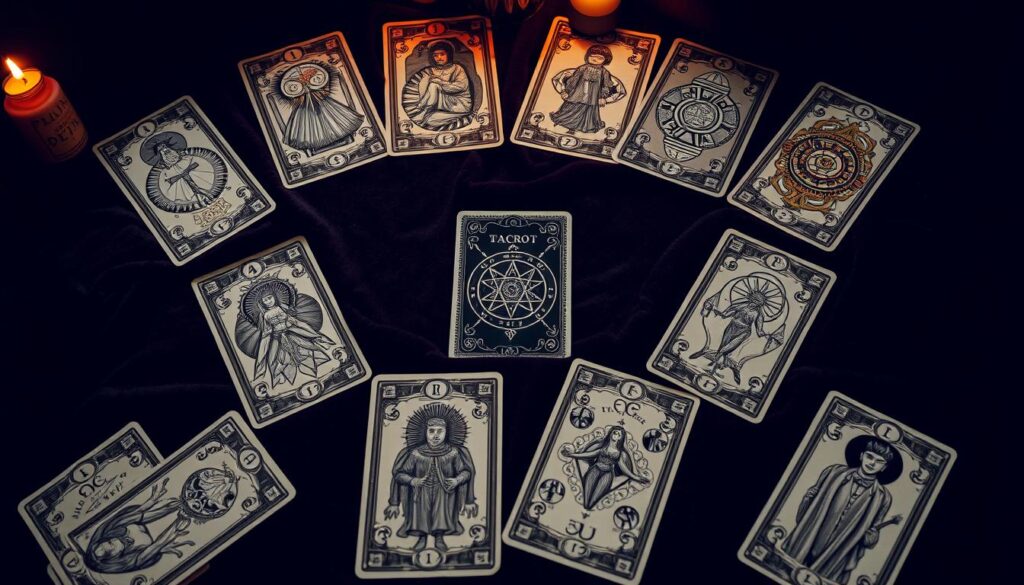
- Try one small pull to build confidence.
- Use journaling to track themes over time.
- Explore card meanings like the Four of Cups meaning for focused study.
From playing cards to prophecy: A brief history of tarot
Early decks began as playful innovations. In northern Italy around 1440–1450, artisans added allegorical triumphs to playing cards. These extra panels acted as trumps for games rather than tools for foresight.
Italian roots in the 15th century
Records call them “carte da trionfi,” used at courts for entertainment. Noble households commissioned ornate panels and the set spread across Europe as elegant gaming material.
18th-century occult revival
In the 1780s Court de Gébelin and Etteilla began assigning symbolic meaning to the trumps. Etteilla introduced upright and reversed interpretations and even made Egyptian‑themed decks meant for divination as an early example of purpose-built design.
Golden Dawn and symbolic order
Éliphas Lévi tied trumps to Hebrew letters and broad occult systems. Later, the Hermetic Order of the Golden Dawn adjusted the order of some trumps, swapped Strength and Justice, and named suits Wands and Pentacles while mapping cards to the Tree of Life.
Rider‑Waite‑Smith and Thoth
The Rider‑Waite‑Smith deck brought fully illustrated minor cards that made meanings more intuitive for many people. Crowley’s Thoth offered a different esoteric synthesis and denser imagery. Scholars like Michael Dummett caution against unproven claims of ancient Egyptian roots, reminding readers to separate myth from documented history.
- Play came first: game origins shaped form.
- Occult systems: gave trumps layered meaning and order.
- Modern decks: evolved imagery to fit today’s world.
The tarot deck structure: Major Arcana, Minor Arcana, and four suits
A standard deck arranges 78 pieces into two broad groups that map big themes and daily details.
Major Arcana: Life’s big passages and the Fool’s journey
The Major Arcana contains 22 cards numbered 0–21. These trumps mark key stages of personal growth.
The Fool’s journey describes movement from innocence through trials to integration. Cards like Death signal transformation, not literal endings.
Minor Arcana: Four suits—Wands, Swords, Cups, Pentacles—and daily life
The Minor Arcana holds 56 cards in four suits. Think of these as snapshots of work, thought, feeling, and resources.
Each suit runs Ace through Ten and shows how small moments build a larger story.
Court cards and the four suits: Pages, Knights, Queens, Kings as people and energies
Court cards can mean a person, a role, or an energy pattern. A Page suggests beginner curiosity. A Queen often shows skilled, compassionate mastery.
Decks may rename courts (Page/Princess, Knight/Prince), but functions stay consistent.

- Quick tip: Scan for a predominance of one suit to spot the life area under focus.
- Make short notes when suits or courts repeat to track personal patterns over time.
- Combine elemental attributions—Fire, Air, Water, Earth—with number patterns for richer meaning.
| Suit | Element | Focus | Example |
|---|---|---|---|
| Wands | Fire | Drive, creativity | New project energy |
| Swords | Air | Thought, communication | Debate or decision |
| Cups | Water | Feelings, connection | Emotional bond |
| Pentacles | Earth | Resources, craft, health | Work and money |
For focused study, try the Eight of Pentacles as an example of suit-specific meaning in practice.
Popular tarot spreads and when to use them
A thoughtful layout organizes the deck so every placement highlights a specific angle on the issue.
Spreads give structure: each position names an influence, challenge, advice, or likely outcome. That clarity helps a reader translate symbols into next steps rather than vague signals.
The Celtic Cross: an eleven‑place snapshot
The Celtic Cross uses about ten to eleven cards to map present, challenge, conscious goals, hidden influences, past and future, and final outcome.
It’s best for complex situations where you need depth across time and influence.
Three‑card layouts: quick focus
Three‑card spreads shine for daily pulls or clear decisions. Try Past‑Present‑Future, Mind‑Body‑Spirit, or Situation‑Action‑Outcome for near‑term guidance.
Specialty layouts and adaptation
- Career path for work planning
- Relationship spread for dynamics and needs
- Horseshoe for phased timelines
- Tree of Life for spiritual mapping
Adapt any layout by adding a clarifier or framing positions as pros/cons to fit the question. Watch suit patterns—many wands signals action and drive; clustered minor arcana show daily details.

Explore related guidance on intuition to pair with your practice. Match spread size to complexity: start with three cards, then try larger maps for nuanced situations.
How what is a tarot card reading actually works
A clear question sets direction. Start with one focused, open-ended prompt. That helps you choose a spread that matches your goal.

Formulating intent and choosing a spread
Shuffle with purpose and lay the chosen spread. Each position names a role in the unfolding story.
Reading the story: positions, interactions, and intuition
Read each placement in order so the narrative grows step by step. Note how nearby suits or repeated numbers add layers of meaning.
- Flow: shuffle, lay, name positions, interpret.
- Context: a card can act as challenge, guide, or timing hint.
- Intuition: let inner sense—like the High Priestess archetype—help tie symbols to your life.
| Step | Action | Outcome |
|---|---|---|
| Prepare | Focus question, pick spread | Clear direction |
| Shuffle & Lay | Shuffle with intent, place cards | Positions set the frame |
| Interpret | Note interactions, upright/reverse nuance | Practical insight |
| Close | Summarize in 1–2 sentences; journal | Action steps and tracking |
Ask a clarifier only if needed. Partnership matters: you bring life context; the reader brings structure and pattern sense. For tips on sensing inner vision, see how to get clairvoyance.
Upright vs. reversed cards: Meaning, nuance, and practice
Directionality in a spread affects how symbols speak to present obstacles and strengths.
Upright pulls usually show clearer, outward energy and primary meanings.
Reversed pulls alter tone: they can weaken intent, reveal shadow sides, or flip an upright meaning.

Common approaches to reversals
- Blocked energy: the flow stalls or needs extra effort.
- Shadow aspects: hidden motives or fears appear.
- Inverse meaning: a direct opposite of the upright message.
“Reversals give texture, not chaos.”
Example: The Hermit upright suggests guidance and reflection. The Hermit reversed can mean avoiding wisdom or lonely isolation without learning. Track these shifts in a journal to test which approach fits your practice.
Beginner tip
Start with all cards upright until core meanings feel natural. Then add reversals with one consistent rule so your reading stays coherent.
When to use reversals: try them when a spread feels stuck or contradictory. If they confuse the story, simplify and rely on clear questions and strong upright knowledge. For further study, consult this seven of pentacles guide.
Key cards with big reputations: Death, The High Priestess, The Sun, The World
Some cards carry reputations that shape how a spread feels at once—urgent, quiet, or celebratory.
Death
Death signals transformation and renewal, not physical end. Think release and rebirth: pruning what no longer fits to make room for fresh growth.
As advice it can mean letting go. As an outcome it often points to a new chapter coming with clear time markers.
The High Priestess
The High Priestess highlights inner wisdom, dreams, and quiet intuition. When paired with Cups, expect reflective energy and deeper feeling to guide choices.
The Sun and The World
The Sun brings clarity, recognition, and vitality. Nearby Pentacles can show success in work or health. The World marks completion and readiness for a fresh cycle.
These major arcana set tone and timing. Surrounding cards color their headlines, so read patterns, not single labels.
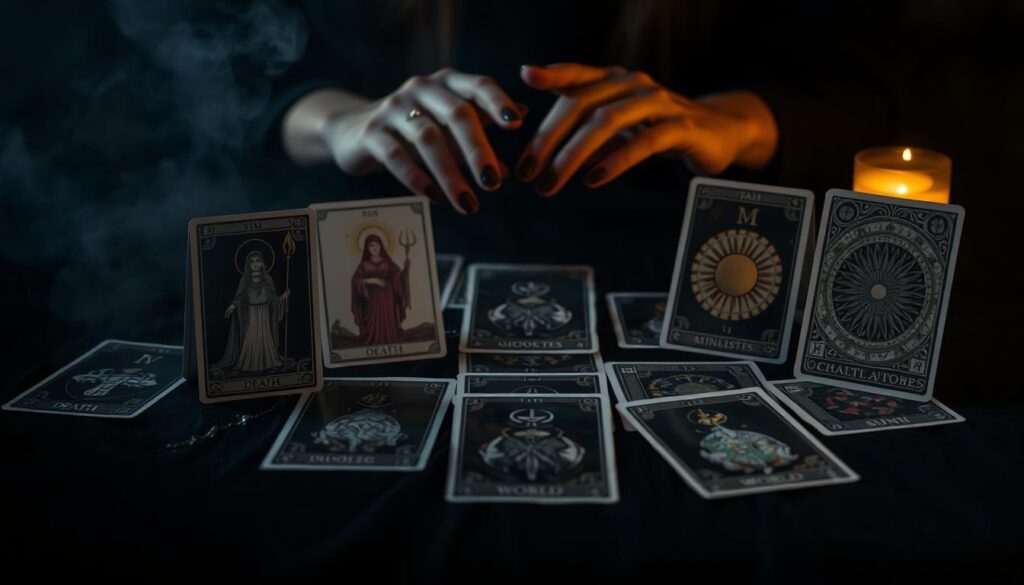
| Card | Core meaning | Common advice |
|---|---|---|
| Death | Transformation, end → new start | Release; allow change |
| The High Priestess | Intuition, inner knowing | Listen; trust stillness |
| The Sun | Clarity, success, vitality | Celebrate; act with confidence |
| The World | Completion, integration | Share gifts; prepare next cycle |
Choosing a tarot deck you’ll actually use
Pick a deck that invites you to return; familiarity speeds learning and builds trust.
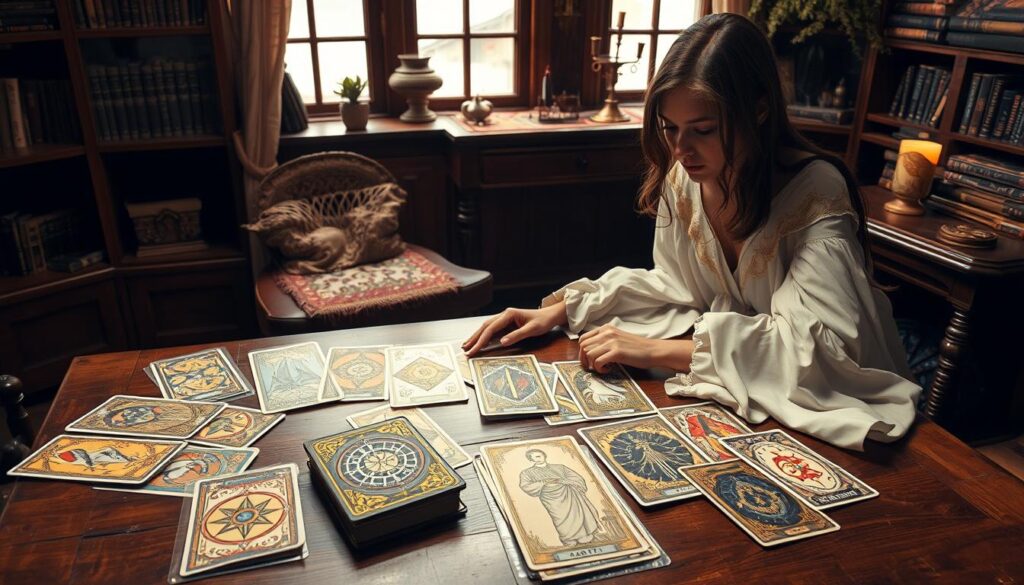
The Rider‑Waite‑Smith (RWS) set remains the go‑to for beginners because its minor suits are fully illustrated and match many guides. It helps people learn meanings and suit patterns, like how wands show action and spark.
By contrast, the Thoth tradition offers dense symbolism and a steeper learning curve. It suits students who prefer esoteric depth over quick intuition.
Finding a deck that fits
Let imagery guide you. Preview all 78 cards online before buying. Note card stock, size, and how the deck handles shuffle and spread.
- Clarity first: choose readable scenes over novelty.
- Practical feel: size and finish matter for long practice.
- Later growth: add a second deck to compare and sharpen meaning.
| Type | Best for | Notes |
|---|---|---|
| Rider‑Waite‑Smith | Beginners | Clear imagery, many resources |
| Thoth | Esoteric study | Complex symbols, deeper study |
| Themed decks | Personal resonance | Inspire practice but check clarity |
Preparing for a reading: Mind, setting, and ethics
Before a session begins, clear intent and a calm space shape how useful the exchange will be. Good prep keeps attention steady and helps the cards speak to practical next steps.
Journal goals and questions ahead of time. List one to three priorities and a few precise questions. Short notes keep the session on track and make follow-up easier.
Respect reader policies and set expectations. Agree on price, length, any off-limit topics, and whether the session may be recorded. Clear logistics create trust and mutual order.

Set the mood: space, time, and focus
Choose a quiet corner and block uninterrupted time. Simple rituals—deep breaths, water, a cloth—help shift your mind into presence.
Don’t test the reader: collaboration over challenge
Testing often derails insight. Offer honest context and ask clarifying questions instead. Work together to turn symbols into usable words and action steps.
“A shared intention clears the path for useful guidance.”
Bring a notebook to capture dates, phrases, and tasks you want to try. After the session, reflect briefly on what resonated and what you will do next. For those exploring professional paths, see how to become a paid psychic.
Learning to read tarot: Skills, practice, and story-building
Consistent habits—daily draws, focused questions, and follow-up notes—help meanings settle into memory.
Know your deck: spend time with images, suit threads, and elemental cues. Study how wands, swords, cups, and pentacles show up in small spreads. Track patterns in the minor arcana to see which life areas the deck favors.

Shuffle, cut, and pull with intention
Hold a clear question in mind while you shuffle. Use the cut to mark intention and then pull calmly. This simple ritual helps align the spread with your true concern and trains the mind to focus.
Create coherent narratives
Start by scanning for majors, then note dominant suits and repeating numbers. Build a short story: overall theme, supporting details, and practical steps. Read interactions, not just single images.
Practice plan and ethical notes
Keep a steady routine: daily pulls, journal lines, and monthly review. Practice three-card exercises with different prompts to grow flexibility.
- Order to follow: scan majors → check suits → read positions → synthesize.
- Make a personal reference: meanings you observe and combinations that repeat.
- Read for friends only with consent and share insights kindly, focusing on options rather than fate.
“Practice shapes skill; curiosity keeps it alive.”
Conclusion
This guide ends with an invitation: see the deck as a reflective tool that highlights energy, meaning, and possible paths rather than fixed fate. strong.
Recap: you explored history, deck structure, spreads, and practical steps to use tarot with care. Readings reveal perspective and options; the future stays open to your choices and effort.
Next steps: pick a deck you’ll actually use, practice simple spreads, and journal outcomes over time. Start small, read tarot cards regularly, and set one concrete action after each session.
The World often signals completion and new cycles—endings that begin again. Thank you for exploring; return as your practice grows and your meaning deepens.
FAQ
What does a tarot card reading involve?
A session typically uses a shuffled deck laid out in a spread; each position adds context. The reader interprets imagery, suits, and Major Arcana themes to tell a clear story about a situation, options, or timing.
How do Major Arcana cards differ from the Minor Arcana?
Major Arcana cards mark major life passages and archetypal forces. Minor Arcana, split into Wands, Swords, Cups, and Pentacles, reflects daily actions, emotions, thoughts, and material matters.
Are there standard meanings for popular cards like Death or The High Priestess?
Yes. Death often signals transformation or the end of a cycle, not literal death. The High Priestess points to intuition, secrets, and inner knowing. Context in the spread changes nuance.
Which spreads work best for beginners?
Start with three-card layouts—Past, Present, Future or Situation, Action, Outcome—to learn storytelling and card relationships. The Celtic Cross offers depth but takes practice.
Should cards be read upright only, or should reversals count?
Many readers begin with upright meanings to build confidence. Reversals can show blocked energy, delay, or inner shadow. Choose an approach and stay consistent while you learn.
How do I choose a deck that fits me?
Compare Rider-Waite-Smith and Aleister Crowley’s Thoth deck for classic symbolism. Then pick imagery and themes that spark intuition. Practical factors: card size, artwork clarity, and guidebook support.
Can I use playing cards instead of a themed deck?
Yes. Cartomancy adapts standard playing cards to similar suits and meanings. Many readers began with playing cards before moving to illustrated decks.
How do history and tradition shape modern practice?
Decks evolved from 15th-century Italian games to 18th-century occult reinterpretation and then Golden Dawn correspondences. Rider-Waite-Smith and Thoth defined much of today’s symbolism and spread usage.
What ethical guidelines should a reader follow?
Respect client boundaries, avoid making medical or legal promises, and be clear about your role. Encourage empowerment and offer practical next steps rather than fatalistic statements.
How often should someone get readings?
Monthly or milestone readings work well for check-ins. Frequent sessions can be useful during major transitions, but allow time between readings to act on insight and notice patterns.
Can readings predict exact timing of events?
Readings indicate tendencies and timing windows rather than precise dates. Use court cards and suit energies to estimate short-term versus long-term timing, and combine intuition with practical planning.
How do court cards represent people and energy?
Pages, Knights, Queens, and Kings can describe age, role, behavior, or an energy you’re adopting. Interpret them as personalities, situations, or advice, not fixed labels.
What role does intuition play in an interpretation?
Intuition connects imagery and story threads. Practice by journaling meanings, noting first impressions, and comparing with reference texts to build reliable instincts.
Is it necessary to follow one tradition or deck order?
No. Many readers blend Rider-Waite symbolism with Thoth correspondences or personal associations. Learn core meanings, then adapt order and language to clear, consistent practice.
How should I prepare for a session as the querent?
Set an intention, journal questions, and choose a quiet space. Be open, but avoid testing the reader. Respectful collaboration leads to more useful guidance.