

This guide reframes the death card as a major arcana symbol of endings that make room for new beginnings.
The card points to necessary closures, not literal demise. Upright meanings focus on transformation, healthy endings, and clearing space for growth.
Reversed readings often show resistance to change, repeating patterns, or stagnancy. You will learn imagery, upright versus reversed meaning, and practical interpretations for love, work, and money.
Expect step-by-step spreads, supportive tools like journaling prompts and simple practices, and links to related material such as practical spreads to help integrate this energy.
Key Takeaways
- The card signals endings that open room for growth.
- Upright shows transformation; reversed warns of resistance.
- Imagery emphasizes purity, invincibility, and equality in cycles.
- The guide offers actionable practices to work with change.
- Subsequent sections move from symbolism to on-the-ground application.
What the Death card really means today: symbolism, myths, and key themes
Rather than predicting an end to life, this card highlights shifts that clear space for fresh possibilities. It asks readers to see endings as part of an ongoing cycle of renewal.

Myth-busting the fear
Dispelling the literal-read helps. Many beliefs claim the image forecasts physical loss. In readings, the emphasis is usually on closure, release, and the healthy ending of a chapter.
Iconography decoded
The skeletal figure in armor shows that change is unstoppable. The white horse suggests purity and forward motion. The black flag with a white motif signals clarity after closure.
Core keywords at a glance
- Transformation — new beginnings after letting go.
- Endings, change, transition — the practical themes in readings.
- Letting go and release — how the card guides action.
| Symbol | Meaning | Practical cue |
|---|---|---|
| Skeletal figure | Invincibility of change | Accept transitions |
| White horse | Purity and forward movement | Embrace new direction |
| King and pauper | Equality of endings | Release class-based beliefs |
Upright vs. reversed meanings for practical readings
This card often marks a clear turning point where one life chapter closes so another can begin.
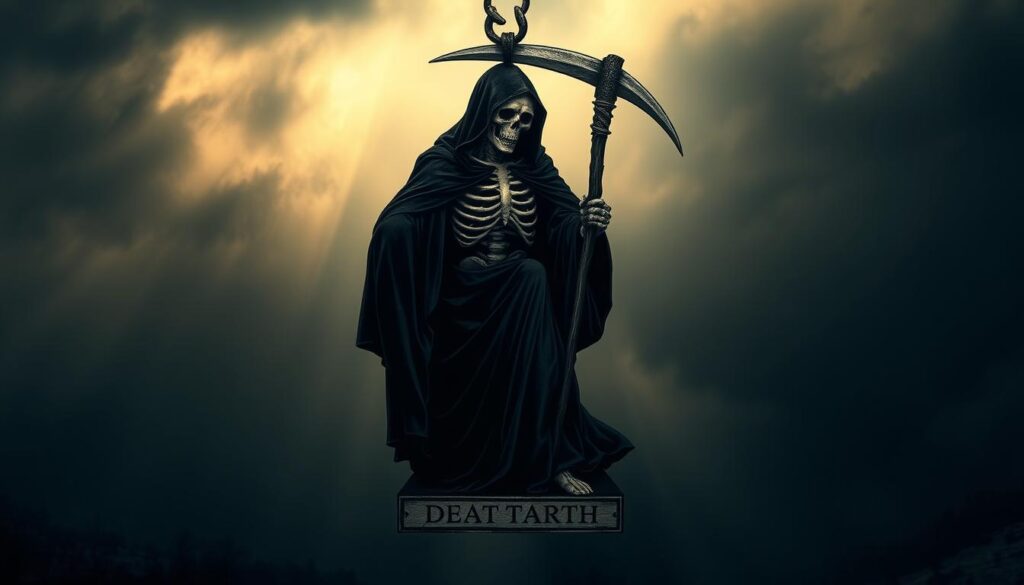
Upright: closing one door to open another
Upright meaning points to a constructive end. You’re invited to put the past behind you and close a chapter with intention.
In relationships, this can mean evolving dynamics or ending cycles that keep you stuck. In career, expect a transition or a nudge to take the plunge. For finances, it asks you to adapt after loss and reset priorities.
Good endings often reduce long-term pain. Timely change prevents prolonged decay and creates space for real transformation.
Reversed: resisting change and repeating patterns
Reversed shows holding back. You may cling to comfort, repeat negative patterns, or stay in a stagnant role.
- Self-check: where do you fear the unknown?
- Try tiny experiments to interrupt habit loops.
- Timing matters: resisting endings prolongs discomfort.
| Orientation | Signal | Quick action |
|---|---|---|
| Upright | Major transition | Close with intention |
| Reversed | Stagnation, patterns | Test small changes |
| Both | Change is active | Ask: which one attachment can I release? |
Affirmation: “I embrace change in all forms.” For a related spread on practical timing, try the seven of pentacles spread to sense next steps.
How to read death tarot in a spread: a step-by-step process
A focused layout helps you see which life area is closing and which can open next.
Prepare your deck and intent
Start by naming the phase you want to explore. Ask questions about endings, beginnings, and what change feels like right now.
Shuffle with that intent. Keep the question simple so your reading stays clear and usable.
Step-by-step flow
Pull a context card first to frame the storyline. Then place the key card and note its position. Add clarifiers to show what must be released.
Finish by drawing next-action cards that point to one small step you can take this week.
Spot the patterns and ask smart questions
Watch for repeated themes across positions: attachments that drain energy, fear that stalls action, or openings that invite work.
Ask: What past habit needs to end now? and Which resource will make this transition smoother?

| Step | Purpose | Quick action |
|---|---|---|
| Context card | Shows the bigger story | Note the theme |
| Key placement | Reveals where change lands | Mark the life area |
| Clarifiers | Pinpoint release vs. rebirth | Identify what to let go |
| Next-action | Practical momentum | Choose one small task |
Tip: If you see strong cards like The Tower or The Hanged Man, expect speed or a needed shift in view. Journal your notes and end with a single, concrete todo—call, cancel, or set a boundary—to turn insight into movement. For related spreads and deeper context, see the three of swords resource.
Applying the Death card to life areas: love, career, and finances
When this arcane image appears, it often signals a practical reset across key life domains.

Relationships and self-love
Use the card to spot cycles that drain emotional energy. Upright readings can show the need to embrace change or to end a relationship that blocks growth.
Singles may be asked to shed old beliefs and patterns to form healthier bonds. For self-love, examine attachments that lower worth and replace them with compassionate boundaries and daily reflection.
Career and vocation
At work, this image often nudges toward transition when stagnancy outweighs stability. Map your skills to new paths and set one concrete milestone to test an industry or role.
If reversed, watch for repeating patterns like over-functioning or staying silent about needs. Design a small experiment this month to interrupt that loop.
Money matters
Financially, an upright reading can mean a loss that leads to value-based change. Use it to clarify priorities, adjust expenses, and redirect resources toward resilience.
When fear of scarcity spikes, protect one essential expense and pause one nonessential. That small win proves change is manageable.
- Talk with a mentor, update a resume or portfolio, and schedule a progress check.
- Look at the past with gratitude; intentionally release what no longer serves.
- Close each scenario with one concrete action: call, renegotiate, or set a boundary this week.
| Life area | Upright cue | Quick one-step action |
|---|---|---|
| Relationships | End cycles; invite healthier dynamics | Schedule an honest conversation |
| Career | Transition nudge; map skills to new paths | Book an informational interview |
| Finances | Value reset after loss; build resilience | Protect one essential expense |
From meaning to movement: practices to embrace change and let go
Action turns meaning into momentum: try a short practice that proves change is doable. Use small rituals to shift how your mind holds endings and to free energy for new beginnings.

Quick, repeatable moves
Start with a 20-minute declutter of one drawer or folder. That small win signals a real ending and clears space for fresh priorities.
Habits and swaps
Pick one habit to retire and one to adopt. Map three simple steps: a cue, a tiny action, and a reward. Repeat until it feels automatic.
Affirmations and prompts
Use “I embrace change in all forms.” daily to retrain limiting beliefs about endings. Journal on these prompts:
- What fear is loudest right now?
- Which belief no longer fits?
- What support do I need this week?
When resistance pops up, shrink the next step until it feels safe.
Practical rhythm and support
Try a new moon to set intentions and a first-quarter check to review progress. Build a three-person support capsule for accountability and encouragement.
| Practice | Why it helps | One-step action |
|---|---|---|
| Declutter | Signals release | 20-minute drawer clear |
| Habit swap | Rewires behavior | Cue → tiny action → reward |
| Affirmation | Shifts beliefs | Repeat daily |
Want a related spread that shows movement across transitions? See a short practical layout at six of swords guidance.
Context matters: deck variations, timing, and powerful card combinations
How a deck depicts the scene often shifts a card’s emotional weight. Small visual changes can turn a stark message into something softer and more approachable.

Comparing imagery across decks
Many decks keep the core elements: a skeletal figure in armor, a white horse, and a black flag. Those repeated motifs preserve the major arcana’s core meaning.
Other decks ease the visual tension. Softer palettes or fewer stark symbols help people meet endings with curiosity instead of fear.
When change accelerates: reading with The Tower or The Hanged Man
Timing matters: if this card sits beside The Tower, time compresses and change can feel sudden and intense. Expect fast shifts and plan for basics first.
Paired with The Hanged Man, the shift often starts as a pause. A new perspective comes before outward movement, which reduces friction once you act.
“Name what is already ending; that clarity lets you direct energy to what remains.”
| Combination | Signal | Quick step |
|---|---|---|
| This card + The Tower | Rapid breakdown; compressed time | Protect essentials; simplify tasks |
| This card + The Hanged Man | Perspective pause before motion | Make one reframing note; wait 48 hours |
| Multiple major arcana | High demand on energy; big change | Prioritize two actions this week |
Remember people-focused nuance: communicate with others and honor how endings affect them. Use combination signals to triage effort and turn upheaval into an opportunity.
For a related spread that helps with timing and next steps, see the four of swords timing spread.
Conclusion
This guide closes by reminding you that the death tarot is a practical ally for timely endings and fresh starts.
Ask one clear question in a short reading: which attachment from the past can I release this week to make room for new beginnings?
Notice patterns, pick the smallest next step, and use simple supports—people, tools, and short time blocks—to lower friction.
Expect a little pain during closure; move at a compassionate pace and honor the energy you need for renewal. Use the card’s figure and symbols as anchors when doubt rises.
Check in after a few days. Name resistance without judgment, revisit affirmations and micro-rituals, and lean on resources if you need help. Trust the process of change and keep practicing the meaning; steady work deepens understanding and opens opportunity.
For practical next steps on making this a paid skill or real work with readings, see how to become a paid psychic.
FAQ
What does the Death card really symbolize in modern readings?
The card signals major transformation rather than literal end-of-life. It points to cycles closing so new opportunities can begin, asking you to release old habits, attachments, or roles that no longer serve growth. Think transition, renewal, and a clean slate.
How do upright and reversed positions change interpretation?
Upright suggests a natural ending that clears the way for renewal and fresh options. Reversed often shows resistance — clinging to old patterns, stalled change, or fear that keeps progress from happening. The spread context clarifies whether the shift is healthy or delayed.
What visual symbols should I notice on the card and why?
Key images include a skeletal figure in armor (inevitable transformation), a white horse (purity and movement), and flags or rising sun motifs (endings leading to new beginnings). These elements highlight the universality of change and the possibility of rebirth.
How do I read this card within a spread step-by-step?
Start by setting a clear intention and question about change. Pull a context card to frame the situation, place the card in its spread position, then add clarifiers to reveal motivations or obstacles. Finish with next-action cards to make the transition practical.
What questions should I ask during a reading to get useful guidance?
Focus on practical prompts: Which habit should I release? What timing or signs indicate this transition? What resources will support me? Asking about next steps helps turn insight into action.
How does this card apply to relationships and self-love?
It often marks the end of unhealthy cycles or the need to redefine boundaries. In love readings, it can mean letting go of a partnership or transforming dynamics to allow healthier connection and self-respect.
What does the card indicate for career and money matters?
It can signal a career pivot, leaving stagnant roles, or reevaluating financial priorities. Expect transitions that require adaptability — clearing space for new income streams or more aligned work.
Are there practical practices to support the transition the card suggests?
Yes. Try decluttering rituals, journaling prompts about what to release, habit-breaking steps, and short affirmations focused on growth. Small, consistent actions make big changes more manageable.
How do different decks change the card’s meaning?
Deck art and cultural cues shift emphasis — some focus on spiritual transformation, others on psychological endings. Imagery nuances help tailor the message to a querent’s life, so compare symbols and tone across decks.
Which cards intensify or clarify the message when paired with this one?
Cards like The Tower or The Hanged Man can speed or deepen change, while cards such as The Star or Temperance suggest healing and balance after transition. Clarifiers reveal whether the shift is sudden, needed, or gradual.
Is this card a bad omen if it appears early in a reading?
Not inherently. Early placement often signals that change is a central theme to address now. It’s an invitation to prepare and use the energy intentionally rather than a negative forecast.
How can I explain this card to a querent who fears endings?
Reframe endings as necessary preparation for new growth. Use concrete examples — like leaving a draining job to pursue training — and offer steps they can take to feel empowered during the transition.