

Start simple, stay curious. A standard deck has 78 pieces split into the Major Arcana and the Minor Arcana. The Major Arcana trace the Fool’s Journey and often point to big life themes, while the Minor Arcana reflect day-to-day moments.
Begin with gentle steps. Many beginners pick Rider‑Waite‑Smith imagery and learn by asking open questions, shuffling simply, and pulling a single card or a small spread. This approach makes learning less overwhelming.
Expect reflective guidance rather than fixed predictions about the future. This guide shows a clear process: choose a deck, set an intention, frame better questions, shuffle, pull one or two cards, and read visuals in context. Practice beats perfection, and we’ll also cover ethical pause points and easy ways to care for your deck so cards stay in good shape.
Key Takeaways
- 78 total cards: 22 Major, 56 Minor — learn the structure first.
- Start with simple pulls and Rider‑Waite‑Smith imagery for clarity.
- Readings offer guidance and possibilities, not fixed fate.
- Practice small spreads and gentle shuffles for steady progress.
- Respect ethics and learn grounding methods for emotional moments.
Tarot for Beginners: What You’ll Learn and How This Guide Works
This guide walks beginners through a slow, curious path that makes learning feel manageable. It breaks the process into tiny, doable tasks so each card and spread builds confidence. You will practice observation, simple rituals, and clear ways to frame a question that invites insight rather than worry.
Who this guide is for and the friendly, step-by-step approach
This is for true beginners who want calm, steady progress. Each short section gives one small exercise you can try alone or with readers in your circle.
What “reading” really means: guidance over prediction
Reading is a reflective tool, like studying a painting that sparks memory and meaning. You will learn to notice imagery, link a card to your question, and reflect on what stands out to your mind. These steps help the guidance land in practical ways you can use in daily life.
- Small tasks: One pull, one note, one reflection.
- Customizable: Choose a deck you like and a journal style that works.
- Outcome: Understand how parts of a reading come together and how they can work in real situations.
For a deeper look at related psychic skills and vision practice, see this companion resource on clairvoyant abilities.
Inside a Tarot Deck: Major Arcana, Minor Arcana, and Suits Explained
The standard set has 78 cards that split into two clear parts. Twenty-two Major Arcana trace the Fool’s path from 0/The Fool through 21/The World. These cards mark big life moments, identity shifts, and themes that shape the larger story.
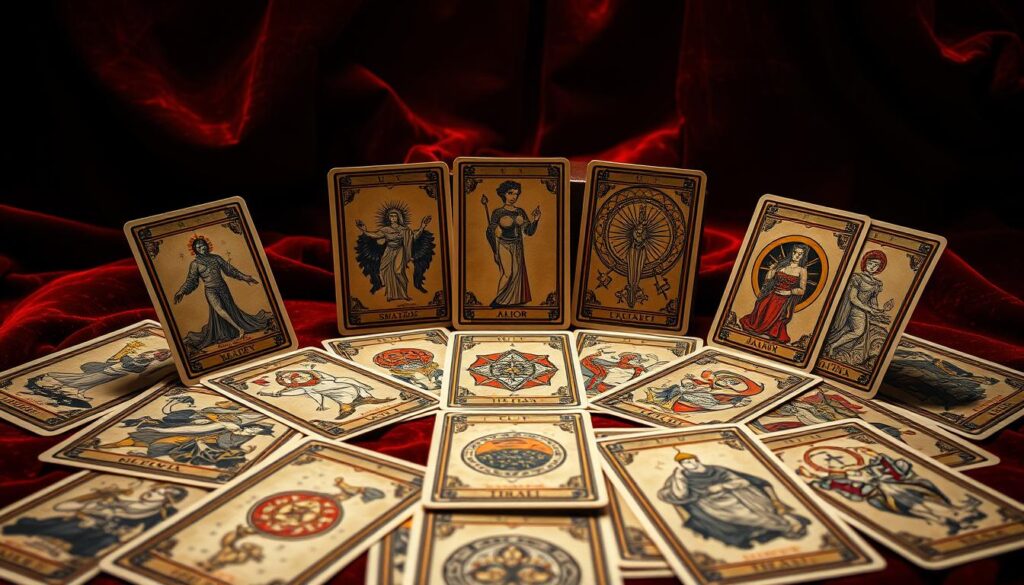
The other 56 are the Minor Arcana. They show everyday dynamics and are easier to influence. Use quick meanings to spot patterns; many Cups can point to emotion, lots of Swords often show mental focus.
Meet the suits
- Wands — fire: drive, creativity, action.
- Cups — water: feelings, intuition, relationships.
- Swords — air: thought, speech, conflict.
- Pentacles — earth: work, money, material life.
Court cards — Page, Knight, Queen, King — can mirror people, roles, or approaches. Remember: a “scary” card does not equal doom. It can signal change, resilience, or fresh clarity.
Start building your own wisdom by noting which part of an image draws your eye and how that links to your question. Over time the deck will feel less like a puzzle and more like a friendly map.
Choosing Your First Tarot Deck and Starter Resources
Pick a deck that feels like a clear, friendly map you actually want to open. Your first choice matters less than connection. If the art draws you in, you’ll practice more.
Beginner-friendly options often start with Rider‑Waite‑Smith because many guides reference its imagery. Modern alternatives — Modern Witch, Mystic Mondays, Ethereal Visions — work well if their style fits your taste.
Starter books and reference sites
Build a small reading toolkit. A few trusted books include 78 Degrees of Wisdom, WTF Is Tarot, and Kitchen Table Tarot. For quick upright and reversed meanings, BiddyTarot is a reliable free resource.
- Try before you buy: visit a local shop and handle different deck sizes and cardstock.
- Note practical things: readability, card finish, and how the imagery sits with you.
- Keep it simple: one solid deck plus one or two resources is enough for beginners.
If you want an example reading focus, explore this Eight of Pentacles guide as a model for practice and study.
How to Do Tarot Cards: Set Your Intention and Ask Better Questions
A short, honest intention helps the deck meet your curiosity with useful insight.
Start by naming why you’re here. State your aim out loud or write a single line. This anchors the pull and shapes what the card offers.

Open-ended frameworks that lead to clarity
Use templates that invite depth. Try: “What do I need to know about…?” or “Where is the hidden opportunity in…?”
Reframe yes/no or “Will I…?” questions into options or next steps. This keeps a reading useful and action-oriented.
Timing, mindset, and ethical boundaries
- Clear mind: Breathe and check your mind before a pull. Calm helps the reading reflect clarity, not panic.
- Pause when charged: If you feel activated or fixed on one outcome, step away. Grounding makes results more helpful.
- Respectful scope: Avoid readings for others without consent. Offer gentle guidance on sensitive matters, not fear.
| Focus | Good question | What it reveals |
|---|---|---|
| Relationship | What do I need to know about this relationship? | Dynamics, next step, boundary clues |
| Career | Where is the hidden opportunity in my work? | Timing, skill leverage, small shifts |
| Creative block | How can I move past this block? | Practical prompts, inner resistance, fresh way forward |
One focused pull can change a whole reading. If you want structured training beyond practice, consider paid psychic training at paid psychic training.
Shuffle, Cut, and Pull: Beginner-Friendly Ways to Handle the Cards
Good hands-on routine brings confidence fast when you work with a new deck. Use simple, repeatable moves that protect card edges and let your focus land on the images.
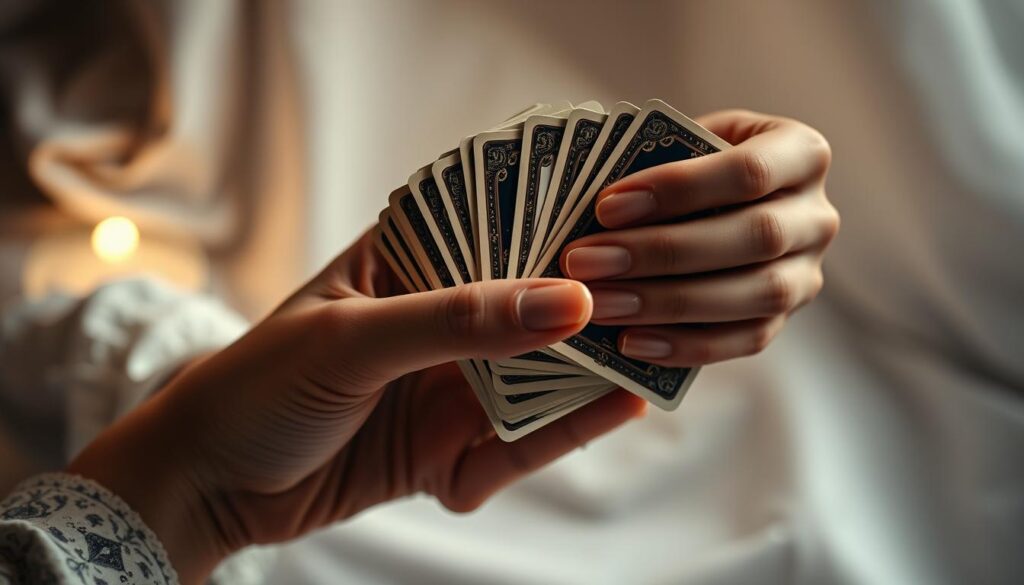
Basic shuffles and gentle cuts
Try an overhand shuffle — horizontal or vertical — for control and little wear. A corner riffle is kinder on older decks and still mixes well.
The washing machine method (spread and swirl) randomizes reversals easily. When it feels right, split the deck into a few piles and let a natural break appear.
Pulling options readers use
Watch for jumpers or flyers; they often point at a meaningful pull card. Fan the deck and choose intuitively, or lift from different spots with your non-dominant hand.
For multi-position spreads, try three piles and reveal the top of each, or restack and draw from the top in order.
Practical deck care and reversal tips
If a deck has thick cardstock, favor vertical overhand shuffles. Fanning powder helps sticky edges slide smoother over time.
Reset reversals by flipping a portion before shuffling, and knock the deck gently between sessions to refresh intention. Give yourself time; steady handling shows a lot of subtle cues as confidence grows.
- Quick checklist: overhand, corner riffle, washing machine; natural breaks; fan, jumper, three-pile; protect thick decks with vertical shuffles or powder.
For more context on card meanings and ongoing practice, see this Seven of Pentacles guide.
Reading the Cards: Meanings, Intuition, and Interpreting Your Spread
Begin each reading by letting the image speak before you add labels or standard meanings.

Link imagery and symbolism to your question
Notice symbols, colors, and faces first. Name what you see aloud. Then connect those details to your situation and the question at hand.
Your first impression often holds the clearest lead. After that, blend in core meanings and personal associations.
Major versus Minor energy — scale and focus
Major Arcana usually point to broad life shifts and long-term themes. Minor Arcana speak about a current situation or daily pattern.
When many of one suit repeat, treat that as a theme: lots of Swords may call attention to thought or communication patterns.
- Reframe feared cards: Death signals ending and transformation. The Devil highlights desire, shadow work, or habits worth renegotiating.
- Let the spread act as a whole. Resist forcing a single card to carry the entire message.
- Write quick notes after a pull; journaling builds a personal dictionary of meanings and strengthens intuition.
- As a reader, honor a strong first impression, then validate it with surrounding cards and context.
| Focus | Visual cues | Reading hint |
|---|---|---|
| Major theme | Prominent figures, cosmic symbols, numbered arcana | Consider life-scale shifts and long-term path |
| Everyday event | Suits, repeated numbers, domestic images | Look for practical next steps and patterns |
| Shadow work | Chains, mirrors, dark imagery | Ask what needs release or renegotiation |
For related training in inner vision, explore a short guide on developing clairvoyant skills at vision practice for readers.
Simple Tarot Spreads to Start Today
Small, repeatable spreads build confidence faster than complex layouts. Begin with a single reliable spread and use it often. Consistency gives patterns time to appear and helps a deck feel familiar.
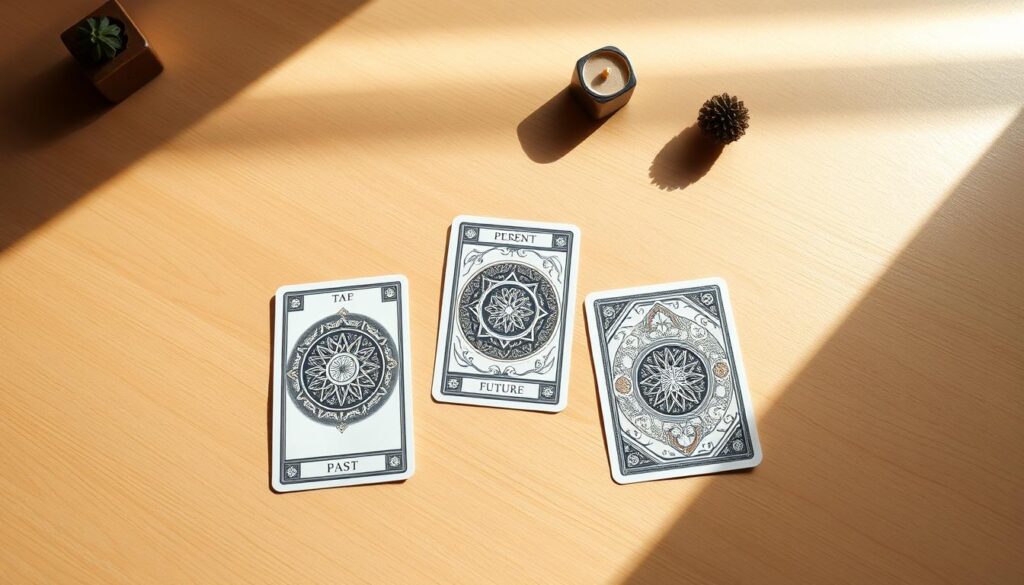
Single-card and daily pull for quick guidance
Try a daily single card draw each morning. Ask, “What should I focus on today?” Note the card and write one sentence about its message. This short ritual trains attention and yields steady insight over time.
Three-card centering spread during change
Lay three cards in a row. Label positions: surrender, self-care, center. Read them in order and then blend the story they tell. This spread offers clear steps when life shifts.
Five-card illumination spread for clarity
Use five positions: what is happening; how to weather it with grace; the lesson; what is leaving; what is arriving. Keep the layout neat and read each position before merging the thread into a single path.
- Practical tip: fan or cut the deck once and pull steadily—method matters less than steady practice.
- Repeat favorite spreads weekly to track patterns and growth.
Build Your Practice: Self-Care, Journaling, and Consistent Tarot Readings
Consistent attention — even five minutes a day — trains your eye and sharpens meaning. Treat practice as a calm habit. Slow breathing, a clear space, and steady time help inner wisdom surface during a pull.

Mindful rhythm and single card work
Pick one small ritual: a morning single card draw, a short breath, and one sentence in a journal. This builds familiarity with a deck and the images it uses.
Keeping a personal book of meanings
Write every reading. Note the card name, first impression, keywords, and any life moments that match. Over weeks this journal becomes your go‑to reference book.
Cleansing, resets, and healthy boundaries
Clear energy your way: a quick smoke pass, a moonlight rest, or a brief spoken intention all work. If you read reversals, upright the cards after sessions so fresh readings begin cleanly.
When to pause
If you feel activated, fixated on one outcome, or emotionally raw, step away and ground first. Share reflections with trusted readers; conversation often reveals useful perspective.
- Practice tip: steady habit beats long sessions; patterns reveal where attention is needed in relationship, work, and life.
Conclusion
Small, repeated actions — a morning pull, a brief journal note — create real learning over time, and they keep the practice kind and useful.
Choose a deck that feels like a good fit. Ask open questions, use a simple spread, and read each card with calm attention. Over weeks, meanings deepen and patterns in life become clearer.
Keep notes. Journaling turns general meanings into personal insight. If you need a focused example, consult the Four of Cups guide for a practical look at a single-card reading.
Share readings with trusted people, step back when you feel stuck, and remember this is a steady practice, not a finish line.
FAQ
What is this guide for and who should use it?
This friendly, step-by-step primer welcomes beginners and curious readers who want practical guidance on learning a deck. It focuses on building useful skills: reading imagery, trusting intuition, setting intention, and creating a routine rather than promising fixed predictions.
What does a reading actually offer — prediction or guidance?
A reading highlights energy, options, and likely paths based on current circumstances. Think of it as guidance for decisions and self-reflection. Skilled readers and resources such as BiddyTarot emphasize insight over absolute forecasting.
How is a deck organized and what is the Fool’s Journey?
A standard deck has 78 cards split into Major Arcana and Minor Arcana. The Major Arcana maps key life themes along the Fool’s Journey. The Minor Arcana divides into four suits — Wands, Cups, Swords, Pentacles — that show everyday situations and elemental energy.
Which starter decks and resources are best for learners?
Rider‑Waite‑Smith remains the classic beginner choice because images match many guidebooks. Modern alternatives suit different aesthetics. Recommended resources include BiddyTarot, 78 Degrees, and beginner books that explain card meanings and spreads.
How do I form better questions for clearer answers?
Use open-ended, present-focused frameworks: ask about influences, next steps, or how to approach a situation. Avoid yes/no traps and hypothetical “what if” fixations. Good questions invite insight rather than demand a single outcome.
What mindset and ethical boundaries should I keep during a reading?
Read with curiosity, respect, and clear intention. Set boundaries around sensitive topics (medical, legal) and avoid reading for someone who hasn’t given consent. If a client or you feels highly distressed, refer them to professional help.
What are beginner-friendly shuffling and cutting methods?
Try simple approaches like the overhand shuffle, gentle riffle, or the “washing” spread on a table. Use a soft cut or split into three piles. Choose the method that feels comfortable and keeps the deck in good condition.
How do I pull cards in a safe, useful way?
Pull using intuitive selection, fan-and-choose, or allow “jumpers” to reveal themselves. Natural breaks in the deck often guide choices. For beginners, single-card pulls and three-card spreads build confidence.
What practical deck care should I know — cardstock, size, reversals?
Handle cards gently, store them in a box, and choose cardstock that suits your hands. Smaller or larger decks change handling. Learn reversals (upside-down meanings) only if they feel useful; otherwise keep readings simple.
How do I interpret imagery and symbolism when reading?
Link card pictures to your question and the querent’s life. Use keywords but prioritize what the image evokes. Combine intuitive impressions with textbook meanings for a balanced reading.
What’s the difference between Major and Minor energy in a spread?
Major Arcana cards point to big, transformative themes. Minor Arcana reflect daily influences, practical choices, and emotional states. A spread heavy in Majors suggests a life-shaping moment; many Minors point to routine matters.
Are cards like Death or the Devil negative?
Not necessarily. These cards usually signal transformation, release, or shadow work rather than literal doom. They call attention to necessary change or unconscious patterns that need review.
Which simple spreads should a beginner practice right away?
Start with a single-card daily pull for guidance, a three-card spread for past/present/future or situation/action/outcome, and a five-card spread for deeper clarity. These builds cover quick reflection and short readings.
How can I build a consistent practice and what helps journaling?
Create a short routine: cleanse briefly, set intention, shuffle, pull, and record impressions. Keep a tarot journal to note meanings, spreads used, and insights — this creates a personal card dictionary over time.
What are common cleansing methods for a deck?
Simple resets include leaving cards in moonlight, smudging with sage or palo santo, and using intention or a quick shuffle ritual. Choose methods that feel respectful and practical for you.
When is it best not to read cards?
Avoid readings when highly emotional, intoxicated, or fixated on a single outcome. Pause if anxiety, grief, or obsessive questions cloud judgment. Clear-headed readings produce kinder, more accurate guidance.
How much time does a beginner need to learn basics and give readings?
Short daily practice — 5 to 15 minutes — quickly builds familiarity. With consistent study of meanings, spreads, and journaling, most beginners can give helpful short readings within weeks.
Can I read for other people and become a professional reader?
Yes. Start by offering free or low-cost short readings, build ethics and clear boundaries, continue learning, and develop a niche. Professional growth often involves studying symbolism, communication skills, and building trust.