

The Wheel of Fortune marks a major turning point in any reading. This guide introduces the wheel fortune as a symbol of cycles, luck, and change that touch everyone, from leaders to everyday workers.
The message is simple: good and bad times alternate. Trying to force outcomes often adds stress. Instead, practice acceptance and stay adaptable to reduce suffering and find openings when the wheel turns.
In this short journey you will get a clear ID, layered symbolism, upright and reversed meanings, and practical tips for timing and synchronicity. Expect action items for work, money, and breaking old patterns.
Who this helps: beginners seeking a quick reference and readers who want a deeper, practical path to read this powerful symbol with confidence.
Key Takeaways
- The wheel fortune speaks to cycles, fate, and timing.
- Upright meanings point to opportunity and flexibility.
- Reversed meanings warn of stalled patterns and sudden shifts.
- Practice acceptance, meditation, and watch for synchronicities.
- This guide offers clear steps for readings in life, work, and finance.
What is the 10 tarot card? Quick ID and core idea
This image signals a pivot in life where forces larger than us steer events. The Wheel of Fortune stands as the tenth Major Arcana and marks clear turning points. It points to cycles, timing, fate, and the ebb and flow of luck.
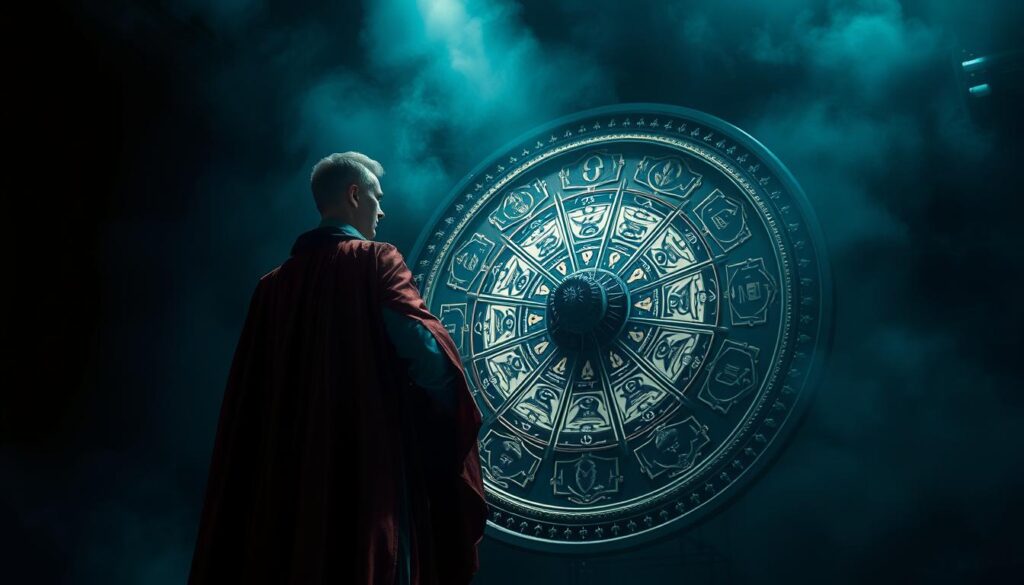
When this symbol appears, a phase is about to change — up or down. It warns against overidentifying with any single moment because the wheel keeps moving. Watch for signs and synchronicities that guide your next best step.
- Quick ID: turning points, fate, cycles, timing, ebb of luck.
- Upright keywords: change, cycles, fate, decisive moments, unexpected events.
- Reversed keywords: bad luck, lack of control, clinging to control, delays.
| Visual Clues | Meaning (Upright) | Action |
|---|---|---|
| Large wheel, four winged figures | Change, cycles, sudden opportunity | Stay alert; act when timing aligns |
| Egyptian figures around rim | Fate, balance, constant motion | Accept shifts; prepare mentally |
| Point in time marker | Synchronicity, decisive moment | Look for signals; pair luck with readiness |
This symbol clarifies the core idea: you can’t stop the cycle, but you can choose your stance. Later sections will unpack upright vs. reversed meanings and give step-by-step reading tips.
For a practical pairing of timing and skill in readings, see a related technique on work and practice.
Wheel of Fortune symbolism decoded: imagery, creatures, and esoteric clues
Look closely and the Wheel becomes a map of forces, each figure telling a part of the story. The rim gathers symbols that explain cycles and fate in the major arcana, blending spirit and matter.
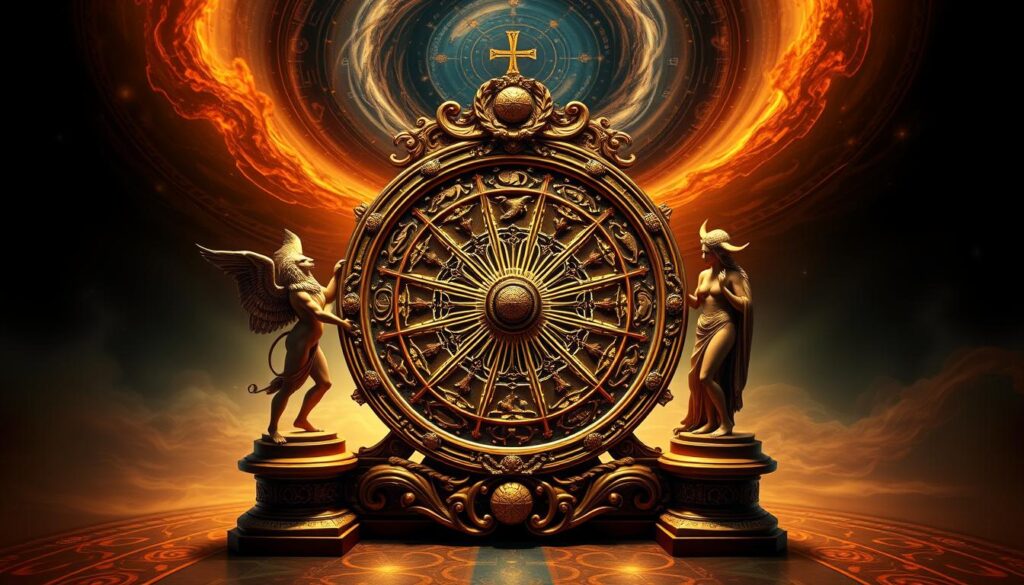
The four winged figures and cosmic order
The four creatures anchor the scene: an angel, eagle, bull, and lion. They link to Aquarius, Scorpio, Taurus, and Leo. These fixed signs bring stability inside change.
Each creature holds a book. That volume often points to the Torah and to disciplined study. The book signals study, wisdom, and steady learning that helps you weather shifts.
Letters, alchemy, sphinx, and Anubis
The central wheel reads like a mandala of esoteric letters and alchemical emblems. It encodes transformation and how fate turns in the material world.
Atop sits the Sphinx — the riddle-holder of balanced power and higher knowledge. Below, Anubis rises, the guide through endings and shadow work.
Serpent, rotation, and practical reading tips
A serpent curls downward to show descent into the material plane. The perpetual rotation reminds us that as one force ascends, another falls. That dynamic energy is the wheel fortune’s core.
- Which creature draws your eye can hint at where you stand in the cycle.
- Use the imagery as a diagnostic tool during readings to time shifts and integration.
How to read the Wheel of Fortune in a tarot spread
Begin your reading by defining what you want to know and assigning spread positions for timing, cause, and actions. Clarify the question so the card can give specific signals instead of vague meanings.
Set the scene: positions, questions, and noticing synchronicities
Lay out positions that name when, why, and how. As you scan, watch for repeat numbers, zodiac echoes, or suit clusters to find the exact point in the journey where the wheel turns.
Upright: embracing cycles, timing, and action
- Name the change. What phase ends and what opens? Link nearby minors to life areas like work or resources.
- Map time windows. Use surrounding suits to sense speed and adjust plans to the detected time frame.
- Choose aligned actions. Say yes to openings, apply, pitch, or upskill so you partner with fate instead of waiting.
Reversed: releasing control, pattern-breaking, and recalibration
- Identify where control is tight and name delays plainly.
- Recommend pattern-breaking: journaling, routine shifts, or mentorship.
- Build simple resilience plans—buffers, flexible schedules, and contingency steps.
Throughout, engage others for support and use meditation and visualization to tune into wheel fortune tarot timing. These practices help you spot the right moment to act.
Upright vs. Reversed meanings in love, career, and finances
Changes shown by the wheel tend to surface in relationships, careers, and finances—each needs a tailored response. Read the position as a prompt to act, not as a verdict.
Love — upright: navigate changes with flexibility
Upright asks for honest talks and a shared timeline. Frame change as growth and renegotiate priorities together.
- Action: Initiate clear conversations about expectations and time.
- Benefit: Adjustments can deepen the connection rather than break it.
Love — reversed: external forces, patience, and team communication
Reversed often means outside pressures interfere. Use patience and practical teamwork to stay aligned.
- Co-create short plans, redistribute tasks, and schedule check-ins.
Career & work
Upright: Say yes to openings; pair luck with preparation—apply, pitch, and network.
Reversed: Stop forcing old solutions. Propose pilots, update workflows, or upskill to meet new demands.
Money and material life
Upright: Windfalls call for saving and diversifying income so future dips are manageable.
Reversed: Avoid risky moves; build a 3–6 month buffer to reduce stress and regain control.
Timing note: Upright often speeds things up, while reversed signals delays you can plan for. Use surrounding cards to clarify area focus—Cups for relationships, Pentacles for money, Wands/Swords for ambition.
For practical pairing of timing and practice, see a related technique on timing and practice.
The number Ten in tarot: cycles, extremes, and fresh starts
Think of Ten as the threshold where a cycle reaches its peak and the next one quietly forms.
Ten defines culmination. It is where the energy built through the previous phase crystallizes into the material world. That extreme often forces a turn, and that turn begins the next cycle.
Major arcana readers know the Wheel as the living pivot. At this point fate and timing converge and your journey hits a clear turn. The moment can feel heavy and liberating at once.
Minor tens show how endings play out in life.
- Wands: passions become burdens needing release.
- Cups: emotional cycles finish in family joy or closure.
- Swords: pain peaks and brings sudden clarity.
- Pentacles: material legacy and practical fruition in the world.
The Kabbalistic lens names Malkuth as the grounding force. Higher influences land in daily life, explaining why a Ten often asks for practical handoffs, farewells, or launches.
Numerically, One and Zero live inside Ten. Endings here already carry seeds of renewal, so aces tend to follow. When a Ten pairs with the Wheel, plan for closure and immediate reorientation.
For a close look at painful endings that open a dawn, see the Ten of Swords.
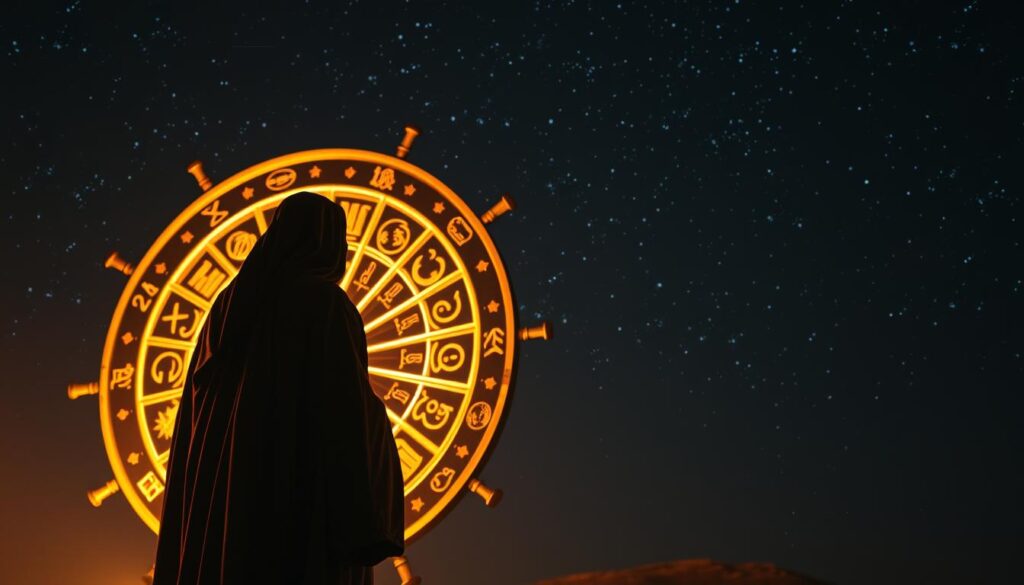
Practical tips to harness the Wheel’s energy in your reading
Use the Wheel as a practical coach: it wants you to notice timing and act with clear intent. Treat readings as a chance to align habits, words, and small steps with the movement you see.
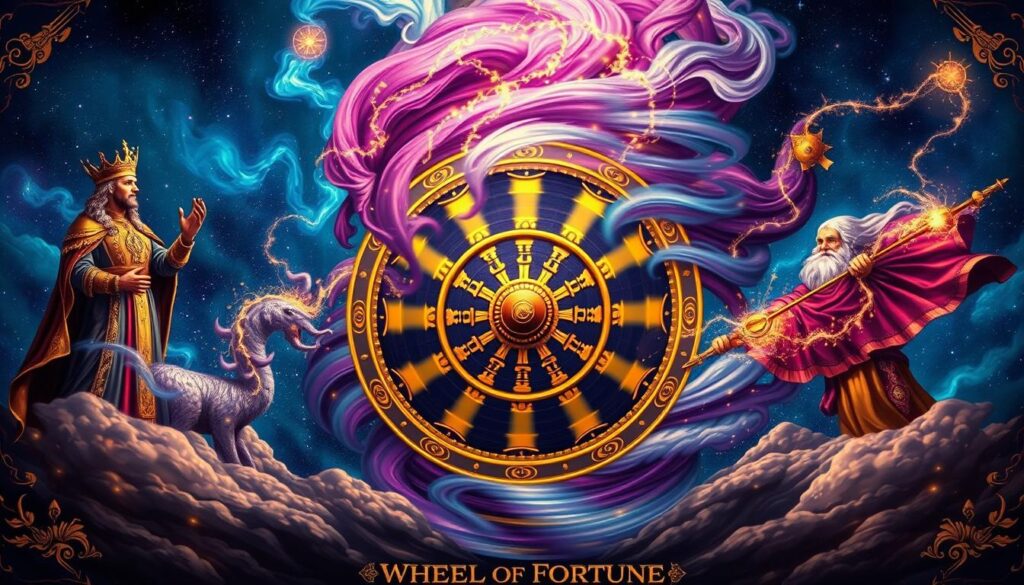
Timing, karma, and “what goes around comes around”
Treat karma pragmatically. Align intent, speech, and actions so outcomes match what you want. Kindness tends to invite kindness in return.
Trust timing. When the wheel fortune appears, expect cycles to shift. Use signal-tracking—repeat numbers, signs, or songs—to confirm a turn is near.
Mindset and tools: meditation, visualization, and staying adaptable
Boost energy alignment with short daily meditation and clear visualization. Name one next step so luck has someplace to meet preparation.
Practice adaptability drills: build skills like scenario planning, buffered calendars, and alternative pathways for work and personal goals.
- Partner with others: mentors and peers help spot signals and seize chances as the wheel turns.
- Keep simple tools handy: a one-card daily draw, breathwork, and a short reflection log ease the journey.
- Right-size control: focus on what matters—habits, outreach, portfolio—and release the rest to timing in the world.
| Focus | Practical Step | When to Use |
|---|---|---|
| Timing & Karma | Track repeating signs; act when signals align | When momentum shows in surrounding cards |
| Energy & Mindset | Daily 5-minute visualization naming one clear move | When choices feel unclear or anxious |
| Skills & Adaptability | Scenario plans, buffered calendar, skill micro-updates | When resistance or delay appears |
| Support | Call a mentor; share plans with peers | At turning points that matter to work or relationships |
For a practical pairing of intention and attraction techniques, see a short guide on the law of attraction to strengthen manifesting habits during a turn.
Conclusion
Every turn of the Wheel brings a moment to choose how you respond. Notice cycles in your life and use timing, awareness, and small steps to pivot when needed.
Ground insights in the material world: capture lessons, adjust plans, and refine priorities so the next turn benefits you and your closest connection.
Upright and reversed meanings both invite agency. Adapt, prepare, and partner with supportive forces rather than resisting change.
Tens mark thresholds that unlock fresh momentum. Check which nearby cards appear to guide decisions at work or home, and revisit a related reading like Ten of Cups for emotional context.
Try a daily practice: one brief pull and a three-line reflection. List three things you can influence today and one matter you’ll release. Reach out to a mentor or peer when cycles tighten—sharing helps each person navigate change with steadier energy.
FAQ
What is the 10 Wheel of Fortune and what does it mean at a glance?
The Wheel of Fortune is the tenth Major Arcana card. It represents cycles, change, and the movement of fate. In a reading it often signals a turning point where external forces, timing, and your actions intersect to create new opportunities or needed adjustments.
What are the key symbols on the wheel and why do they matter?
The wheel shows letters and alchemical emblems that hint at cycles and transformation. Four winged creatures—an angel, eagle, bull, and lion—connect the wheel to the fixed signs of the zodiac and to stable spiritual forces. These images guide interpretation by pointing to universal patterns and the interplay between chance and wisdom.
Who are the sphinx and Anubis on the card and what do they signify?
The sphinx sits at the top as a symbol of higher wisdom, balance, and riddle-like insight. Anubis appears near the base to represent underworld guidance, endings, and the mechanics of fate. Together they show that both conscious knowledge and deeper processes steer the wheel’s turns.
What do the books and serpent on the card represent?
Books often refer to sacred law or recorded wisdom—think of tradition and learning that shape destiny. The serpent symbolizes descent into the material world and the continuous cycle of renewal. Combined, they suggest that knowledge and earthly experience shape how the cycle unfolds.
How should I set up a reading when the wheel appears?
Place the wheel in context by clarifying the question and the spread position. Note timing clues and recent patterns in the querent’s life. Pay attention to synchronicities and outside events; the wheel often links to moments when timing and action converge.
What does the wheel mean when it appears upright?
Upright, the card encourages embracing cycles, recognizing opportunity, and taking timely action. It can signal luck or an auspicious turning point. It also reminds you to move with change rather than resist it, and to use wisdom when options appear.
How should I interpret the wheel when it’s reversed?
Reversed, the wheel can indicate stalled progress, resistance to change, or repeating negative patterns. It asks you to release control, reassess routines, and break habits that block forward movement. Recalibration and patience are usually needed.
What does the wheel suggest about love and relationships upright?
In love, an upright wheel often signals shifts—new phases, renewed connection, or important timing that favors growth. It invites flexibility, open communication, and readiness to evolve together rather than clinging to old dynamics.
What does the wheel mean for relationships when reversed?
Reversed in love, the wheel can point to external pressures, unresolved cycles, or repeated conflicts. It encourages patience, clearer teamwork, and addressing underlying patterns rather than blaming chance or fate.
How does the wheel affect career and work readings?
For career, upright implies sudden opportunities, promotions, or shifts that reward adaptability. Reversed suggests missed chances, resistance to change, or a need to update skills and strategy to match new conditions.
What about money and material life—good or bad omens?
Financially, an upright wheel may predict windfalls or improved conditions tied to timing and networks. Reversed warns of downturns or repeating money habits that drain resources. Preparation and wise planning reduce risk either way.
Why is the number ten significant in this context?
Ten marks an ending that leads to a new cycle. In the Major Arcana, it’s a pivotal turning point where lessons culminate and direction shifts. In minor arcanas, tens show completion at a suited peak and the start of the next stage.
How can I use the wheel’s energy in practical ways during a reading?
Focus on timing, karma, and the idea that what goes around comes around. Use tools like meditation, visualization, and journaling to identify patterns. Encourage clients to stay adaptable and take small, timely actions when opportunities appear.
Are there quick tips to tell when the wheel points to fate versus personal choice?
Look at surrounding cards and the question. Cards indicating external forces, timing, or major life events lean toward fate. Cards showing personal agency, tools, or steps suggest choice. The wheel often blends both—use context to weigh each influence.